A yarn weight chart is a standardized guide that classifies yarn by its thickness, from the thinnest (#0 Lace weight) to the thickest (#7 Jumbo). Think of it as a friendly, universal language for crafters.
This system helps you match the right yarn to a pattern so your finished project will look and feel just as you imagined. Once you get the hang of this chart, you'll be able to choose your materials with total confidence, turning a moment of confusion into a joyful part of your creative process.
What Is a Yarn Weight Chart
Have you ever stood in a yarn shop, holding a beautiful skein, and wondered if it was the right one for your project? We’ve all been there. A yarn weight chart is about to become your new best friend, taking all the guesswork out of the equation.
This handy tool ensures that a "worsted weight" yarn from one brand is the same thickness as a worsted weight from another. That consistency makes it so much easier to follow patterns and substitute yarns when you need to. Ultimately, it gives you the freedom to bring your vision to life just as you imagined it.
Each weight category comes with recommendations for hook and needle sizes. This gives you a reliable starting point for any project you're itching to start and helps you feel prepared for success.
A Detailed Look at Each Yarn Weight Category
Now that you have a quick overview, let's dive into the specifics of the eight standard yarn weights, from the most delicate to the absolute chunkiest. Getting to know the personality of each category helps you connect the numbers on a yarn weight chart to the beautiful projects you can create with your own two hands.
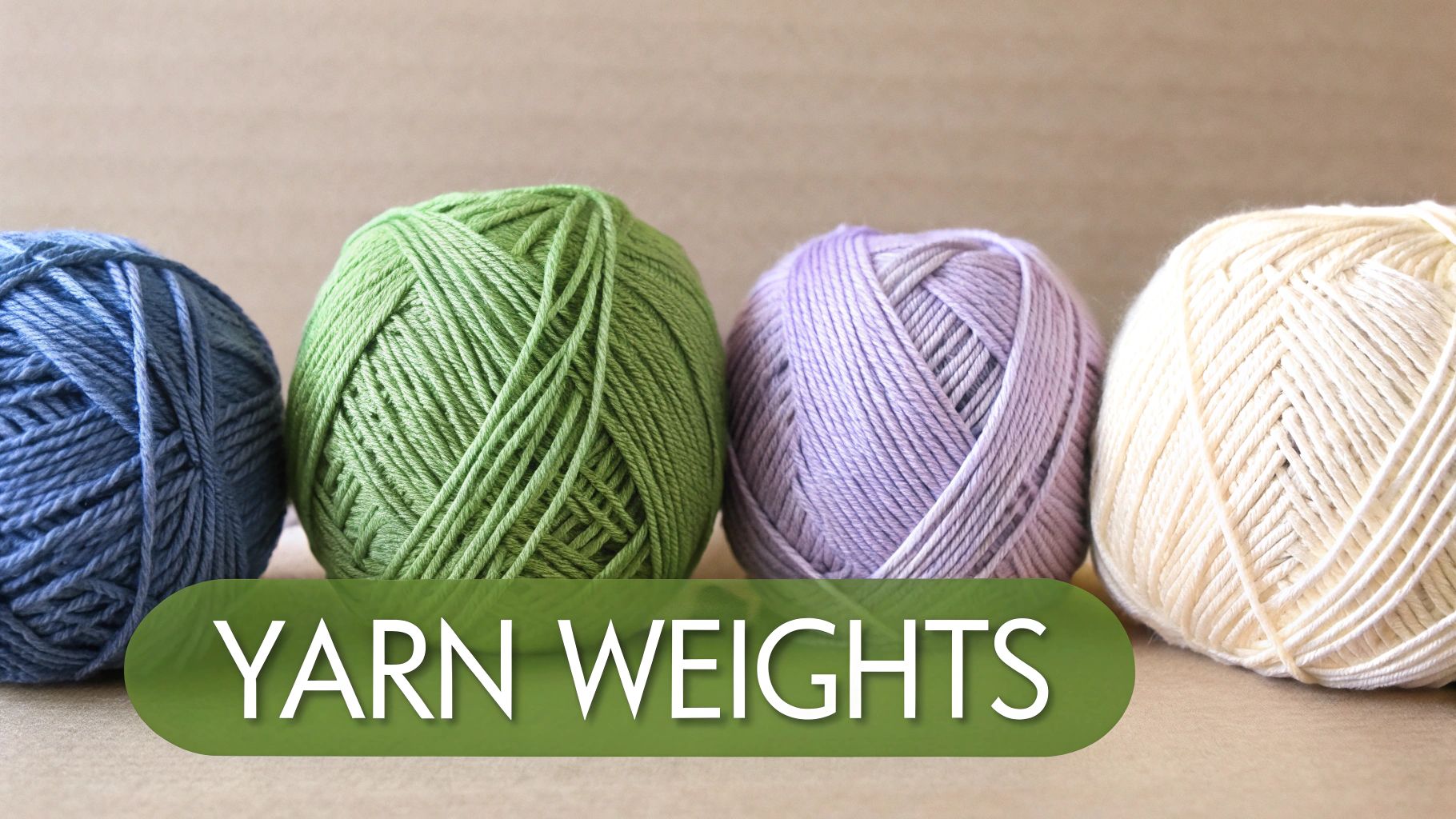
This journey through the yarn spectrum will help you visualize what you can make with every type of fiber. This transforms yarn selection from a chore into a joyful part of your crafting.
From Lace to Medium Weight Yarns
These lighter yarns are perfect for creating items with beautiful drape and intricate stitchwork. They are staples for detailed garments, delicate accessories, and classic projects that need a soft, thoughtful touch.
#0 Lace: The most delicate and fine yarn you can find, almost like a single thread. It’s perfect for creating airy, openwork patterns like intricate shawls and elegant doilies.
#1 Super Fine (Fingering): A very thin yarn beloved for socks, baby items, and detailed colorwork. We especially love 100% mercerized cotton in this weight for amigurumi because it creates crisp stitches that hold their shape.
#2 Fine (Sport): Slightly thicker than fingering weight (a thin yarn good for detail), this weight offers a wonderful balance of definition and drape. It's a great choice for lightweight sweaters and accessories.
#3 Light (DK): A versatile and incredibly popular choice, DK (Double Knitting) yarn works up faster than finer weights but is still light enough for comfortable garments. You can learn more about its unique properties in our guide to all things DK weight yarn.
#4 Medium (Worsted/Aran): Often called the "workhorse" of the yarn world, and for good reason. It’s sturdy, easy to handle, and perfect for a huge range of projects, from cozy blankets and sweaters to durable dishcloths and amigurumi.
From Bulky to Jumbo Yarns
As we move up the chart, these thicker yarns are all about creating cozy, warm, and wonderfully quick projects. If you want instant gratification and that snuggly feeling, this is where you'll find it!
The Craft Yarn Council (CYC) system divides yarn into categories with corresponding wraps per inch (WPI), from lace (30–40 WPI) to jumbo (1–4 WPI), creating a global standard for crafters.
#5 Bulky (Chunky): Noticeably thick and plush, this yarn is ideal for fast projects like warm hats, scarves, and thick blankets that come together in a flash.
#6 Super Bulky: A seriously thick yarn that creates a wonderfully squishy fabric. It’s excellent for statement pieces and projects you want to finish over a weekend.
#7 Jumbo: The thickest yarn available! This is what you see used for arm knitting or large-scale projects like giant throw blankets and decorative pillows.
Choosing the Best Yarn Fiber for Your Project
While our yarn weight chart helps you nail the right thickness, the fiber you choose is truly the heart and soul of your project. The material affects everything from the fabric’s drape and feel to how you’ll care for the finished piece. Let's walk through some of the most popular options to help you find the perfect match.
Think of it like picking the right ingredient for a recipe. Each fiber brings its own unique personality to your creation, and making that choice is a beautiful, mindful part of the crafting process.
A Quick Guide to Common Fibers
Here’s a simple look at what different fibers bring to the table, helping you match the material to your vision. There’s no single "best" option—only the one that’s perfect for your project.
Mercerized cotton (fingering): Smooth, durable, and has crisp stitch definition; it holds its shape well, making it ideal for amigurumi and other detail work.
Cotton blends (DK/worsted): Breathable and easy to care for, these are a good choice for summer garments, dishcloths, and homeware.
Acrylic (mostly worsted): A budget-friendly and machine-washable option, common for blankets and everyday projects. Be aware it can sometimes pill or create static.
Wool/wool blends: Wonderfully warm and elastic with great stitch recovery. It's a classic for hats and sweaters; just be sure to check care instructions and consider any skin sensitivities.
Chenille/faux-fur: Known for its plush texture, making it perfect for cozy blankets and pillows. It's not usually recommended for beginner amigurumi as the texture can make it hard to see your stitches.
For an even deeper dive into materials, check out our complete guide on choosing the perfect yarn for your crochet project. Remember, picking out your yarn is the first joyful step in bringing your idea to life.
Why Making a Gauge Swatch Is So Important
Alright, you've consulted the yarn weight chart and picked out the perfect yarn for your pattern. You're ready to dive in, right? Hold on just a moment. There’s one tiny step that connects that beautiful skein to a finished project you'll truly love: the gauge swatch.
Think of it as a small practice square before you start the main event. It might feel like an extra step, but trust us, it’s the secret weapon for making sure your project turns out the right size.
What Is Gauge, Anyway?
In simple terms, gauge is just the number of stitches and rows that fit into a specific measurement, usually a 4x4 inch (or 10x10 cm) square. Every single crocheter has their own unique tension: some of us make tight stitches, others are a bit looser. Your personal tension directly impacts the size of your final piece.
A swatch is your way of checking if your tension matches what the pattern designer intended. If it does, great! Your project will come out as planned. If not, no big deal, you can make a simple adjustment to get it just right. This mindful first step is your insurance against disappointment and can save you hours of frustration later.
How to Make and Measure Your Swatch
Making a swatch is a calming way to start a project. It gives you a chance to get a feel for the yarn and get into the rhythm of the stitch pattern. Here’s an actionable tip you can try right now.
Create Your Square: Using the yarn and hook recommended in your pattern, crochet a square that's a little bigger than 4x4 inches. This gives a more accurate measurement because stitches on the edges can be uneven.
Wash and Block It: This is key! Treat your swatch the same way you’ll treat your finished item. Give it a wash and gently block it so the stitches can relax into their final size.
Measure Your Stitches: Lay the swatch flat and grab a ruler. Count the number of stitches across a 4-inch span and the number of rows in a 4-inch height. Be sure to measure in the middle of the swatch for best results.
If your numbers match the pattern’s gauge, you’re good to go! If they don't, it’s an easy fix. Our guide on crochet hooks, size, and gauge breaks down exactly how to change your hook size to hit that sweet spot.
How to Substitute Yarns in Any Pattern
We’ve all been there: you find the perfect pattern, but you want to use a different yarn. Maybe you're trying to shop your stash, or you just fell in love with a different colorway. Whatever the reason, substituting yarn shouldn't be an intimidating puzzle. It's just another part of your creative process.
The first and most important rule is to match the yarn weight category. This is your non-negotiable starting point. If your pattern calls for a #4 Medium weight yarn, your best bet is to find another #4 Medium weight yarn. Sticking to the same category is the foundation for getting a project that looks and drapes the way the designer intended.
Key Steps for a Successful Substitution
Once you've matched the weight, a few other details will help you nail the substitution. Thinking through these steps will ensure your finished piece is something you're truly proud of.
Consider the Fiber: Swapping one fiber for another can completely change the final fabric. Imagine swapping a stretchy, forgiving wool for a rigid, structured cotton. The fit and feel will be worlds apart. Think about the original yarn’s qualities. Was it meant to be warm, breathable, or stretchy? Try to pick a substitute that shares those key characteristics.
Check the Yardage: This one trips up even experienced crafters! Don't assume that two 100g skeins have the same length. Always compare the total yards or meters listed on the yarn label to make sure you have enough to finish your project. Nothing is worse than running out of yarn on the last row.
Make that Gauge Swatch: We know, we know, but this step is absolutely critical when substituting! It’s the only way to truly know if your chosen yarn and hook combination will match the pattern’s tension. Getting gauge right is what guarantees your sweater, hat, or socks will actually fit.
Our yarn weight chart is more than just a technical guide; it’s a tool that gives you creative freedom. Take worsted weight yarn, for example, it's one of the most popular and versatile categories in the world. Once you understand how to substitute yarns within this category, a whole universe of fiber and color possibilities opens up.
Start Your Next Project with Confidence
With the yarn weight chart in hand, you're ready to walk into any craft store, or browse online, with a whole new level of clarity. Instead of seeing this chart as a set of rules, think of it as the key that unlocks your creative potential, helping you bring your beautiful ideas to life exactly as you imagined them.
That thoughtful process of picking out your materials is a mindful and calming part of the whole journey. It’s a quiet moment to connect with your project and the person you’re making it for, infusing every stitch with intention and care.
Crafting is so much more than just making things; it’s about the joy you find in the process. Each stitch is a chance for a little peace, and every finished project is a celebration of your creativity and care.
Of course, one of the best ways to feel confident starting a new project is knowing exactly where everything is. Having an organized crafting space makes a world of difference. A little bit of prep work can make your crafting time that much more enjoyable.
Frequently Asked Questions About Yarn Weights
As you get comfortable with the world of yarn, a few questions are bound to pop up. It happens to everyone! We've gathered some of the most common ones we hear about the yarn weight chart to give you quick, clear answers.
Our goal is simple: to help you feel confident and excited every time you pick up a hook, knowing you’ve got the right yarn for the job.
What Happens If I Use the Wrong Yarn Weight?
This is a big one. Using a different yarn weight than what your pattern calls for will completely change how your project turns out. It's not just about the final size; it affects the entire feel of the fabric: its texture, its stiffness, and the way it drapes.
A thicker yarn will make a bigger, bulkier item, while a thinner yarn will give you something much smaller and more delicate. This is exactly why a gauge swatch is your best friend! It’s the only real way to know if your project will match the designer’s vision. For the best results, always try to stick with the yarn weight category mentioned in the pattern.
Can I Hold Two Strands of Yarn Together?
Absolutely! Holding two strands together is a fantastic trick. It's perfect for using up leftover yarn from your stash or creating a beautiful, marled fabric with unique color blends. As a general rule, holding two strands of the same weight together makes a yarn that's about one or two categories thicker on the yarn weight chart.
Here’s a handy reference to get you started:
- Two strands of Lace weight yarn often work up like a Fingering weight.
- Two strands of Fingering weight can be a good substitute for Sport or DK weight.
- Two strands of DK weight get you pretty close to a worsted or Aran weight yarn.
Of course, the best way to know for sure is to make a quick gauge swatch. This will tell you if your double-stranded creation is a good match for your pattern’s requirements.
What Does Ply Mean and How Does It Relate to Weight?
You've probably seen terms like "4-ply" or "8-ply" on yarn labels, especially on yarns from the UK or Australia. Ply simply refers to the number of individual strands that are twisted together to make the final yarn.
But here’s the tricky part: ply can be a misleading way to judge thickness. The individual plies themselves can be thick or thin. A fluffy 2-ply yarn from one brand could actually be thicker than a dense 4-ply from another.
While ply tells you how the yarn was constructed, the standardized yarn weight chart (with its categories from 0 to 7) is a much more reliable and universal system for understanding how thick a yarn truly is.
Is Wraps Per Inch the Same as Yarn Weight?
Wraps Per Inch (WPI) isn't the weight category itself, but it's a brilliant method for finding out a yarn's weight. It’s the perfect trick for identifying that mystery skein in your stash that lost its label ages ago!
To measure WPI, just wrap the yarn around a ruler or even a pencil. Make sure the strands lie snugly next to each other without overlapping or squishing. Then, count how many wraps fit neatly into a one-inch space and compare that number to a WPI chart to find its matching category on the standard yarn weight chart.
Here at Crochetree, we believe that understanding your materials is the first step toward a joyful and mindful crafting journey. We hope this guide has left you feeling inspired and ready to create something beautiful. Explore our supplies and resources to find the perfect project to put your new knowledge to the test. Find your next creative adventure at https://crochetree.com.