Welcome to the amazing world of DK weight yarn! If you've spent any time with knitters or crocheters, you've definitely heard the term. It's that go-to, Goldilocks yarn that's just right for so many projects, not too thick, not too thin. Your creative journey with this fantastic yarn starts right here.
Getting Started With DK Weight Yarn
Walking into a yarn shop can feel both exciting and a little overwhelming. The walls are lined with countless fibers, weights, and colors. But don't worry! Understanding the basics, like what DK means, is the first step toward making sense of it all. We’re here to clear up any confusion and get you stitching with absolute confidence.
DK stands for Double Knitting, and it's a fan-favorite for a reason. It has enough substance to knit up faster than a fingering weight, but it’s still fine enough to create garments with beautiful drape and stitch definition. This perfect balance makes it a fantastic workhorse yarn for beginners and seasoned crafters alike. You've got this!
What We'll Cover
This guide is more than just a dictionary of terms. It’s a practical look at how you can use this amazing yarn to bring your ideas to life. We'll walk through everything you need to know, empowering you to create projects you'll love.
Here's what you can expect to learn:
- Why DK yarn is the perfect choice for so many different types of projects.
- Actionable tips for picking the perfect fiber for whatever you plan to make.
- Simple techniques you can use right now to make sure your projects turn out beautifully, every single time.
- A ton of project ideas to get your needles clicking or hook moving right away.
Our goal is simple: to help you move from being curious about DK yarn to confidently using it for projects you’ll be proud to show off.
So, let's dive in. Your next beautiful handmade project is just waiting to be cast on, and you're ready to make it happen.
Decoding What DK Weight Yarn Really Means
Walk into any yarn shop, and you're met with a kaleidoscope of colors, textures, and thicknesses. So, what exactly makes DK weight yarn stand out? Let's unravel this together, focusing on what these terms mean for your projects. Forget the dense, technical jargon; think of this as a friendly conversation to build your yarn expertise.
Imagine different yarn weights as a choir. Fingering weight is the delicate soprano, perfect for light, intricate fabrics, and for delicate amigurumi dolls. Worsted weight is the bold, reliable alto, known for its substance and warmth. DK weight? It’s the versatile mezzo-soprano, sitting beautifully right in the middle, ready to shine in any role you give it.
It has enough body to create a cozy sweater but is still fine enough for elegant drape and detailed stitch work. It truly is the "just right" yarn, empowering you to tackle almost any project with confidence.
The Numbers Behind DK Yarn
This "just right" quality isn't just a feeling; it's backed by a standardized system. The Craft Yarn Council (CYC) developed a universal system that classifies DK weight yarn as a #3 Light yarn. That little number is your best friend when matching yarn to a pattern, giving you consistency no matter the brand or fiber content.
This system helps you know exactly how a yarn will behave. A #3 yarn is the sweet spot between the super-fine #1 and #2 weights (like sock and sport yarn) and the bulkier #4 and #5 weights (worsted and chunky). You can get a better sense of how these all relate in our complete guide on yarn weights.
This clear classification is a huge win for crafters. It means you can confidently pick up a skein of DK yarn, knowing it will work for any pattern that calls for that weight. It takes the guesswork out of the equation and sets you up for success right from the start.
Here's a quick visual guide to what defines DK weight yarn.
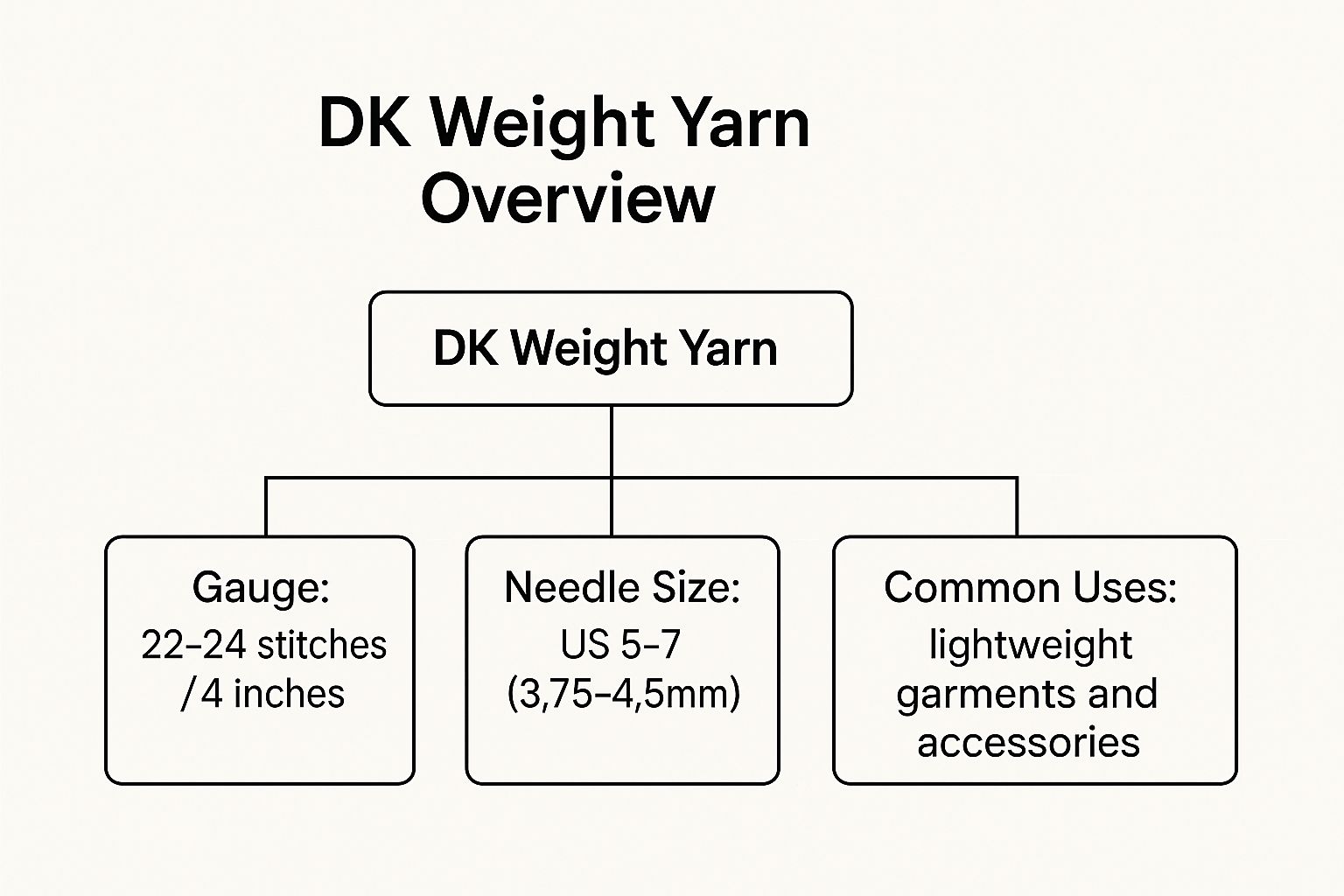
As you can see, there's a direct link between the yarn's weight, the tools you use, and the final fabric you create. Understanding this is the key to planning your projects effectively and bringing your vision to life.
To put DK weight into perspective, let's see how it stacks up against its neighbors in the yarn family.
Yarn Weight Comparison Chart
This table gives you a quick side-by-side look at the Standard Yarn Weight System, so you can easily see where DK fits in.
|
Category Number |
Yarn Weight Name |
Common Stitches (per 4 in / 10 cm) |
Recommended Needle/Hook Size |
|---|---|---|---|
|
#1 Super Fine |
Sock, Fingering |
27-32 stitches |
2.25 mm - 3.25 mm (US 1-3) / B-1 to E-4 Hook |
|
#2 Fine |
Sport, Baby |
23-26 stitches |
3.25 mm - 3.75 mm (US 3-5) / E-4 to 7 Hook |
|
#3 Light |
DK, Light Worsted |
21-24 stitches |
3.75 mm - 4.5 mm (US 5-7) / 7 to I-9 Hook |
|
#4 Medium |
Worsted, Aran |
16-20 stitches |
4.5 mm - 5.5 mm (US 7-9) / I-9 to K-10.5 Hook |
|
#5 Bulky |
Chunky, Craft |
12-15 stitches |
5.5 mm - 8 mm (US 9-11) / K-10.5 to M-13 Hook |
Think of this chart as your cheat sheet for yarn substitutions and project planning. Bookmark this page so you can come back to it whenever you need!
Getting Technical: What Is WPI?
Another term you’ll often hear is Wraps Per Inch (WPI). This is a wonderfully hands-on way to figure out a yarn's thickness. To find the WPI, you just wrap the yarn snugly around a ruler or even a pencil, without squashing the strands or letting them overlap, and count how many wraps fit neatly into one inch.
- DK weight yarn typically has a WPI of 11-14.
This measurement is a lifesaver if you've lost a yarn label or are working with a beautiful, unlabeled hand-spun skein from a fiber festival. It’s a practical skill that puts the power back in your hands, letting you identify any mystery yarn in your stash. Try it now with a yarn from your stash and see how easy it is!
The real magic of DK yarn is its incredible balance. It offers crisp, beautiful stitch definition for patterns like cables and lace, while also working up much faster than finer yarns. You get that satisfying feeling of progress without sacrificing detail.
This versatility has made DK weight a cornerstone of the crafting world for good reason. It’s a favorite for everything from baby blankets and lightweight sweaters to hats and shawls.
How to Choose the Right Fiber for Your Project
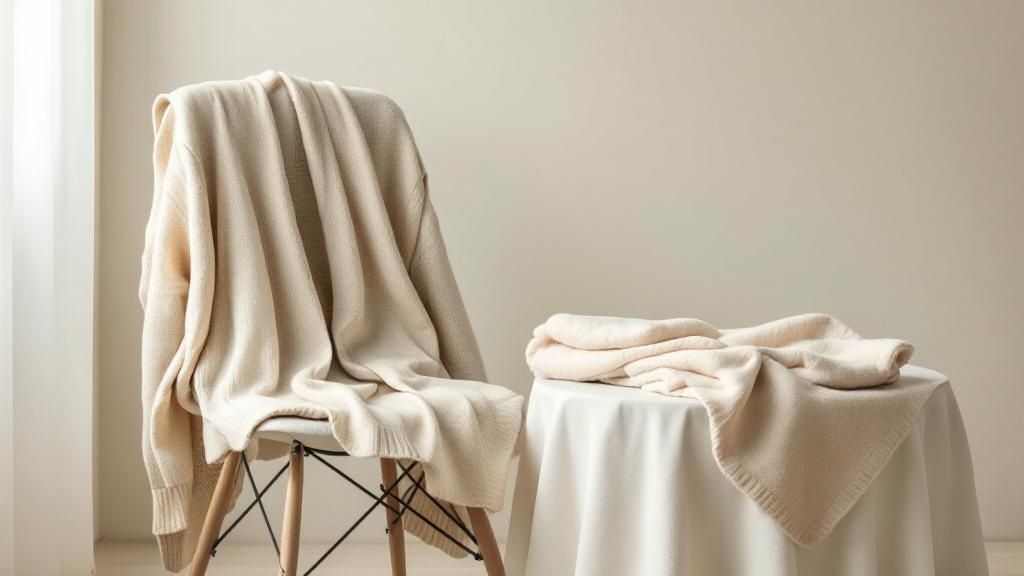
Once you've wrapped your head around its weight, the real character of a DK weight yarn shines through in its fiber. Think of the fiber as the yarn's DNA, it determines everything about how the final fabric will feel, hang, and hold up over time. Picking the right one is the first creative step toward making something you'll absolutely love.
This isn't about "good" versus "bad" fibers. It's about finding the perfect match for your vision. You wouldn't wear a heavy wool coat on a hot summer day, right? The same logic applies here. Let’s get to know the most common fibers you'll find, so you can choose like a pro.
Exploring Animal Fibers
When you think of cozy, you're probably thinking of animal fibers. They're loved for their warmth, natural stretch, and incredible softness, making them a top pick for garments and accessories you want to last for years.
Merino Wool: This isn't your grandma's scratchy wool. Merino is unbelievably soft and bouncy, making it perfect for anything that touches your skin, think sweaters, hats, and scarves. Its natural elasticity makes stitches pop, which is fantastic for showing off cables and textured patterns. Plus, it's a natural temperature regulator, so it keeps you warm without making you sweat.
Alpaca: If you're looking for a touch of luxury, alpaca is your answer. It has a silky feel and creates a fabric with a gorgeous drape and a subtle, fuzzy halo. It's actually warmer than sheep's wool and lanolin-free, making it a wonderful hypoallergenic choice. It’s ideal for elegant shawls or a super-soft baby blanket.
Blends: You'll often find DK yarns that mix fibers, like Merino and nylon. These blends give you the best of both worlds. You get the softness and warmth of the wool, but the nylon adds serious strength and durability. This makes them a workhorse for projects that see a lot of wear, like socks and kids' clothing. Wool is a major force in the textile industry; its worsted form alone was valued at USD 1.6 billion in 2024 and is projected to hit around USD 2.7 billion by 2034. That growth comes from a steady demand for natural, long-lasting fibers in everything we wear and use at home.
Getting to Know Plant Fibers
Plant-based fibers are the unsung heroes of spring and summer crafting. They’re known for being cool, breathable, and creating a fluid drape that’s totally different from the springiness of wool.
Cotton: A true classic. Cotton is strong, absorbent, and lets air flow freely, which is why it's the go-to for summer tops, market bags, and kitchen essentials like dishcloths. It creates wonderfully crisp stitches but has very little stretch, giving the finished fabric a beautiful, relaxed drape.
Linen and Bamboo: Just like cotton, these fibers are a dream to work with in warm weather. Linen is incredibly durable and just gets softer the more you wash it. Bamboo, on the other hand, has a silky feel and a beautiful sheen. Both are fantastic for lightweight garments that need an elegant, flowing silhouette.
Actionable Tip: Before starting, ask yourself: Am I making a cozy winter hat or a light summer shawl? The answer will immediately guide you to the right family of fibers. Thinking about the project's purpose is the first step to a successful outcome.
Making Your Final Decision
Feeling more confident? The next time you grab a skein of DK yarn, look past the pretty color. Flip it over, read the label, and think about the fiber's personality. Is it springy and warm like wool, or cool and drapey like cotton?
Matching the fiber to your project's purpose is a total game-changer. It's what takes your work from simply "handmade" to truly special. For a deeper dive, check out our guide on choosing the perfect yarn for your crochet project. You now have the know-how to make choices that will make your finished pieces shine.
Why Making a Gauge Swatch Is Your Secret Weapon
Let's talk about the one step that so many crafters skip, but which really separates the good projects from the great ones: the gauge swatch.
I get it. When you've got that gorgeous new yarn and an exciting pattern, the last thing you want to do is knit a tiny, boring square. But trust me, if you can start seeing this little step as an investment in your project, it's a total game-changer. It’s your secret weapon for making things that actually fit and look like you bought them in a high-end boutique.
Think of it this way: you wouldn't spend hours baking a cake without checking if your oven is at the right temperature, right? A gauge swatch is the same idea. It’s a quick test run that guarantees your beautiful finished piece is a complete success.
Honestly, skipping the swatch is the number one reason a sweater ends up three sizes too big or a hat could fit a toddler instead of you. Taking just 30 minutes to check your gauge is what stands between a project you'll wear with pride and one that gets sadly stuffed in the back of a closet. You owe it to your hard work to get it right!
So, What Exactly Is Gauge?
In the simplest terms, gauge is just a measurement. It tells you how many stitches and rows you're making within a specific area, usually a 4x4 inch (or 10x10 cm) square.
Gauge is like your personal crafting signature. It’s the result of three things working together: the yarn you chose, the needles or hook you're using, and your own natural tension.
Most pattern designers will recommend a specific gauge (except when sizing is not very important, like in projects for crochet dolls or other amigurumi toys, like the ones at Crochetree). Their instructions and final measurements are all based on that magic number. If you can match their gauge, your project will come out the size they designed it to be. It’s that critical.
A gauge swatch isn't about blindly following rules. It’s about gathering intel. It shows you exactly how your yarn, your tools, and your hands are working together, setting you up for a flawless finish.
This is why swatching is so important. Even if you use the exact yarn and needle size the pattern calls for, your tension might be naturally tighter or looser than the designer's. Your swatch is the only way to find out before you're 10 hours into a project.
How to Make and Measure Your Swatch
Ready to make this your new non-negotiable habit? It's way easier than it sounds. Following these steps will give you the confidence that you're starting off on the right foot.
1. Go Bigger Than You Think: Don't just cast on the exact number of stitches the gauge calls for. To get a truly accurate measurement, you need a swatch that's at least 6x6 inches. This gives you a stable area in the middle to measure, away from any curled-up edges.
2. Use the Right Stitch: Check the pattern's gauge section and use the stitch it specifies (it’s often stockinette stitch for knitting or single crochet for crochet). Just keep working until your swatch is a decent-sized square.
3. Wash and Block It!: This is the pro move that many people skip. Yarn, especially natural fibers, can bloom, shrink, or stretch after its first wash. Treat your swatch the exact same way you plan to care for the finished garment, then let it dry completely.
4. Time to Measure: Lay your dry swatch on a flat surface. Using a good ruler or a gauge tool, count how many stitches and rows fit inside the central 4-inch area.
Now, compare your numbers to the pattern's gauge. If you have more stitches than the pattern calls for, your tension is tight. Try going up a needle or hook size. If you have fewer stitches, your tension is loose, so try a smaller size. An essential part of this process is selecting the ideal needle for your project, as the material and type can also influence your fabric. Making this little adjustment is what guarantees a perfect result.
Finding Perfect Patterns for DK Weight Yarn
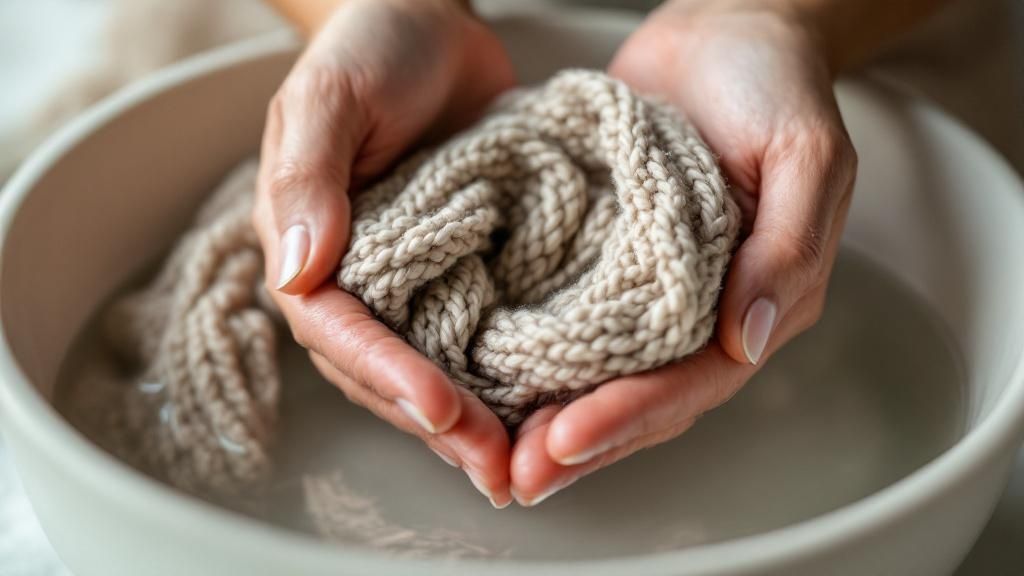
Okay, you've mastered the basics of dk weight yarn. Now for the best part: picking a project and turning that lovely skein into something you can actually wear or use. This is where your creativity truly gets to shine!
Think of DK yarn as the ultimate all-rounder in your stash. It’s just right for a massive range of patterns. Whether you're dreaming of a cozy sweater, a delicate shawl, or a quick weekend accessory, there’s a DK pattern out there with your name on it.
Let's dive into a few project ideas where this amazing yarn truly shines.
Elegant Sweaters and Cardigans
If you’ve ever wanted to create a sweater that you’ll actually wear all the time, DK yarn is your best friend. It creates garments with the perfect amount of warmth, but without the bulk you'd get from a heavier worsted or aran weight. The result is a beautiful, flattering drape that layers effortlessly.
What's more, DK yarn has fantastic stitch definition. This means any special textures you create, like cables, lace, or intricate colorwork, will really stand out. Every stitch is crisp and clear, showing off all your hard work.
Look for patterns like:
Classic Cardigans: Think open-front styles that are perfect for those in-between seasons.
Lightweight Pullovers: The ideal layer for a crisp fall day or a cool spring morning.
Cabled Sweaters: The balanced thickness of DK yarn makes those beautiful cable twists pop.
A great garment is all about the right yarn for the right design. DK hits that sweet spot, giving you enough structure for details while still being light enough for comfortable, everyday wear.
Lightweight Shawls and Scarves
Accessories are another area where DK yarn is a total star. It has enough substance to create a truly cozy scarf or shawl without feeling like you’re wrapped in a heavy blanket. A DK shawl provides genuine warmth on a chilly evening, yet it's fine enough to be styled without overwhelming your outfit.
This makes it a fantastic choice for multi-season projects. You could create a classic wool scarf for winter or switch to a cotton-blend DK for a breezy, lacy shawl to wear on a summer night. It’s also a great place for beginners to start; for a simple first project, check out this guide on how to knit a cozy scarf.
Adorable Baby Items and Blankets
When knitting for little ones, DK yarn is what so many crafters reach for time and time again. It’s wonderfully soft and incredibly practical. A baby blanket made with DK yarn is cozy and warm, but not so thick that it feels heavy or bulky.
The same logic applies to tiny sweaters, hats, and booties. The yarn is fine enough to look delicate and sweet, but it's also durable enough to handle plenty of cuddles and machine washes. Just be sure to choose a machine-washable fiber, like a superwash merino or a soft cotton blend, to make life easier for new parents.
Consider making:
1. Heirloom Baby Blankets: A perfect canvas for showing off beautiful stitch patterns.
2. Sweet Cardigans and Hats: DK is the ideal weight for tiny garments that fit comfortably.
3. Soft Toys and Amigurumi: This yarn has just enough structure to help stuffed toys hold their shape, although you should use a thinner yarn (like fingering weight mercerized cotton) if you wish to have a more delicate toy or doll.
At the end of the day, picking a pattern is a personal journey. Let your imagination run wild and don't be afraid to try something new! The perfect project is out there, and with DK yarn, you have a reliable partner to help bring your vision to life.
Caring for Your Handcrafted Treasures
You’ve poured so much of yourself into your project, hours of focus, skill, and creativity. Now you’re holding a beautiful, finished piece. The final, crucial step is knowing how to care for it so it lasts a lifetime.
Think of it as the last act of creation. Proper care isn't a chore; it’s what keeps your work looking as stunning as the day you cast off. Just like you wouldn't water a cactus the same way you water a fern, different yarn fibers have unique needs. What’s right for a sturdy cotton dishcloth could be a disaster for a delicate alpaca shawl.
The First Step: Always Read the Label
Before you do anything else, go back to your yarn label. Seriously. That little piece of paper is your best friend, packed with specific instructions straight from the manufacturer on how to wash, dry, and iron that particular fiber.
This one simple habit is the easiest way to prevent a beloved sweater from accidentally shrinking to a doll’s size. It’s the difference between a project that lasts a lifetime and one that’s ruined in a single wash.
For instance, many animal fibers like non-superwash wools need a gentle hand wash in cool water with a no-rinse wool wash. On the other hand, tough plant-based fibers like cotton or many acrylic blends can often handle a gentle machine cycle just fine. To dive deeper, check out our ultimate guide to caring for your handmade crochet treasures.
The Magic of Blocking
If there’s one secret that takes a finished project from looking “homemade” to “handcrafted,” it’s blocking. This is the simple process of wetting or steaming your piece and pinning it into its final, perfect shape to dry.
Don't skip this step! The results are truly transformative:
It evens out your stitches, making them look incredibly neat and professional.
It opens up lace patterns, letting all that intricate work breathe and shine.
It perfects the drape so the fabric hangs exactly how you envisioned.
It locks in the correct size, guaranteeing your garment fits just right.
Blocking isn't just an optional finishing touch. It's the step that allows the yarn to relax and the stitches to settle, helping your project live up to its full, beautiful potential.
This is especially true for natural fibers. Wool, which is about seven times stronger than cotton, responds beautifully to blocking. The global love for these durable, natural textiles is clear; the wool yarn market, which includes DK weight, is projected to grow from around USD 5.76 billion in 2024 to about USD 8.05 billion by 2034. You can read more about the growth of the wool yarn market and see why caring for these fibers properly is so important. It's about preserving a truly valuable material.
Your DK Weight Yarn Questions Answered
As you dive deeper into the world of DK weight yarn, you're bound to have some questions. That's a great sign! It means you're really starting to think like a crafter and getting to know your materials inside and out. We've gathered a few of the most common questions to give you clear, straightforward answers.
Think of this as your go-to guide for those little "aha!" moments. Let's get these questions sorted so you can get back to what you love, making beautiful things.
Can I Substitute DK for Worsted Weight Yarn?
This is probably the number one question we hear, and the short answer is: proceed with caution. Swapping a #3 light yarn (DK) for a #4 medium yarn (worsted) is a significant change. Because DK is thinner, the fabric you create will be lighter and have a lot more drape.
You could try to hit the pattern's gauge by going up several needle sizes, but that would result in a very open, almost holey fabric. This might be a cool effect for a breezy summer shawl, but for a structured sweater, it would likely sag and lose its shape entirely.
It’s almost always better to find a pattern written specifically for DK weight yarn. This is the surest way to guarantee your finished piece will look, feel, and fit exactly as the designer planned.
What Does "Double Knitting" Actually Mean?
The name "Double Knitting" is a bit of a historical leftover, and it can be confusing. It doesn't mean the yarn is only for the technique of double knitting.
The name comes from a time when this yarn was roughly twice the thickness of the most common yarn available, which we'd now call fingering or laceweight. Today, it’s simply the official name for the versatile #3 yarn weight category. So go ahead and use DK yarn for any knitting or crochet project that calls for it!
How Much Yarn Is in a Skein of DK?
Yardage can definitely shift depending on the fiber and the brand, but there’s a reliable range to keep in mind. A standard 100-gram (3.5-ounce) skein of wool DK yarn will typically give you between 220 and 270 yards (or about 200 to 250 meters).
But remember, this isn't a hard and fast rule. A dense fiber like cotton will have less yardage per 100 grams than a light, airy wool or alpaca. The golden rule is to always check the yarn label for the exact yardage before you buy. It’s the only way to avoid that dreaded game of yarn chicken.
Is DK Weight Yarn a Good Choice for Beginners?
Absolutely! We wholeheartedly recommend DK yarn to new crafters. It really is the perfect middle ground for learning and building your skills with confidence.
Here’s why it’s so beginner-friendly:
Easy to See: The yarn is thick enough to make your stitches clear and distinct. This is a huge help when you're learning the ropes and trying to fix mistakes.
Works Up Quickly: It builds fabric much faster than finer yarns, so you get that rewarding feeling of progress that keeps you motivated.
Comfortable to Hold: It's not so chunky that it feels clumsy on the needles or hook, making for a much smoother crafting experience.
All in all, it’s a wonderfully encouraging yarn for tackling your first scarf, hat, or baby blanket. You can do it!
Ready to cast on? Explore the beautiful patterns and high-quality yarns at Crochetree and find everything you need to bring your next idea to life. Discover your next project on Crochetree today!