

The Beauty of Beginning Small
There’s something special about your very first crochet project. It’s not about perfection or symmetry, it’s about possibility.
The first chain you make may twist, your first row might curl, and your stitches might dance out of line. But that’s okay. Every beginner starts with curiosity in their hands and a bit of hope wrapped around a hook.
At Crochetree, we always say: you don’t need to be crafty, just willing to begin.
The right project will meet you exactly where you are and help you find your rhythm, one stitch at a time.
Why Start with Simple Projects
Starting small builds momentum. Finishing something, anything, gives you that burst of confidence that says, “I can do this.”
Simple projects help you:
-
🧶 Learn the basic stitches (chain, single crochet, double crochet)
-
✋ Develop muscle memory and consistent tension
-
💡 Practice pattern reading without feeling overwhelmed
-
🎁 Create something you can actually use or gift
Crochet is an act of mindfulness. When you start small, you give your mind and hands time to sync. A quiet rhythm that makes you feel calm, capable, and creative.
5 Easy Crochet Projects for Beginners
|
Project |
Skills You’ll Learn |
Time Estimate |
Why It’s Perfect |
|
1. Crochet Coaster |
Chain, single crochet |
1 hour |
Flat, quick, and forgiving — practice even tension |
|
2. Simple Scarf |
Turning rows, half-double crochet |
2–3 hours |
Teaches edges and rhythm, great for daily use |
|
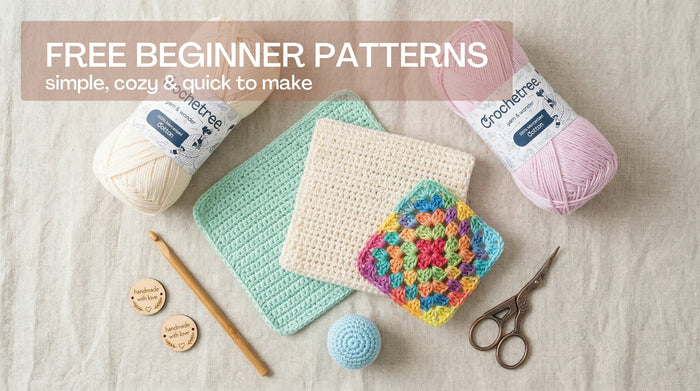
3. Granny Square |
Double crochet clusters, joining |
2 hours |
Fun modular learning — build a blanket later |
|
4. Amigurumi Ball |
Magic ring, increase/decrease |
3–4 hours |
Introduces shaping — the foundation of toy making |
|
5. Mini Crochet Doll |
Combining parts, assembly |
5–6 hours |
A joyful first step toward character creation |
💛 Crochetree Note: The “mini doll” often becomes the beginner’s first emotional project — you finish it, hold it, and realize you’ve just created something from a ball of yarn and patience.
How to Choose Your First Project
When picking your first crochet project, follow the “3 C’s”:
|
C |
What It Means |
Example |
|
Comfortable |
Uses stitches you already know |
Simple coaster |
|
Compact |
Small enough to finish in a day |
Hair scrunchie or granny square |
|
Cheerful |
Inspires you to keep going |
Colorful mug cozy or plush toy |
If a pattern looks too long or confusing, it’s okay to skip it for now. Your first goal isn’t mastery, it’s momentum.
Suggested Yarn & Hook Combinations
|
Project Type |
Yarn Weight |
Hook Size |
Tip |
|
Coasters / Scarves |
Worsted (4) |
5 mm |
Soft texture and clear stitches |
|
Amigurumi Dolls |
Fingering (1) |
2.25–3.25 mm |
Tight stitches to hide stuffing |
|
Granny Squares |
DK (3) or Worsted (4) |
4–4.5 mm |
Moderate tension for flat joins |
✨ Use smooth, light-colored yarn at first. It’s easier to see where your hook should go and easier to spot your progress.
Note: You can also use worsted weight yarn to practice amigurumi dolls, as you are learning, but they will be neater once you start using fingering weight yarn.
Practice Ideas for Busy Beginners
Even 15 minutes a day adds up. Try this gentle routine:
-
Day 1: Learn to chain and single crochet.
-
Day 2: Practice rows (count stitches as you go).
-
Day 3: Crochet a coaster or mini square.
-
Day 4: Try increasing and decreasing (start an amigurumi ball).
-
Day 5: Assemble or weave in ends. Celebrate your first finish!
Crochet doesn’t demand perfection; it rewards consistency. Small, daily stitches turn into surprising progress.
How Crochet Builds Calm
Many beginners find that crochet quickly becomes a form of mindfulness. The repeating motions help regulate breathing, focus attention, and ease the noise of busy days.
|
Feeling |
Crochet’s Effect |
|
Stress or anxiety |
Repetition and rhythm calm the nervous system |
|
Overthinking |
Counting stitches centers your mind |
|
Low mood |
Tangible progress creates quiet satisfaction |
🌷 “When you make with your hands, your mind softens.” – Crochetree mantra
Troubleshooting Common Beginner Worries
|
Concern |
What’s Happening |
What to Remember |
|
“My edges look uneven.” |
Missing or adding stitches per row |
Count every few rows, you’ll get steadier fast. |
|
“My project curls.” |
Stitches too tight |
Loosen grip slightly or go up one hook size. |
|
“I can’t read patterns yet.” |
Too many abbreviations |
Watch a video tutorial side-by-side. You’ll learn both visually and by repetition. |
|
“It’s taking too long.” |
Natural beginner pace |
Even 10 minutes of crochet trains your hands. You’ll speed up soon. |
When You’re Ready for More
Once you’ve made your first few pieces, you’ll naturally crave a bit more challenge. Try:
-
Combining stitches: add bobbles, shells, or clusters.
-
Joining motifs: connect granny squares for a scarf.
-
Small amigurumi projects: simple animals or base dolls.
That’s how many Crochetree students begin their journey. One small project becomes a skill, and one skill becomes confidence.
A Gentle Closing Thought
Learning to crochet is really about learning to trust yourself. You’ll drop loops, unravel rows, sigh, and then try again. And that quiet persistence is what turns yarn into art.
So don’t wait for the perfect project. Pick one that excites you just enough to begin.
Because somewhere between your first chain and your first finished piece, something lovely happens: you realize you’ve created calm, joy, and beauty with your own two hands.
Explore the Crochetree Crochet Basics Course. A free, gentle companion for your first stitches, complete with videos, close-ups, and warm encouragement every step of the way.
![The Ultimate Beginner's Guide to Crochet [2026]](http://crochetree.com/cdn/shop/articles/feat-ultimate-beginners-guide-to-crochet_eae81cec-84d0-455d-b190-08cd22d826c4.jpg?v=1777713815&width=700)
