

Diving into crochet is an exciting first step into a world of creativity, calm, and connection. Before you make your first stitch, you’ll need to pick your yarn. The simplest choice for a beginner is a smooth, medium-weight (worsted or category 4) yarn in a light color. This combination is the key to a frustration-free start, making your stitches easy to see, count, and master.
Finding the Perfect Yarn for Your First Project
Choosing your first skein of yarn is an act of creative joy, not a test! Think of it like picking out fresh ingredients for a favorite recipe. The right materials help everything flow better, making your finished creation that much more rewarding. Our goal here is to help you build confidence from the very first loop.
What Makes a Yarn Beginner-Friendly?
When you’re just starting, you want a yarn that’s on your team. A forgiving yarn lets you focus on learning the basic stitches without getting tangled up in frustration. Once you get the hang of it, you can branch out and explore all the fun, fuzzy, and funky yarns out there. If you're looking for a complete A-to-Z guide, our post on how to start crocheting is the perfect place to begin.
A few key things make certain yarns a dream for newcomers:
Smooth Texture: Steer clear of fluffy, bumpy, or novelty yarns for now. They can snag your hook and hide your stitches. A smooth yarn lets your hook glide like a dream, helping you find a relaxing rhythm.
Light Color: This is one of the most helpful tips for any new crocheter! Trying to learn on dark yarns like navy or black can be a real challenge because you can't see your stitches. A light, solid color makes every loop and knot pop, so you can easily see what you're doing.
Medium Weight: Worsted weight yarn (often labeled as category 4) is the "just right" of the yarn world. It’s not too thin and fiddly, but not so thick that it's clumsy. It works up quickly, which is super motivating when you're eager to see progress!
The most important thing a beginner yarn can offer is clarity. You need to see exactly where your hook goes and how the stitches are formed. A light-colored, worsted-weight yarn does just that, turning a moment of potential confusion into an "aha!" moment of learning.
To give you a head start, here's a quick guide to common yarn fibers. Think of this as a quick-reference list to help you match your yarn to your project idea.
Quick Guide to Beginner-Friendly Yarn Fibers
- Mercerized cotton (fingering): Smooth, durable, crisp stitch definition; holds shape, ideal for amigurumi/detail work, like what we create at Crochetree.
- Cotton blends (DK/worsted): Breathable, easy care, good for summer garments, dishcloths, homeware.
- Acrylic (mostly worsted): Budget-friendly, machine-washable, common for blankets and everyday projects (note potential pilling/static).
- Wool/wool blends: Warm, elastic, great stitch recovery, ideal for hats, sweaters; check care/sensitivity.
- Chenille/faux-fur: Plush texture for blankets/pillows; not recommended for beginner amigurumi (low stitch visibility).
Each fiber has its own personality, and knowing the basics will help you pick a winner for whatever you decide to make first.
Why Yarn Weight Matters for Your First Project
Before you get lost in the wonderful world of different fibers, let's talk about something even more fundamental: yarn weight. This is just a term for how thick the yarn strand is, and picking the right one can be the difference between a joyful first project and a frustrating knot of confusion. Getting this right is a huge first step in building your creative confidence.
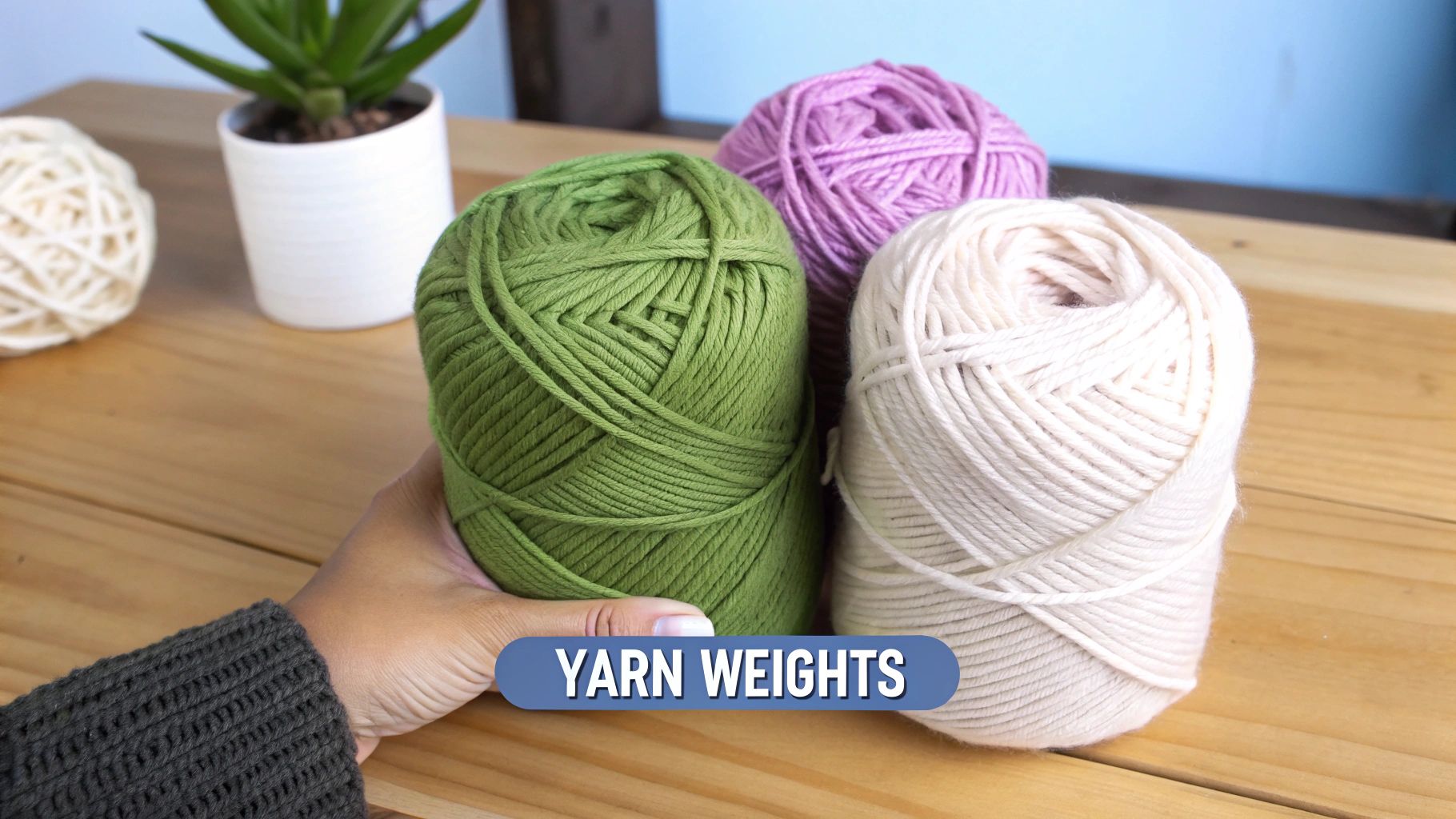
Think of it like learning to write. You wouldn't start with a giant marker or a super-fine technical pen, right? Yarn works the same way; you need a tool that feels just right in your hands from the get-go, helping you find your creative flow.
For anyone just starting out, the sweet spot is worsted weight yarn. You'll often see it labeled as category 4, “medium,” or sometimes “aran.” This thickness is the gold standard for a reason: it’s substantial enough to feel comfortable in your hands and sturdy enough to handle being worked and reworked as you learn.
Seeing Your Stitches Clearly
The biggest win with worsted weight yarn is visibility. Its balanced thickness creates clean, well-defined stitches that you can actually see and count. That clarity is absolutely crucial when you’re learning the foundational movements of crochet.
With worsted weight yarn, you can easily:
Identify individual stitches: You’ll be able to see exactly where your hook needs to go for the next stitch.
Spot mistakes quickly: If a stitch looks a little wonky, you’ll notice it right away. This makes it so much easier to fix before it becomes a bigger problem.
Maintain consistent tension: The yarn’s structure gives you great tactile feedback, guiding your hands as you learn to control how tightly or loosely you pull your loops.
Picking the right yarn weight isn't about following arbitrary rules; it's about setting yourself up for success. Worsted weight yarn acts like a friendly guide, clearly showing you the path of each stitch so you can focus on the mindful rhythm of creating.
A Perfect Partner for Your First Hook
Yarn weight and hook size go hand-in-hand. Worsted weight yarn is the perfect match for hook sizes like 5mm (H-8) or 5.5mm (I-9), which just so happen to be the most comfortable sizes for beginners to hold and maneuver. This ideal pairing helps you create a fabric that isn't too tight or too loose.
This balanced relationship is why worsted weight is so consistently recommended for new crocheters. It’s thick enough to let you see your progress, which is one of the best motivators there is. Seeing your creation take shape quickly is a powerful encouragement to keep going and embrace the joy of making something with your own two hands.
To see how worsted weight fits into the bigger picture, you can explore our complete crochet yarn weight chart, which breaks down every category.
Comparing Beginner-Friendly Yarn Fibers
Okay, you've got a handle on yarn weight. Now it's time for the fun part: picking the fiber! This is the heart and soul of your yarn, and it’s where your project really starts to show its personality. For newcomers, the most common options are acrylic, cotton, and wool.
Each one feels different, behaves differently on the hook, and has its own special quirks. Choosing isn't about finding the one "best" fiber. It's about matching the right yarn to your first project and what feels good in your hands. Let's break them down so you can pick the perfect partner for your first creative adventure.
Detailed Yarn Fiber Comparison for Beginners
To help you decide, let's look at how acrylic, cotton, and wool stack up in real-world crafting. This table focuses on what matters most when you're just starting, from how easy it is to fix mistakes to how your finished project will look and feel.
|
Criteria |
Acrylic |
Cotton |
Wool |
|---|---|---|---|
|
Feel on the Hook |
Glides smoothly, very little friction. |
Sturdy and crisp, less give. |
Bouncy and elastic, feels alive. |
|
Stitch Visibility |
Good, especially in light colors. |
Excellent, stitches are very defined. |
Good, but can be slightly fuzzy. |
|
Forgiveness |
Very high; easy to pull out stitches. |
Lower; can be tricky to "frog" (undo). |
High; its elasticity helps hide mistakes. |
|
Common Projects |
Blankets, scarves, practice pieces. |
Dishcloths, market bags, amigurumi. |
Hats, cowls, warm winter items. |
|
Care Needs |
Machine washable and dryable. |
Machine washable, often air-dries. |
Often requires handwashing. |
Understanding these differences helps you know what to expect. For instance, if you know you’ll be making and fixing mistakes (which is a totally normal and essential part of learning!), grabbing a skein of acrylic or wool is a wonderfully forgiving choice.
Acrylic: A Budget-Friendly Workhorse
Acrylic yarn is a synthetic fiber, and it’s often the very first yarn a new crocheter picks up. There's a good reason for its popularity: it's one of the most affordable and widely available options out there. You can find it in a massive rainbow of colors at pretty much any craft store.
Its smooth texture is a huge win for beginners. The hook glides right through the loops with very little snagging, helping you find a steady, comfortable rhythm. And because it's so tough, you can pull out your stitches (a process we affectionately call "frogging") again and again without worrying about ruining the yarn.
Actionable Tip: Grab an inexpensive skein of acrylic yarn just for practicing new stitches. It takes all the pressure off "messing up" precious material and lets you relax and focus on getting the motions right.
This durability makes it perfect for big projects like blankets or for crocheting endless practice squares until you feel confident. Just be aware that some acrylics can feel a bit stiff or squeaky, and the cheaper stuff might start to pill (form little fuzzballs) after a while.
Cotton: Crisp, Strong, and Defined
Cotton is a natural plant fiber known for its strength and amazing stitch definition. If you want every single stitch to pop and look incredibly neat, cotton is your best friend. It creates a crisp, clean fabric that's ideal for things that need to hold their shape.
Unlike wool or acrylic, cotton has almost zero stretch. This is both a pro and a con. The lack of elasticity is what gives it that beautiful, clear stitch definition, making it perfect for dishcloths, coasters, and summer tops. For detailed work like amigurumi (like our Crochetree dolls), a smooth, tightly-spun mercerized cotton is fantastic because it helps the little creatures keep their shape perfectly.
That said, the lack of give can be a little tough on your hands as you're learning to manage your tension. It demands a more consistent grip to keep your stitches even. It’s also less forgiving if you make a mistake, as the fibers tend to lock together, making it harder to pull out.
Wool: Warm, Forgiving, and Full of Life
Wool, a natural fiber from sheep, is wonderfully warm, breathable, and has a surprising amount of elasticity. This natural springiness is what makes it so lovely to work with. It has a gentle give that is easy on your hands and can actually help hide minor inconsistencies in your tension.
This elasticity makes wool an amazing choice for wearable items like hats, scarves, and sweaters. The fabric it creates is cozy and has a lovely "stitch memory," which means it tends to bounce right back into shape.
A couple of things to keep in mind when choosing wool:
Care Instructions: A lot of wool yarns need to be hand-washed to prevent felting (shrinking and matting). Always, always check the yarn label! A "superwash" wool has been treated so it can go in the washing machine, making it a much more practical option for everyday items.
Skin Sensitivity: Some people find certain wools itchy. If you have sensitive skin, look for merino wool, which is famous for its incredible softness, or try a wool blend.
Ultimately, the best yarn for your first project is whatever you enjoy working with for the item you have in mind. Don't be shy about going to the store and just picking up a skein of each. Feeling the material is the first step toward a happy crafting experience.
Acrylic Yarn: A Closer Look for Beginners
Let's dive into a fiber that’s practically synonymous with starting crochet: acrylic. If you've ever set foot in a craft store, you’ve seen the rainbow aisles packed with it. This synthetic fiber has earned its spot as the go-to for newcomers, and for some very good reasons.
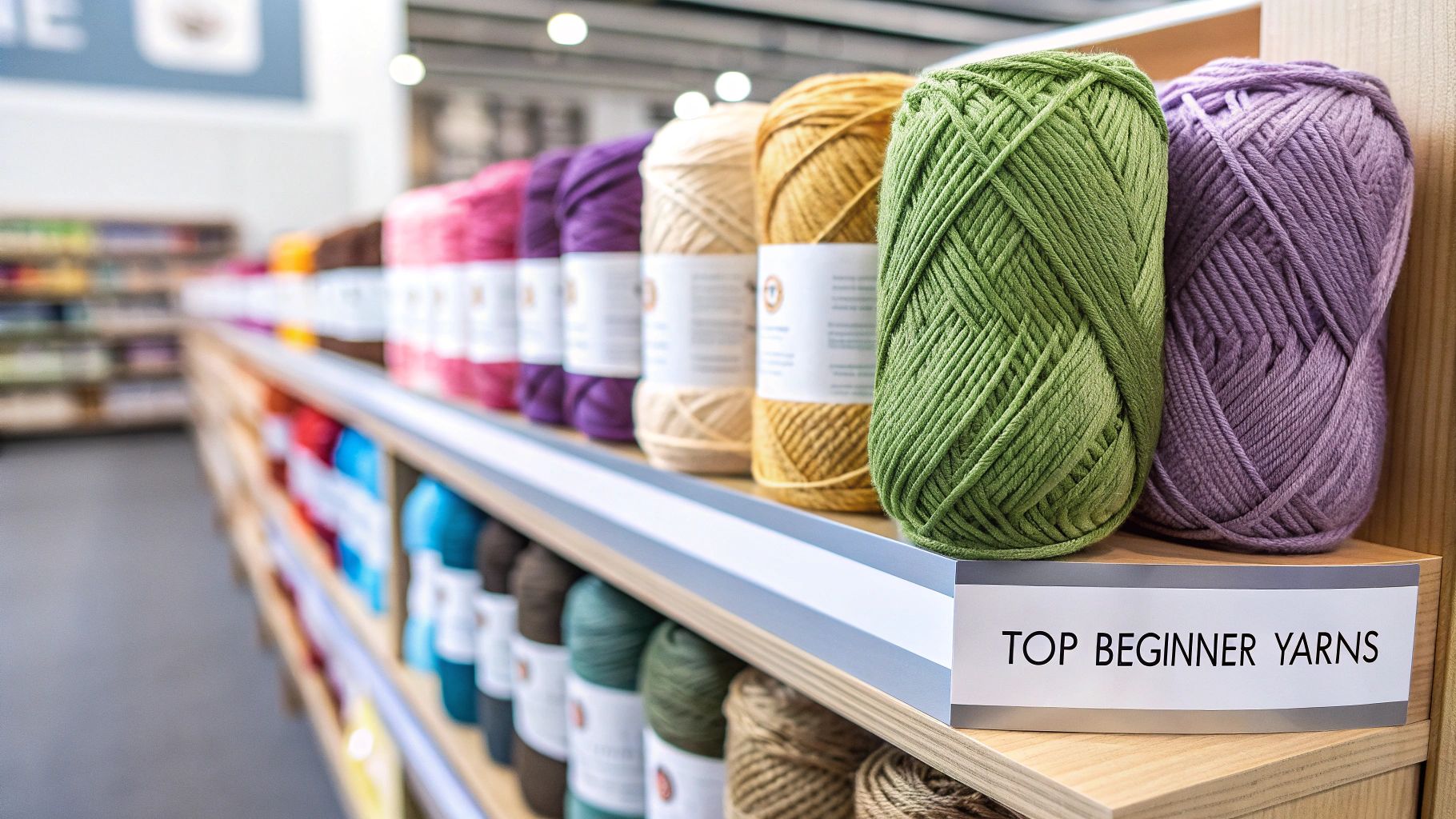
Its main draw is simple: accessibility. Acrylic yarn is incredibly affordable and you can find it just about anywhere, which takes the pressure off when you're just finding your footing. You can buy a few skeins to practice with without making a big investment, letting you focus on the simple joy of learning.
Beyond the price tag, acrylic is just plain practical. Think of it as the workhorse of the yarn world, built to handle the realities of everyday life and learning.
The Practical Perks of Acrylic
How a yarn feels on the hook is a huge deal for beginners, and acrylic really shines here. Its smooth texture lets your crochet hook glide through stitches with ease, helping you find a comfortable, steady rhythm. That slickness is a lifesaver when you're still building muscle memory for the basic movements.
Ease of care is another massive win. Most acrylic yarns are machine washable and dryable, making them perfect for projects that will see a lot of action, like:
- Cozy afghans and blankets for the living room sofa.
- Durable scarves and hats you can wear every day.
- Fun, playful items for children (always with adult supervision, of course).
This durability extends to the learning process itself. Acrylic is remarkably forgiving. You can pull out your stitches, a process we lovingly call "frogging", again and again without the yarn fraying or falling apart. That resilience gives you the freedom to practice without fear, turning mistakes into learning moments instead of frustrations.
Crocheting with acrylic is like having a patient teacher. It doesn't judge your crooked stitches and lets you try again as many times as you need. It’s all about embracing the journey, not perfection, and building your confidence one stitch at a time.
A Few Things to Keep in Mind
While acrylic is a fantastic starting point, it’s good to know the full story. Because it's a synthetic fiber, it doesn't "breathe" as well as natural fibers like cotton or wool. This means it might not be your first choice for a breezy summer garment.
You might also find that some cheaper acrylics can feel a bit stiff or even squeak on the hook as you work. Another thing to watch for is pilling: over time and with lots of washing, acrylic projects can develop little fuzzy balls on the surface. It's completely normal, but something to be aware of.
Even with these minor points, acrylic yarn remains a wonderful, supportive choice for anyone starting their crochet adventure. It offers a low-stakes, high-reward way to fall in love with the craft and discover the simple joy of making something with your own two hands.
Working with Natural Fibers Like Cotton and Wool
While acrylic is a fantastic and forgiving place to start, you’ll eventually want to explore the beautiful world of natural fibers. Yarns like cotton and wool bring their own unique textures and qualities to the table, opening up a ton of new possibilities for your projects.
Let's break down the two most common natural fibers so you can choose the right one with confidence.
The Crisp, Clean World of Cotton
Cotton yarn is a plant-based fiber known for its strength, breathability, and incredible stitch definition. If you want every single one of your stitches to pop and look super sharp, cotton is your best friend. Its smooth strands create a sturdy fabric that actually gets softer every time you wash it.
This makes it perfect for projects that will see a lot of action, like:
Sturdy Market Bags: Cotton’s strength can handle the weight of groceries or books without stretching out of shape.
Absorbent Dishcloths and Washcloths: It’s a natural choice for hardworking kitchen and home items.
Breathable Summer Garments: The airy feel makes it ideal for lightweight tops and shawls in warmer weather.
Amigurumi Dolls: Mercerized cotton will give you the neat and polished finish to any doll you create.
One of cotton's defining traits is its complete lack of elasticity. This is a huge win for projects that need to hold their shape, like dolls, animals, coasters or placemats. For a beginner, this rigid structure can help you create a very neat and tidy-looking fabric right from the get-go.
The beauty of cotton is in its honesty. It shows off every stitch exactly as you made it. This clear feedback is a fantastic way to learn, helping you see your progress and perfect your technique with each loop.
However, that lack of stretch can also be a challenge. It demands a more consistent hand to keep your tension even, since there’s no "give" to hide slight variations. It can be a bit tougher on the hands than more forgiving fibers, so don't forget to take breaks and stretch your fingers.
The Warm, Forgiving Embrace of Wool
Now, let’s talk about wool. As a natural animal fiber, it's famous for its warmth, softness, and wonderful elasticity. This natural "springiness" is what makes wool an absolute dream to work with. It has a gentle give that is incredibly forgiving on your hands and helps smooth over any minor tension wobbles, leaving you with a beautifully even fabric.
That bounce makes wool the go-to for cozy wearables that need to stretch and snap back into shape. Think of warm hats that fit snugly on your head, comfy sweaters, and soft scarves you can wrap up in. While cotton is versatile enough for sturdy items, wool truly shines when it comes to warmth and flexibility.
When you're picking out wool, there are two key things to keep in mind:
Skin Sensitivity: Some people find certain types of wool itchy. If you have sensitive skin (or are making a gift for someone who does), look for Merino wool. It's known for being exceptionally soft and gentle.
Care Instructions: Always, always check the yarn label. Traditional wool will shrink and felt into a solid mass if you wash it improperly. For easy-care projects, grab a superwash wool, which has been treated so you can toss it in the washing machine.
Ultimately, choosing between cotton and wool comes down to what your project needs. Do you want something sturdy and defined? Or something warm and stretchy? Once you understand their personalities, you’ll be able to pick the perfect natural fiber for whatever you’re making.
Choosing Your Yarn and Embracing the Journey
You've explored the world of yarn weights, compared different fibers, and now you’re standing at the exciting threshold of making your first choice. Finding the best yarn for crochet beginners isn’t about discovering one single, perfect skein. It's about finding the right material for you and the wonderful first project you're about to create. Trust your instincts and let your curiosity lead the way.
The most important thing is that your first yarn makes learning feel joyful, not frustrating. Just remember those simple keys to success we talked about: a smooth texture, a light color, and a medium (worsted) weight. That combination is your recipe for seeing every stitch clearly and building confidence with each loop.
Your First Actionable Step
Before you head to the checkout, here’s one last piece of advice. If you can, go to a local craft store. Don't even look at the labels or the project suggestions just yet. Just walk down the yarn aisle and feel the different textures.
- Which one feels soft and inviting in your hands?
- What colors make you feel happy and inspired?
- Does the bouncy feel of wool excite you, or does the sturdy nature of cotton feel more grounded and reliable?
Connecting with your materials is the very first step in mindful crafting. The yarn you’re most drawn to is often the one you’ll be most excited to work with, turning practice into a calming and rewarding experience.
Let this be a moment of connection, not a test. The goal is simply to feel excited to begin. You are at the start of a beautiful journey, one that offers calm, joy, and a tangible connection to your own creativity. Embrace the learning process, celebrate your progress, and welcome to the wonderful world of crochet.
Common Questions About Choosing Crochet Yarn
Stepping into the yarn aisle for the first time can feel a little overwhelming. Don’t worry, every single crocheter has stood right where you are! Let's tackle some of the most common questions so you can pick your first skeins with confidence.
What Yarn Should I Avoid as a Beginner?
As tempting as those super fluffy skeins look, it's best to steer clear of highly textured or novelty yarns when you're just starting. This means things like chenille, faux fur, or eyelash yarn. While they feel amazing, their texture makes it almost impossible to see your individual stitches, and seeing your stitches is critical for learning.
In the same way, very dark yarns like black, navy, or deep brown can hide the details of your work, making it hard to see where to place your hook. Sticking with smooth, light-colored, worsted-weight yarns will make your first projects much easier and way more fun.
How Do I Know Which Crochet Hook to Use?
This is a great question, and the answer is usually hiding in plain sight! Almost every skein of yarn has a label with a little icon or text recommending a specific crochet hook size. It takes all the guesswork out of the equation.
For the worsted-weight (category 4) yarn we recommend for beginners, this is usually a 5mm (H-8) or a 5.5mm (I-9) hook. Starting with the suggested size is always the best move, as it's designed to create a well-balanced fabric that isn't too tight or too loose.
Actionable Tip: Always start with the hook size suggested on the yarn label. This simple step ensures your project has the right drape and feel, letting you focus on mastering the stitches instead of fighting your materials.
Is It Better to Buy Expensive or Cheap Yarn When Starting?
There’s absolutely no need to splurge on pricey yarn when you’re just beginning. In fact, affordable acrylic or cotton yarn is perfect for practice. You’ll be making tons of stitches and probably unraveling them many times (a process we affectionately call “frogging”!), and you shouldn't have to stress about messing up expensive fibers.
Your goal right now is to find a yarn that feels good in your hands and is easy to work with. It's all about building your skills and falling in love with the relaxing rhythm of crochet. You can always treat yourself to more luxurious yarns once you've got the hang of it.
![The Ultimate Beginner's Guide to Crochet [2026]](http://crochetree.com/cdn/shop/articles/feat-ultimate-beginners-guide-to-crochet_eae81cec-84d0-455d-b190-08cd22d826c4.jpg?v=1777713815&width=700)
