Welcome to the wonderfully bumpy world of textured crochet! If you've ever admired a cozy cabled sweater and wondered, "How did they do that?". The Front Post Double Crochet (FPdc) is very often the secret ingredient.
So, what is a front post double crochet? It’s a simple twist on a classic stitch. Instead of working into the top loops of a stitch from the previous row, you work your stitch around the body, or "post," of that stitch. This small change pushes the stitch forward, creating a beautiful, raised texture you can see and feel.
Your Guide to Textured Crochet Stitches
That one tiny shift in where you place your hook is all it takes to add incredible depth and dimension to your work. It’s a skill that helps your projects look polished and professional, transforming simple patterns into stunning, touchable creations.
This simple but mighty stitch is more than just a variation; it opens up a whole new toolbox for your crafting journey. By learning the FPdc, you can create:
Cozy Ribbing: Perfect for stretchy hat brims, snug sweater cuffs, and neat blanket borders that lay flat and won't curl.
Intricate Cables: The FPdc is what allows stitches to cross over one another, forming those impressive woven patterns that look so complex but are surprisingly achievable.
Waffle Textures: When combined with other stitches, it creates a wonderfully squishy and absorbent fabric ideal for washcloths or plush blankets.
To help you visualize the difference, let's break it down.
FPdc vs Regular Double Crochet At A Glance
This quick table shows how a simple change in hook placement completely transforms the stitch.
|
Feature |
Regular Double Crochet (dc) |
Front Post Double Crochet (FPdc) |
|---|---|---|
|
Hook Placement |
Into the top two loops of the stitch below |
Around the post (body) of the stitch below |
|
Appearance |
Flat, smooth fabric |
Raised, textured, 3D effect |
|
Common Uses |
Standard projects, garments, blankets |
Ribbing, cables, decorative textures |
See? It’s all about working around the stitch instead of into it. Mastering this technique will give you the confidence to tackle more advanced patterns and add your own creative flair. You can explore even more creative possibilities in our guide to the most common crochet stitches.
When to Use the Front Post Double Crochet
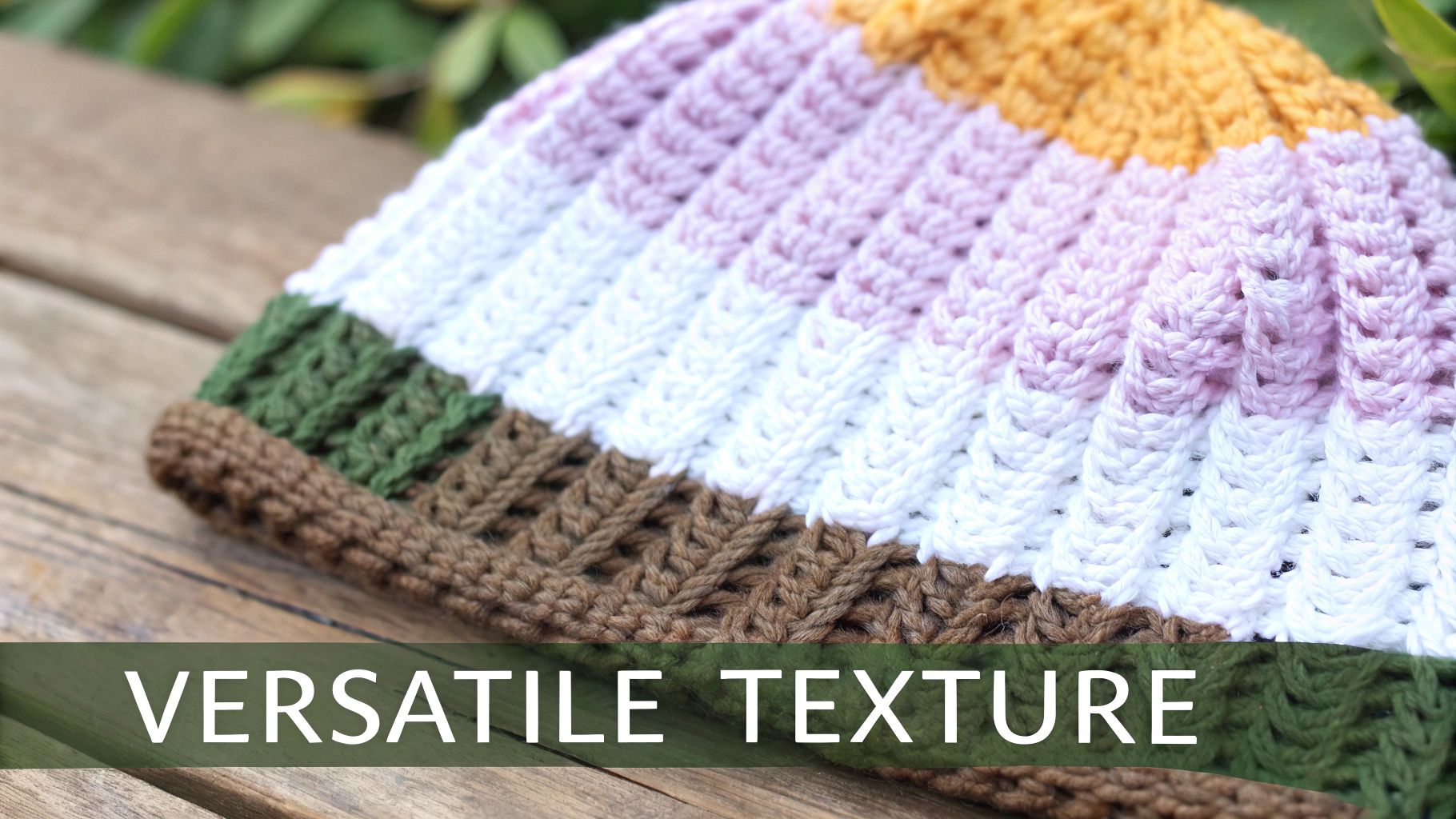
Alright, now that you know what a front post double crochet is, let's get to the fun part: what can you actually do with it? This stitch is a game-changer for adding professional-looking texture and structure. It’s how you turn a simple, flat piece of fabric into something special.
One of the most common ways you'll see the FPdc used is to create ribbed fabric. When you pair it up with its counterpart, the Back Post Double Crochet (BPdc), you can make beautifully stretchy and tidy ribbing. This is the secret to getting that polished, store-bought look on your handmade items.
Creating Classic Ribbing and Borders
Think about that cozy, snug feeling of your favorite beanie or the neat cuffs on a handmade sweater. That's the magic of post stitches! This ribbed effect is perfect for:
Stretchy Hat Brims: FPdc ribbing gives hats a comfortable, secure fit that hugs your head without being too tight.
Snug Sweater Cuffs: It creates a clean cuff that keeps your sleeves in place and adds a classic, finished detail.
Neat Blanket Borders: A border made with post stitches adds just enough weight and structure to keep the edges from curling up, helping your blanket lay beautifully flat.
Building Intricate Crochet Cables
Have you ever admired those gorgeous, woven-looking cables in crochet projects and thought they were way too complicated? I’ve got good news: the FPdc is the key that unlocks that impressive texture.
Crochet cables are really just post stitches worked out of order. You might skip a few stitches, work an FPdc around the posts of the next few, and then circle back to work FPdc stitches around the posts you skipped. That simple crossover motion is what creates that beautiful, twisted look.
With the FPdc, you're essentially "sculpting" with yarn. By making stitches physically cross over each other, you can build incredible three-dimensional patterns that literally pop off the fabric.
This technique transforms a flat project into something dynamic and wonderfully touchable. It’s amazing how creatively placing this one simple stitch can build something so extraordinary.
A Step-by-Step Guide to the FPdc Stitch
Ready to give it a try? Let’s turn that knowledge into muscle memory. This simple, step-by-step guide will walk you through making your very first Front Post Double Crochet (FPdc) stitch. Take a deep breath, grab your hook, and let's create some texture together.
The core motion is all about working around the body of the stitch from the row below, instead of into its top loops. Think of it as gently giving the stitch a little hug with your hook from the front. This simple action is what makes the stitch pop forward.
Your First Front Post Double Crochet
Before you start, make sure you have a row of regular double crochet stitches to work into. This will be your foundation.
Yarn Over and Find Your Target: Start by yarning over, just like you would for a standard double crochet. Now, look at the stitch below where you want to place your FPdc. Instead of aiming for the V-shaped loops at the top, identify the vertical 'post' or body of that stitch.
Insert Your Hook: This is the key move! Insert your hook from the front of your work to the back, going into the space to the right of the post. Then, guide your hook back out to the front through the space on the left side of that same post. Your hook should now be behind the post, pushing it slightly forward.
Complete the Stitch: From here, it’s just like finishing a regular double crochet. Yarn over and pull up a loop (you’ll have three loops on your hook). Yarn over again and pull through the first two loops. Finally, yarn over one last time and pull through the remaining two loops.
And that's it! You’ve just made a Front Post Double Crochet. Take a moment to admire how it stands out from the fabric.
As you can see, the only real difference between an FPdc and a standard double crochet is that unique hook placement. It’s a simple change with a big impact, and it's no wonder that video tutorials on this technique are so popular.
Keep practicing this motion. Your hands will quickly learn the rhythm, and soon you'll be adding beautiful, touchable texture to your projects without a second thought.
Choosing the Right Yarn for Textured Projects
The yarn you pick can make your beautiful post stitches pop or cause them to disappear. When you're pouring your heart into a project where texture is the star, the right material makes all the difference. It ensures all that hard work gets the spotlight it deserves.
For any kind of textured work, smooth yarns with excellent stitch definition are your best friends. These yarns have a tight, even twist that helps every single stitch stand out, clearly defining the raised ridges of your front post double crochet.
Matching Yarn to Your Project
Making something cozy to wear, like a hat or a scarf? Or a plush blanket? Your yarn choice can really enhance the final result. Consider these options:
Wool/wool blends: Warm, elastic, and great stitch recovery, perfect for hats, sweaters, and anything needing a bit of stretch. Just check care instructions and be mindful of any skin sensitivities.
Acrylic: A budget-friendly, machine-washable choice common for blankets and everyday projects. It offers great stitch definition but be aware it can sometimes pill or create static.
Cotton blends (DK/worsted): Breathable and easy to care for, making them a good choice for summer garments, dishcloths, and other homewares.
Chenille/faux-fur: Creates an incredibly plush texture for cozy blankets or pillows. However, the low stitch visibility can be tricky for beginners and may hide detailed post stitch work.
The goal is to let your stitches tell the story. A yarn that complements the texture will elevate your project from a simple item to a handcrafted treasure, ensuring every post stitch is visible and celebrated.
For more tips on picking the perfect fiber for any project, you can check out our complete guide on choosing the perfect yarn for your crochet project.
Common FPdc Mistakes and How to Fix Them
Learning a new stitch is a journey, and that journey is always filled with little discoveries and, let's be honest, a few "happy accidents!" Every single crocheter makes mistakes along the way, so if you hit a snag with the FPdc, just know you're in great company.
Think of this as your friendly troubleshooting guide. Let's gently untangle some common hurdles beginners face with this stitch.
Forgetting to Skip the Stitch Behind
This one is a classic! A frequent mix-up is working an FPdc around a post and then working another stitch into the top loops of that very same stitch. This accidentally adds an extra stitch to your row, causing your project to mysteriously grow wider and wider.
The Simple Fix: Remember, the FPdc replaces the standard stitch. Once you complete your FPdc around the post, you need to skip the top loops of that stitch and move on to the next one in your pattern. It's a one-for-one trade!
Fabric Puckering from Tight Tension
Another common culprit is pulling your yarn too tight when making the FPdc. This can cause the fabric to bunch up or pucker, since the post stitches end up a bit shorter than their neighbors. Don't worry, tension is something every crafter works on!
The Simple Fix: Consciously relax your hands and your grip. As you pull up the first loop of your FPdc, give it a little extra slack to match the height of a regular double crochet. Keeping your loops loose and even is the secret to a beautifully smooth, flat fabric.
Your FPdc Questions, Answered
As you start playing with textured stitches, it's totally normal for questions to pop up. Every crafter has them! Here are some simple, clear answers to the things people wonder about most when tackling the front post double crochet.
Let's clear up any confusion so you can get back to your project with confidence.
What Is the Difference Between Front and Back Post Double Crochet
It all comes down to where you stick your hook. That one simple change in direction is what makes the stitch pop out on one side or the other.
For a Front Post Double Crochet (FPdc), you work from the front of your fabric to the back, pushing the post of the stitch from the row below forward, toward you. This is what creates that raised, cord-like ridge on the side of the project you're looking at.
For a Back Post Double Crochet (BPdc), you do the complete opposite. You insert your hook from the back to the front, pushing the post backward, away from you. This makes the ridge appear on the reverse side of your work. When you alternate FPdc and BPdc stitches, you get that classic stretchy ribbing you see on sweater cuffs and hat brims.
Do I Skip a Stitch After Making a Front Post Double Crochet
Yes, you absolutely do, and this is one of the most important things to remember! When you make a front post double crochet around the post of a stitch, you’re essentially using that stitch's spot in the row.
Because of this, you need to skip the top of the stitch you just worked around and move right along to the next one. Forgetting this step is a super common hiccup that will accidentally add stitches to your row, causing your project to get wider.
Think of it like a trade-off. The FPdc replaces the regular stitch you would have worked into the top loops. Since you've already filled that spot by working around the post, you don't need to work into it again.
Can I Use Front Post Stitches with Other Stitch Heights
You sure can! While the Front Post Double Crochet is the one you'll see most often, this "around the post" technique works with almost any basic crochet stitch.
You can easily make stitches like:
- Front Post Single Crochet (FPsc)
- Front Post Half Double Crochet (FPhdc)
- Front Post Treble Crochet (FPtr)
The core motion of working around the post stays exactly the same. The only thing that changes is the height of the stitch you're completing. This little trick opens up a whole new world of texture and design possibilities for your projects.