![The Ultimate Beginner's Guide to Crochet [2026]](http://crochetree.com/cdn/shop/articles/feat-ultimate-beginners-guide-to-crochet_eae81cec-84d0-455d-b190-08cd22d826c4.jpg?v=1777713815&width=1600)
So you want to learn to crochet? First of all, welcome!
You're about to discover one of the most relaxing, rewarding, and downright addictive crafts out there. Whether you stumbled across a gorgeous amigurumi doll on Instagram, watched someone whip up a cozy blanket on YouTube, or simply want a creative outlet that doesn't involve a screen, you've come to the right place.
This is the only guide you'll need to go from "What even is a slip knot?" to confidently working your first real project. We'll walk through everything, supplies, basic stitches, easy projects, and the mistakes every beginner makes (so you can skip them). No jargon overload, no intimidation. Just clear, friendly guidance from someone who's been exactly where you are.
Ready? Grab a cup of tea, settle in, and let's get started. You can craft this!
What Is Crochet, Exactly?
Crochet is a method of creating fabric by interlocking loops of yarn with a single hooked needle, called a crochet hook. That's it. One hook, one strand of yarn, and your two hands. Unlike knitting (which uses two needles and keeps many stitches "live" at once), crochet works one stitch at a time. This makes it incredibly forgiving for beginners. If you make a mistake, you simply pull the yarn back and try again. No dropped stitches rolling off a needle, no panic.
The word "crochet" comes from the French croche, meaning "hook." And while the craft has roots stretching back centuries, it's experiencing a massive revival right now. In 2026, crochet is everywhere, from handmade fashion on the runway to the booming world of amigurumi (crocheted stuffed animals and dolls), cozy home décor, and wearable accessories. It's creative, it's meditative, and it produces something tangible and beautiful that you made with your own hands.
If you've been searching for how to start crochet, here's the honest truth: you can learn the basics in a single afternoon. Mastering it? That's a lifelong, joyful journey. But getting started is far easier than you think.
Essential Supplies for Crochet Beginners
One of the best things about crochet for beginners is that you don't need much to get going. Forget expensive equipment or complicated setups. Here's everything you actually need.
1. Yarn
Yarn is your primary material, and choosing the right one makes a real difference when you're learning. Here's what to look for:
- Weight: Start with worsted weight (also called medium or #4 weight). It's thick enough to see your stitches clearly but not so bulky that it's hard to handle.
- Fiber: Acrylic yarn is budget-friendly and easy to care for, great for practice. Once you're ready to level up, mercerized cotton is fantastic for amigurumi and detailed projects because it holds its shape beautifully and has a lovely sheen. Our Mercerized Cotton Amigurumi Yarn is a favorite among beginners and experienced crocheters alike.
- Color: Choose a light or medium solid color for your first projects. Dark yarn and variegated (multi-colored) yarn make it harder to see individual stitches, save those for later.
2. Crochet Hooks
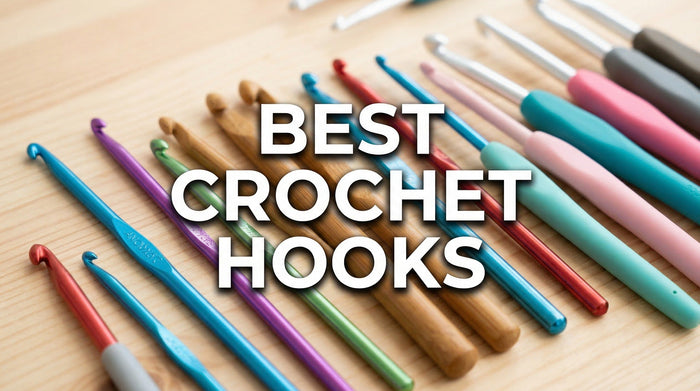
Crochet hooks come in different sizes, and each size is designed to work with a specific yarn weight. For worsted weight yarn, you'll want a 5mm (H/8) or 5.5mm (I/9) hook. This is the sweet spot for beginners, big enough to handle comfortably, small enough to maintain control.
Hooks come in three main materials:
- Aluminum: Smooth, lightweight, affordable. The most popular choice for beginners.
- Ergonomic (rubber grip): If you plan to crochet for longer sessions, these reduce hand fatigue significantly. Worth the small extra investment.
- Bamboo/Wood: Warm to the touch and slightly "grippy," which can help if your yarn tends to slide. Some beginners love them, others prefer the speed of metal.
Our recommendation? Start with an aluminum hook in 5mm. It's inexpensive, universally available, and gets the job done. You can always upgrade to ergonomic hooks once you know you love crochet (spoiler: you will).
3. Essential Accessories
You don't need much beyond yarn and a hook, but these small tools will make your life easier:
- Scissors: A small, sharp pair for cutting yarn.
- Tapestry needle: A blunt, large-eyed needle for weaving in loose ends when you finish a project. You'll use this constantly.
- Stitch markers: Small clips or rings that mark specific stitches in your work. Essential for crocheting in the round (like amigurumi). Even a bobby pin or piece of contrasting yarn works in a pinch.
- Measuring tape: For checking gauge and project dimensions.
- Row counter (optional): A small clicker to track your rows. Your phone's counter app works fine too.

Total startup cost? You can get everything you need for under $15–$20. Crochet is one of the most accessible crafts out there.
The Basic Crochet Stitches Every Beginner Needs to Know
Here's the thing about crochet that surprises most people: almost every pattern in the world is built from just a handful of basic stitches. Learn these four, and you can make scarves, blankets, bags, amigurumi dolls, garments, truly anything. For a comprehensive visual overview, head to our guide on basic crochet stitches for beginners.
The Slip Knot, Where Everything Begins
Every crochet project starts with a slip knot. It's the very first loop you place on your hook, and it takes about five seconds to learn:
- Make a loop with your yarn, leaving a 6-inch tail.
- Pull the working yarn (the strand connected to the ball) through the loop.
- Slide your hook through the new loop and tighten gently.
That's it, you're ready to chain.
The Chain Stitch (ch)
The chain stitch is the foundation of most crochet projects. It creates the base "row" that you'll build upon. Think of it like laying the foundation of a house.
- With a slip knot on your hook, wrap the yarn over the hook from back to front (this is called a "yarn over").
- Pull the yarn through the loop on your hook.
- That's one chain. Repeat to create as many chains as your pattern calls for.
Practice making chains until they feel natural and even. This is genuinely the single most important thing you can do as a beginner. We have a step-by-step tutorial on how to do a chain stitch in crochet if you'd like a visual walkthrough.
Single Crochet (sc)
Single crochet is the shortest and most basic stitch. It creates a tight, dense fabric, perfect for amigurumi, dishcloths, and anything that needs structure.
- Insert your hook into the second chain from the hook (or the next stitch in your row).
- Yarn over and pull through the stitch, you now have 2 loops on your hook.
- Yarn over again and pull through both loops.
One single crochet, done! This stitch is the backbone of countless beginner crochet projects. Master it and you can already make a surprising number of things.
Half Double Crochet (hdc)
Half double crochet sits between single crochet and double crochet in height. It creates a slightly taller, softer fabric with a beautiful texture.
- Yarn over, then insert your hook into the next stitch.
- Yarn over and pull through the stitch, you now have 3 loops on your hook.
- Yarn over and pull through all 3 loops at once.
HDC is incredibly versatile. It works up faster than single crochet but still has a nice, defined texture. Many hat and scarf patterns use it exclusively.
Double Crochet (dc)
Double crochet is taller than single crochet and works up much faster. It creates a looser, more flowing fabric, ideal for blankets, shawls, and garments.
- Yarn over, then insert your hook into the next stitch.
- Yarn over and pull through the stitch, 3 loops on your hook.
- Yarn over and pull through the first 2 loops, 2 loops remain.
- Yarn over and pull through the last 2 loops.
It seems like a lot of steps written out, but once you get the rhythm, double crochet flies. This is the stitch that makes crocheting a blanket in a weekend actually possible.
A Quick Note on Turning Chains
When you reach the end of a row and need to turn your work around to start the next row, you'll make one or more chain stitches first. These "turning chains" bring your hook up to the height of the next row's stitches:
- Single crochet: Chain 1 to turn
- Half double crochet: Chain 2 to turn (or chain 1, if the pattern advises)
- Double crochet: Chain 3 to turn (or chain 2, if the pattern advises)
This small detail trips up many beginners, so keep it in mind as you start working rows.
Your First Practice Session: What to Do
Before jumping into a project, spend 30–60 minutes just practicing. Here's a simple routine:
- Make a slip knot and chain 20. Pull it out and do it again. And again. Do this until your chains are even and consistent.
- Chain 15, then single crochet back across. Turn, chain 1, and single crochet the next row. Do 10 rows. Don't worry about perfection, just get comfortable with the motions.
- Try the same thing with double crochet. Chain 15, then double crochet back. Notice how the fabric is taller and more open.
- Count your stitches. At the end of every row, count. You should have the same number you started with. If not, you're accidentally adding or skipping stitches, the most common beginner issue.
This practice swatch doesn't need to become anything. It's your training ground. Give yourself permission to make ugly stitches. Every crocheter's first swatch looks wobbly and uneven, that's completely normal and exactly how learning works.
10 Easy First Crochet Projects for Beginners
You've practiced your stitches, your chains are looking respectable, and you're ready to make something real. Here are ten easy crochet projects that are genuinely beginner-friendly, no overwhelming patterns, no advanced techniques required.
1. Dishcloth or Washcloth
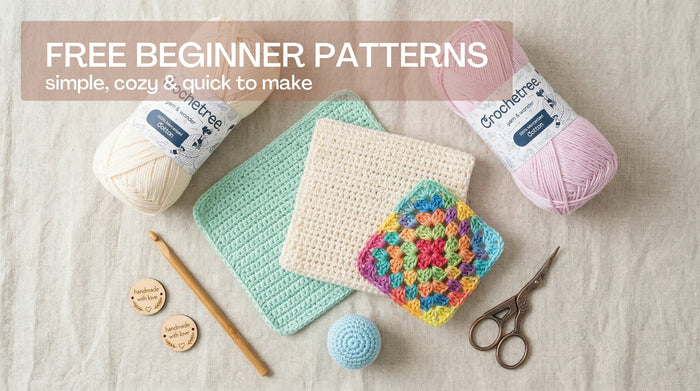
This is the classic first project for a reason. It's a simple square worked in rows of single crochet or double crochet. You'll practice maintaining consistent stitch count, turning your work, and creating an even fabric. And at the end, you have something genuinely useful. Use cotton yarn for the best results.
2. Infinity Scarf
A long rectangle joined into a loop, that's all an infinity scarf is. Work a chain as long as you want the scarf to be wide, then crochet rows in double crochet or half double crochet until it's the length you want. Sew the short ends together, and you've got a cozy, stylish accessory. This is one of the most satisfying beginner crochet projects because it looks impressive with minimal skill.
3. Simple Beanie Hat
A basic beanie introduces you to crocheting in the round, working in a continuous spiral instead of flat rows. You'll start with a magic ring, increase evenly to create a flat circle, then work straight to form the sides of the hat. It's a step up from flat projects, but there are countless free beginner beanie patterns that walk you through every round.
4. Granny Square
The granny square is iconic for a reason. It teaches you how to work in the round, change colors, and create clusters of double crochet stitches. Once you've mastered one granny square, you can make dozens and join them into blankets, bags, cardigans, the possibilities are literally endless.
5. Phone Pouch or Small Bag
A small rectangular pouch worked in single crochet. Fold it in half, sew up the sides, add a simple strap (just a long chain), and you've made a functional bag. This project teaches you seaming (joining two pieces together), a skill you'll use constantly.
6. Baby Blanket
Don't be intimidated by the word "blanket." A baby blanket is small (typically 30" x 36"), and if you use double crochet, it works up surprisingly fast. Choose a soft yarn in a cheerful color, put on a podcast or audiobook, and enjoy the meditative rhythm of row after row. This is where many people truly fall in love with crochet.
7. Coasters (Set of 4)
Small circles or squares worked in cotton yarn. They're quick (each one takes 15–20 minutes), they teach you basic shaping, and they make great gifts. Plus, making a set of four gives you built-in repetition to really lock in your stitches.
8. Simple Amigurumi Ball
Before you tackle a full amigurumi doll, start with a simple crocheted ball (sphere). It teaches you increasing and decreasing, the two techniques that create 3D shapes. Work in continuous rounds of single crochet, increase for the first half, decrease for the second half, stuff with fiberfill, and close it up. Congratulations, you've made your first amigurumi shape!
9. Headband or Ear Warmer
A short rectangle worked in rows, then joined into a loop. You can embellish it with a simple bow or twisted seam for style. This is a fast, satisfying project that makes a great gift and introduces you to basic finishing techniques.
10. Your First Crochet Doll
Once you're comfortable with single crochet in the round, increasing, and decreasing, you're ready for a simple amigurumi doll. Start with a basic body shape and gradually build up to more detailed characters. Our crochet doll pattern collection includes patterns at every skill level, and our step-by-step beginner courses walk you through the entire process stitch by stitch. There's nothing quite like holding a handmade doll you created from scratch.
Common Beginner Crochet Mistakes (and How to Avoid Them)
Everyone makes these. Literally everyone. Knowing about them in advance won't prevent them entirely, but it'll help you identify and fix issues faster.
1. Losing or Gaining Stitches
This is the number one beginner struggle. Your rows get wider or narrower as you go, creating a wonky, triangular shape instead of a neat rectangle. The fix: count your stitches at the end of every row. Seriously, every single row. It takes five seconds and saves you from frogging (ripping out) ten rows later.
The most common places to accidentally add stitches: working into the turning chain when you shouldn't, or putting two stitches into the same stitch at the beginning or end of a row. The most common way to lose them: skipping the very first or very last stitch of a row because it's hard to see.
2. Crocheting Too Tightly
Beginners tend to pull their yarn tight because it feels more controlled. The result? Stitches that are painfully hard to work into, a stiff fabric, and sore hands. Try to keep your tension relaxed and consistent. The yarn should flow smoothly through your fingers, not get death-gripped. If you find it hard to insert your hook into your stitches, you're probably crocheting too tight. Try going up one hook size.
3. Not Checking Gauge
Gauge is how many stitches and rows fit into a specific measurement (usually 4 inches). If your gauge doesn't match the pattern's gauge, your finished project will be the wrong size. For practice projects like dishcloths, gauge doesn't matter. But for garments, hats, or anything that needs to fit? Always make a gauge swatch first. It takes ten minutes and prevents hours of frustration.
4. Skipping the Foundation Chain Count
When a pattern says "chain 25," count those chains. Don't eyeball it. Getting the foundation chain wrong means your entire project starts at the wrong width, and you often won't notice until several rows in.
5. Not Reading the Full Pattern Before Starting
This is tempting, you just want to jump in. But reading through the entire pattern before you start helps you understand the overall structure, catch any techniques you might need to look up, and avoid surprises. Take five minutes to read it through. Future you will be grateful.
6. Being Afraid to Frog (Rip Out)
Frogging, pulling out your stitches to undo mistakes, is not failure. It's part of crochet. Every experienced crocheter frogs regularly. The sooner you make peace with it, the more enjoyable your crochet journey will be. Think of it this way: the yarn isn't wasted. It's just been through a practice round.
7. Using Dark or Variegated Yarn to Learn
We mentioned this earlier, but it bears repeating. Dark yarn (black, navy, dark brown) makes it extremely hard to see individual stitches, especially under artificial lighting. Variegated or multi-colored yarn camouflages your stitch definition. Learn with a light, solid color. You'll see every stitch clearly, which means you'll learn faster and make fewer mistakes.
Understanding Crochet Patterns: A Quick Primer
Crochet patterns use standardized abbreviations that look like gibberish at first but become second nature quickly. Here are the most common ones you'll encounter:
- ch — chain
- sl st — slip stitch
- sc — single crochet
- hdc — half double crochet
- dc — double crochet
- inc — increase (two stitches in one)
- dec — decrease (two stitches joined into one)
- st(s) — stitch(es)
- rep — repeat
- rnd — round
A pattern line like "Rnd 3: (sc 4, inc) x 6 [36]" means: "In round 3, work 4 single crochets then an increase; repeat this sequence 6 times; you should have 36 stitches at the end of the round."
It feels like learning a new language, and it is, but it's a very small language. After two or three projects, you'll read pattern abbreviations as easily as regular words.
How to Choose Your Next Steps After the Basics
You've learned your stitches, you've completed a project or two, and you're hooked (pun very much intended). Where do you go from here?
Explore New Techniques
Once you're comfortable with the basics, there's a whole world of techniques to explore:
- Color changes: Working with multiple colors in the same project. Start with simple stripe patterns.
- Working in the round: Creating tubes and spheres instead of flat fabric. Essential for hats, amigurumi, and bags.
- Textured stitches: Bobbles, popcorn stitches, front/back post stitches, these add dimension and visual interest to your fabric.
- Appliqué and embellishment: Adding crocheted flowers, leaves, or other decorative elements to your projects.
Try Amigurumi
If you love the idea of creating adorable stuffed characters, amigurumi is calling your name. It uses primarily single crochet in the round with increases and decreases to create 3D shapes. Start simple, a basic sphere, then a one-piece character, and work your way up to multi-piece dolls with detailed features.
At Crochetree, amigurumi is our specialty. We have over 40 unique doll characters, from Daisy (our base doll) to elaborate characters like Snow Queen Ballerina, Annie the Cowgirl, and Grandpa George. Our patterns include detailed instructions, and our video courses show you every single stitch. If you've ever looked at a crocheted doll and thought "I could never make that", trust us, you absolutely can. That's our whole thing.
Join a Community
Crochet is infinitely more fun when you share it. Join crochet groups on Facebook or Reddit, follow crocheters on Instagram and YouTube, and don't be shy about sharing your work, even (especially!) your beginner projects. The crochet community is one of the most supportive, encouraging groups on the internet. Seriously.
Invest in Quality Materials
As your skills grow, treat yourself to better yarn. The difference between budget acrylic and a quality mercerized cotton is night and day, in how it feels to work with, how it looks in the finished project, and how it holds up over time. Explore our yarn collection to find fibers that match your evolving skill level and project ambitions.
Take a Structured Course
Self-teaching with free tutorials is great, but a structured course can fill in gaps and take you from "I know the basics" to "I can confidently tackle any pattern" much faster. Our beginner courses are designed for exactly this, building your skills step by step with real projects, clear video instruction, and pattern support.
Crochet Terminology: US vs. UK
One thing that catches beginners off guard: US and UK crochet terms are different. The same stitch has different names depending on which system the pattern uses. Here's a quick conversion:
| US Term | UK Term |
|---|---|
| Single crochet (sc) | Double crochet (dc) |
| Half double crochet (hdc) | Half treble crochet (htr) |
| Double crochet (dc) | Treble crochet (tr) |
| Slip stitch (sl st) | Slip stitch (ss) |
Most patterns will specify whether they use US or UK terms at the top. All Crochetree patterns use US terminology. When in doubt, check before you start, mixing up US and UK terms will result in a very different fabric than intended!
How Much Does It Cost to Start Crocheting?
Let's break it down honestly:
- One skein of worsted weight yarn: $3–$8
- Aluminum crochet hook (5mm): $2–$4
- Tapestry needle set: $3–$5
- Stitch markers (pack of 20): $3–$5
- Small scissors: You probably already own these
Total: roughly $11–$22 to start. Compare that to other creative hobbies, and crochet is remarkably accessible. As you progress, you'll invest more in quality yarn and tools, but the barrier to entry is about as low as it gets.
Frequently Asked Questions
Is crochet hard to learn?
Not at all. Crochet for beginners is genuinely straightforward, most people can learn the basic chain stitch and single crochet in their first sitting. The learning curve is gentle: you start with simple stitches, practice them until they feel natural, and gradually add new techniques. Unlike many crafts, crochet uses just one tool (a hook), works one stitch at a time, and is easy to undo if you make a mistake. If you can tie a knot and hold a pencil, you can learn to crochet.
How long does it take to learn crochet?
You can learn the foundational stitches (chain, single crochet, double crochet) in 1–3 hours. Within a week of regular practice (even just 20–30 minutes a day), most beginners are comfortable enough to start a simple project like a dishcloth or scarf. Within a month, you'll be reading patterns, working in the round, and tackling more ambitious projects. Remember, "learning crochet" isn't a single event, it's a progression. You'll keep discovering new stitches and techniques for years, and that's what makes it exciting.
What should my first crochet project be?
A dishcloth or washcloth is the classic recommendation, and for good reason. It's a simple square, it uses basic stitches, it doesn't need to be a precise size, and you end up with something useful. If you want something more exciting, an infinity scarf or set of coasters are also excellent first projects. The key is to choose something small, flat, and forgiving, save the amigurumi dolls and fitted garments for after you've built your foundation.
Is crochet or knitting easier for beginners?
Most people find crochet easier to pick up initially. With crochet, you only use one hook (instead of two needles), you work one active stitch at a time (so there are no live stitches to drop), and mistakes are simpler to fix, just pull the yarn back through. Knitting has its own advantages and beauty, and many crafters eventually learn both. But if you're starting from zero and want the gentlest learning curve, crochet is a fantastic choice.
You're Ready, Let's Do This!
Here's what we want you to take away from this guide: you don't need permission, you don't need talent, and you don't need to be "crafty" to start crocheting. You just need a hook, some yarn, and the willingness to make some beautifully imperfect stitches while you learn.
Every stunning amigurumi doll, every intricate blanket, every gorgeous crocheted garment you've ever admired was made by someone who once sat exactly where you're sitting, staring at a slip knot, wondering if they were doing it right. They kept going. And so will you.
Ready to take the next step? Here's what we'd suggest:
- Grab your starter supplies, a hook, a skein of quality yarn, and a tapestry needle.
- Practice your basic stitches using the guides linked throughout this post.
- Pick your first project from the list above and just start.
- When you're ready to level up, explore our beginner courses for structured, step-by-step video instruction that takes you from the basics to creating your very own crochet dolls.
And if you ever feel stuck, remember: the crochet community is here for you. We're here for you. At Crochetree, we believe with our whole hearts that you can craft this, and we can't wait to see what you create.
Happy crocheting! 🧶