Before you learn a single stitch, you face your first real decision in crochet: how to hold the hook. It sounds trivial. Just pick it up and go, right? But the way you grip your hook shapes everything that follows. Your tension, your speed, how long you can crochet before your hands start complaining, and ultimately, how much you enjoy the craft.
Here's the thing nobody tells beginners: there is no "correct" way to hold a crochet hook. There are common methods, sure. There are preferences, habits, and strong opinions. But the grip that works for your neighbor, your favorite YouTuber, or your grandmother might not work for you, and that's perfectly fine.
In this guide, we'll walk through the two main approaches to holding your crochet hook, help you figure out which one suits your hands, and explain why comfort should always come before speed. If you're brand new to crochet, you might also want to check out our Crochet Basics Beginner Course for a full visual walkthrough of these fundamentals.
Let's get your hands sorted. 🌷
The Two Main Ways to Hold a Crochet Hook
When people talk about how to hold a crochet hook, they're almost always referring to one of two methods: the knife grip and the pencil grip. Both are widely used, both produce beautiful work, and both have dedicated fans who swear theirs is the "right" way. (It isn't. There is no right way. Just your way.)
The Knife Grip
Hold the hook the same way you'd hold a dinner knife, with your hand over the top of the shaft, fingers wrapped around it, and your palm facing down. Your index finger and thumb rest on the flat part of the hook (the thumb rest, if your hook has one), while your remaining fingers curl around the handle for support.
This is the most common grip among beginners, and there's a good reason: it feels immediately familiar. You've been holding knives and spoons your whole life. The motion comes naturally.
The Pencil Grip
Hold the hook exactly the way you'd hold a pen or pencil, pinched between your thumb and index finger, resting against your middle finger, with the hook tip pointing down slightly. Your movements come primarily from the fingers rather than the wrist.
This grip tends to be more popular in the UK and parts of Europe, and it's often preferred by people who do detailed work like amigurumi, lacework, or Tunisian crochet.
Knife Grip vs. Pencil Grip: At a Glance
| Knife Grip | Pencil Grip | |
|---|---|---|
| How you hold it | Like a dinner knife, palm over the shaft | Like a pen, pinched between thumb and index finger |
| Primary motion | Wrist and forearm | Fingers and hand |
| Best for | Long sessions, bulky yarn, blankets, larger projects | Detailed work, fine yarn, amigurumi, lacework |
| Pros | Feels natural for most beginners; distributes effort across hand and wrist; good for speed | Offers more precision and fine control; lighter touch; easier for small stitches |
| Cons | Less precision on very fine work; can cause wrist fatigue if you grip too tightly | Can tire fingers faster; less common in US tutorials; may feel awkward at first |
| Fatigue risk | Wrist and forearm strain | Finger and thumb strain |
| Who tends to prefer it | US/Australian crocheters, beginners, speed crocheters | UK/European crocheters, amigurumi makers, fine-detail workers |
Notice that neither column says "better." That's intentional.
Finding What Feels Natural
Here's a simple exercise. Pick up your crochet hook without thinking about it, just grab it the way your hand wants to. That's your starting grip. It might be knife, it might be pencil, or it might be some hybrid that doesn't have a name. All of these are valid.
Now try the other one. Spend five minutes making chain stitches with each grip. Pay attention to:
- Does your hand feel relaxed or tense? Tension is the enemy. If you're white-knuckling the hook, something needs to change.
- Can you move the hook fluidly? The yarn should glide through your stitches without you fighting it.
- Where do you feel the effort? It should be evenly distributed, not concentrated in your thumb, your wrist, or any single finger.
Some people know within thirty seconds which grip is theirs. Others need a few projects to decide. And here's the part that surprises many crocheters: your grip will evolve over time. As your hands develop muscle memory, you'll naturally make small adjustments. You might start with a tight knife grip and gradually loosen into something more relaxed. You might discover that you switch to a pencil grip for amigurumi without even realizing it.
Don't force it. Your hands are smart. Trust them.

Why Comfort Matters More Than Speed
There's a particular myth in the crochet world that goes something like this: faster is better, and the "right" grip is the one that lets you crochet the fastest. You'll see speed crochet videos online, competitions, and well-meaning advice about optimizing your hook position for maximum stitches per minute.
Ignore all of it. At least for now.
Speed is a natural byproduct of practice. The more you crochet, the faster you get, regardless of which grip you use. What actually matters, especially when you're building a lifelong craft habit, is sustainability. Can you crochet for an hour without pain? Can you pick up your hook again tomorrow without your hands protesting? Can you finish a full project, a scarf, a blanket, a crochet doll pattern, without your body paying the price?
That's what comfort gives you: the ability to keep going. And the crocheter who keeps going will always outpace the one who burns fast and burns out.
A few signs your grip might be working against you:
- Your hand cramps within 15–20 minutes
- You notice indentations or redness on your fingers from the hook
- Your wrist aches after a session
- Your stitches are unusually tight and hard to work into on the next row
- You're gripping the hook so hard your knuckles turn white
If any of these sound familiar, it's not a sign that you're bad at crochet. It's a sign that your grip needs a small adjustment. Loosen up. Reposition. Try the other method. Your stitches will thank you.
Hand Fatigue and Tension: How to Prevent It
Hand fatigue is the number one reason people take long breaks from crochet, or quit altogether. And it's almost always preventable. The root cause, in nearly every case, is excess tension, gripping the hook too tightly, pulling yarn too hard, or holding your hands in a rigid position for too long.
Here's how to keep your hands happy:
1. Loosen Your Grip
This is the single most impactful change you can make. Your hook needs to be secure in your hand, it does not need to be imprisoned. Imagine you're holding a small bird: firm enough that it can't fly away, gentle enough that you don't hurt it. That's the tension you're aiming for.
2. Stretch Before and During Sessions
Simple hand stretches make a real difference:
- Finger spreads: Spread your fingers wide, hold for five seconds, release. Repeat five times.
- Wrist circles: Rotate each wrist slowly in both directions, ten times each way.
- Thumb stretches: Gently pull each thumb back toward your wrist. Hold for ten seconds.
- Prayer press: Press your palms together in front of your chest, fingers pointing up. Slowly lower your hands while keeping palms pressed. Hold for fifteen seconds.
3. Check Your Posture
Hand fatigue often starts in your shoulders and neck. If you're hunched over your work, your arms carry extra tension that travels straight to your hands. Sit upright. Bring your work up to a comfortable level rather than bending down to it. Support your arms on a pillow or armrest if possible.
4. Watch Your Yarn Tension
The way you hold the yarn in your non-hook hand matters just as much as your hook grip. If you're wrapping it tightly around multiple fingers or pulling it taut, you're adding extra resistance that your hook hand has to fight against. Experiment with different yarn-holding methods until you find one that feeds the yarn smoothly without strangling it.

Adjusting Your Grip for Different Stitches
Here's something that even experienced crocheters don't always realize: your grip doesn't have to be static. Different stitches and techniques call for different levels of control, and it's completely normal to make subtle adjustments as you work.
| Stitch / Technique | Grip Adjustment | Why |
|---|---|---|
| Single crochet (sc) | Standard grip, relaxed hold | Simple, repetitive motion, consistency is key |
| Double crochet (dc) | Slightly looser grip for yarn overs | Multiple yarn overs need space to slide |
| Treble / triple crochet | Even looser; let the hook rotate freely | Three yarn overs require fluid hook movement |
| Amigurumi (tight sc in the round) | Firmer grip, pencil style often helps | You need control to work into tight stitches |
| Lace / openwork | Light pencil grip for precision | Delicate stitch placement; avoid pulling too tight |
| Bulky yarn / thick projects | Knife grip with forearm engagement | Larger hooks and thicker yarn need more leverage |
The takeaway: be adaptable. If a particular stitch feels awkward or your tension seems off, it might not be your skill level, it might just be your grip. A small shift in finger placement can transform a frustrating stitch into a smooth one.
Ergonomic Hooks: Are They Worth It?
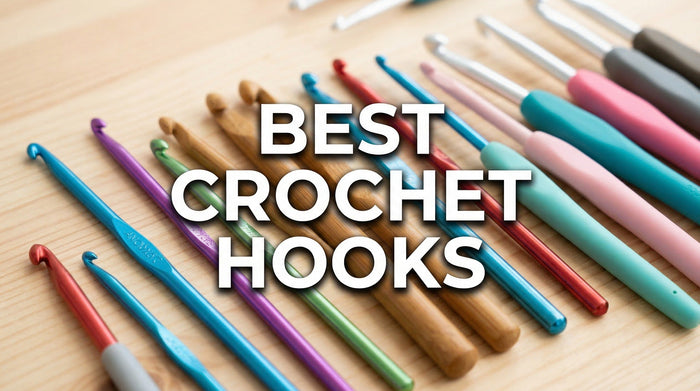
If you've browsed any crochet supply store, you've seen ergonomic hooks, the ones with thick, cushioned, sometimes wildly colorful handles. They cost more than standard aluminum hooks, and they take up more space in your project bag. So are they actually worth it?
For most people who crochet regularly: yes.
Here's what ergonomic hooks do differently:
- Thicker handles reduce the grip force your fingers need to apply. Less force means less fatigue.
- Cushioned or rubberized grips absorb some of the pressure that would otherwise go straight to your finger joints.
- Contoured shapes encourage a more neutral hand position, reducing strain on the wrist.
And what they don't do:
- They won't make you faster (at least, not directly)
- They won't fix fundamentally poor technique
- They won't feel right for everyone, handle shape is personal
Our honest recommendation: If you crochet for more than 30 minutes at a time, if you experience any hand or wrist discomfort, or if you're working on large projects (blankets, garments, multi-piece dolls), an ergonomic hook set is one of the best investments you'll make. They typically cost only a few dollars more per hook than standard options, and the comfort difference is significant.
If you're just starting out and aren't sure whether crochet is for you yet, a standard aluminum hook is perfectly fine. You can always upgrade later.

When to Take Breaks
This one is simple but hard to follow, because when you're in the zone, the last thing you want to do is stop.
Take a break every 20–30 minutes. Set a timer if you have to. Stand up, stretch your hands, roll your shoulders, look at something far away (your eyes need a break from close work too). Even two minutes is enough.
Here's a practical break schedule that works well:
- Every 20–30 minutes: 2-minute hand and wrist stretch
- Every hour: Stand up, walk around, get water
- Every 2 hours: Take a real 10–15 minute break, do something completely different
This isn't about discipline or willpower. It's about longevity. The crocheters who are still happily making things in their 70s and 80s are the ones who treated their hands with respect all along the way. Be kind to your hands now, and they'll be kind to you for decades.
Building Your Own Rhythm
Every crocheter develops a rhythm, a personal cadence of hook movement, yarn feed, and stitch formation that becomes as automatic as breathing. You can't force it. It arrives naturally through repetition, patience, and a willingness to let go of the idea that your work has to look like someone else's.
A few things that help the rhythm come:
- Practice the same stitch repeatedly. Chain 30, single crochet across, turn, repeat. Boring? Maybe. Effective? Absolutely. Muscle memory builds through repetition, and muscle memory is what rhythm is made of.
- Don't compare your speed to others. The person crocheting lightning-fast in that YouTube video has probably been doing this for years. Your speed will come.
- Listen to something while you crochet. Music, podcasts, audiobooks, anything that keeps your conscious mind occupied and lets your hands work on autopilot. This is where the magic happens.
- Work on projects you actually enjoy. Motivation matters. If you're excited about the finished product, you'll crochet more, and more practice means better rhythm. If you need inspiration, our pattern collection has dozens of projects across all skill levels.
Your rhythm will look different from anyone else's. Your tension will be slightly different. Your speed will be your own. And that's exactly as it should be. Every handmade piece carries the unique signature of the hands that made it, including yours.

Putting It All Together
Let's recap what actually matters when it comes to holding your crochet hook:
- Try both grips, knife and pencil, and go with whichever feels more natural
- Prioritize comfort over speed, always
- Keep your grip loose, firm enough to control the hook, gentle enough to avoid tension
- Adjust your grip for different stitches and projects as needed
- Stretch regularly and take breaks every 20–30 minutes
- Consider ergonomic hooks if you crochet for extended sessions
- Be patient with yourself, your rhythm and confidence will develop over time
If you're just starting your crochet journey and want step-by-step guidance beyond the hook grip, our Crochet Basics Beginner Course covers everything from your first chain stitch to finishing your first project. And when you're ready to dive into patterns, explore our full pattern collection, including our beloved yarn collection in beautiful colors that make every project a joy. 💛
You can craft this!
Frequently Asked Questions
What is the best way to hold a crochet hook for beginners?
There's no single "best" way, the best crochet hook grip is the one that feels comfortable and lets you crochet without pain. Most beginners start with the knife grip (holding the hook like a dinner knife) because it feels immediately familiar. Try both the knife grip and pencil grip, and go with whichever one allows your hand to stay relaxed while maintaining control of the hook.
Is the knife grip or pencil grip better for crochet?
Neither is objectively better. The knife grip distributes effort across the hand and wrist, which many find comfortable for long sessions and larger projects. The pencil grip offers more precision and finer control, which can be helpful for detailed work like amigurumi or lacework. Many experienced crocheters switch between both depending on the project and how their hands feel that day.
Why do my hands hurt when I crochet?
Hand pain while crocheting is almost always caused by gripping the hook too tightly, staying in the same position for too long, or using a hook that doesn't fit your hand. Try loosening your grip, taking breaks every 20–30 minutes, doing hand stretches before and during sessions, and switching to an ergonomic hook with a cushioned handle. If pain persists, consult a healthcare professional.
Are ergonomic crochet hooks worth buying?
For most people who crochet regularly, more than 30 minutes at a time, yes. Ergonomic hooks have thicker, cushioned handles that reduce grip force and ease strain on fingers, hands, and wrists. They're especially helpful if you experience hand fatigue, have arthritis or joint issues, or work on large projects. They usually cost only a few dollars more than standard hooks.
Can I switch between knife grip and pencil grip?
Absolutely. Many experienced crocheters naturally switch grips depending on the stitch, the project, or how their hands feel. Switching grips actually helps prevent repetitive strain by engaging different muscle groups. There are no rules here, do what keeps you comfortable and your stitches consistent.
![The Ultimate Beginner's Guide to Crochet [2026]](http://crochetree.com/cdn/shop/articles/feat-ultimate-beginners-guide-to-crochet_eae81cec-84d0-455d-b190-08cd22d826c4.jpg?v=1777713815&width=700)