

Ready to learn how to do a single crochet stitch? You’ve come to the right place! At its core, the motion is simple: you insert your hook, yarn over, pull up a loop, and then yarn over again to pull through both loops on your hook. That’s it! This single, repeatable movement creates a strong, dense fabric perfect for countless projects, and you can absolutely master it.
Preparing for Your First Crochet Stitch
Welcome to the wonderful and mindful world of crochet! Before diving into the stitch itself, let's get you comfortable with the essentials. Think of this as a gentle warm-up, setting a solid foundation for everything you’ll create. A calm beginning makes for a joyful crafting journey, one stitch at a time.
The first step in any crochet project is creating a slip knot. This is the simple, adjustable loop that gets the yarn onto your hook. If you need a refresher, we have a step-by-step walkthrough in our guide on how to create a slip knot for crochet.
Your Starting Point
Once that slip knot is sitting comfortably on your hook, it's time to make a foundation chain, sometimes called a starting chain. This is just a series of chain stitches that will form the base of your first row. A huge part of this initial stage is figuring out how to hold your hook and yarn in a way that feels natural to you.
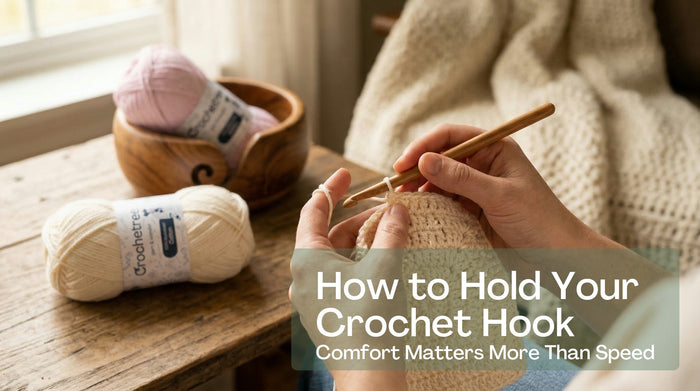
There are two common ways to hold your hook, and neither is better than the other:
Pencil Grip: Holding the hook just like you would a pencil, resting it on your middle finger while gripping with your thumb and index finger.
Knife Grip: Holding the hook from above, much like you would hold a knife to cut something.
Actionable Tip: Try both grips with your foundation chain to see which feels more comfortable and gives you better control. What works for one person might not work for you, so trust your hands!
The single crochet stitch is a true cornerstone of this craft. While many assume crochet is an ancient art, it actually came into its own in the early 19th century. Tapestry crochet, which leans heavily on this stitch, was already popular in Northern Europe by the 1820s. You can discover more about crochet’s fascinating past on interweave.com.
Tips for Getting Started
Before you make your first stitch, here are a few little things that will make your life easier:
Actionable Tip: Wind your yarn into a center-pull ball. This stops it from rolling all over the floor and getting tangled up with your chair legs (we’ve all been there).
Keep your first practice swatch! Don't unravel it. It’s an amazing visual reminder of how much your tension and skill improve over time.
Organize your hooks. Find a simple case or even a pencil pouch to keep them sorted by size. It saves so much frustration when you don’t have to dig for the right tool mid-project.
Now that you have the right yarn and hook in hand, you’re all set to learn the single crochet stitch. Remember to be patient with yourself and enjoy the simple, mindful rhythm of making each loop.
How to Do a Single Crochet Stitch
Alright, you've got your yarn and you’ve chained your foundation row. Now for the exciting part! Learning how to do a single crochet stitch is all about getting into a simple, four-step groove. Don't worry about making it perfect right away, just focus on the gentle, repeating motion. This stitch, often shortened to sc, is the absolute backbone of so many projects, from sweet amigurumi dolls to cozy blankets.
The whole thing comes down to four key movements: insert the hook, yarn over, pull up a loop, and pull through two. Let's break it down together, nice and easy.
Finding Your Starting Point
One of the first hurdles for beginners is figuring out exactly where to put the hook. For your first row, you'll always skip the very first chain stitch right next to your hook. Think of this skipped chain as a little step-up; it gives your work the height it needs to start the row cleanly.
So, you're going to insert your hook into the second chain from the hook. Look for that little "V" shape in the chain and slide your hook right under the top loop.
The Four Core Movements
Once your hook is sitting in that second chain, you're all set to make the magic happen. Take a breath and let's go through the rhythm. It’s like a little dance between your hook and the yarn.
- Yarn Over (yo): With your hook in the chain, use it to scoop the working yarn from back to front. This is called a "yarn over," and you'll do it a lot in crochet.
- Pull Up a Loop: Now, gently pull that yarn you just grabbed back through the chain stitch. You should now have two loops on your crochet hook.
- Yarn Over Again: That's right, time for another yarn over! Grab the working yarn again, from back to front.
- Pull Through Both Loops: Finally, pull your hook and the yarn it's holding through both of the loops that were on your hook.
You did it! You've officially made your very first single crochet stitch. You should be left with just one loop on your hook, ready to go again.
Now, just repeat those four movements in every chain stitch down the line. It's going to feel awkward at first, but trust me, every single crocheter has felt that way. But with practice, your hands will build muscle memory, and soon it will feel completely natural. This is the simple, mindful magic of crochet.
Building Your Fabric and Keeping Edges Straight
You’ve conquered your first row of single crochet stitches. Pat yourself on the back! That’s a huge milestone. Now, let's look at how you turn that single line of stitches into an actual piece of fabric. The next steps are all about adding height and keeping your sides nice and even.
This is where the turning chain becomes your best friend. Think of it as a little step ladder that gets you up to the next level of your project.
The Crucial Turning Chain
When you get to the very end of your row, you’ll make one extra chain stitch before you do anything else. This single chain simply lifts your yarn up to the perfect height to start the next row of single crochet stitches. It’s a tiny move, but it's what gives your fabric structure.
After making that one chain, just flip your work over like you're turning the page of a book. Now you're all set to work back across the stitches you just made.
Placing That First Stitch Correctly
The real secret to perfectly even sides is knowing exactly where to put that very first stitch on the new row. For a single crochet turning chain, that little chain you made does not count as a stitch.
This means you’re going to insert your hook into the very first stitch of the row—the one sitting directly below your turning chain. Working into this specific stitch is what keeps your rows from slowly shrinking inward. From there, just continue making one single crochet in each stitch all the way across.
Actionable Tip: The best habit you can build is to count your stitches on every single row. If you started with 10 stitches, every row you crochet should also have 10 stitches. This simple practice will save you from so much frustration!
This consistent counting is the single best way to keep your project from getting wider or narrower when you don't want it to. If your sides still look a bit wobbly, our guide on how to crochet straight edges has some deeper dives and troubleshooting tips. This is what turns a wonky line of yarn into a neat dishcloth, scarf, or whatever you're dreaming up.
Solving Common Beginner Mistakes
Let's be honest: every single crocheter, no matter how skilled, has had to pull out a row (or ten). We call it "frogging", because you rip-it, rip-it! Don’t let mistakes discourage you; they’re just part of the process. Think of each little hiccup as a learning moment that builds your confidence for the long run.
One of the first hurdles everyone faces is getting the tension right. Are your stitches so tight you can barely get the hook back in? You're probably pulling the yarn too hard. On the other hand, if your work looks loose and holey, your tension is likely too relaxed.
Actionable Tip: The sweet spot is a relaxed, even rhythm. Your hook should glide into each stitch smoothly, not feel like you're wrestling with it. Try making a small practice swatch (a mini-square) to find your groove without the pressure of a full project.
Reading Your Work
Another classic beginner issue is losing or adding stitches, which makes the edges of your work go wonky. A simple habit of counting your stitches at the end of each row can save you so much frustration. It helps you catch a mistake right away instead of discovering it five rows later!
Also, watch out for splitting the yarn. This happens when your hook goes through the strands of yarn instead of neatly under both loops of the stitch below. Taking a moment to aim your hook properly makes all the difference. Crochet has a rich history as a practical craft; during World War II, skills like the single crochet were even used to make essential items. Embrace the learning curve, you're in good company.
Your Single Crochet Questions Answered
As you get the hang of the single crochet stitch, you're going to have questions. That’s a good thing! It means you’re paying attention to the details. We've pulled together a few of the most common hurdles new crocheters face to help you clear them with confidence.
Why Are My Edges Not Straight?
Don't worry, every single crocheter has dealt with wobbly edges. It's practically a rite of passage! The number one reason this happens is accidentally adding or skipping a stitch at the beginning or end of a row. The turning chain is often the culprit here.
For single crochet, you’ll make just one chain before you turn your work. Crucially, this turning chain does not count as your first stitch. You need to work your first single crochet into the very last stitch from the row below. The best habit you can build right now is counting your stitches at the end of every row.
What Is the Difference Between US and UK Crochet Terms?
This is such an important question! The stitch we're learning here, the single crochet (sc), is a US term. If you were following a UK pattern, the exact same stitch would be called a double crochet (dc). Always check the pattern notes before you start. Most designers will specify whether they use US or UK terms. All guides and patterns on our site use US terminology.
How Do I Keep My Tension Even?
Finding your rhythm with tension is more art than science, and it just takes practice. Be patient with yourself! The key is in how your non-hook hand guides the yarn. Many people find success wrapping the yarn around their pinky finger and then draping it over their index finger.
The goal is a stitch that’s firm enough to look neat but relaxed enough for your hook to glide into on the next row. If your stitches are too loose, you’ll see gaps; too tight, and you’ll be fighting to get your hook through. Making a practice swatch is the perfect, no-pressure way to find what feels right for you.
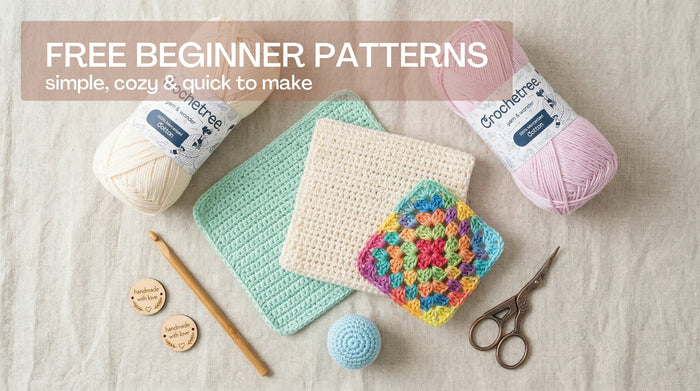
We hope these answers help you feel more confident as you learn how to do a single crochet stitch. Every crocheter starts here, and every stitch is a step forward. At Crochetree, our mission is to provide the support you need to find joy and peace in your craft. Explore our collection of beginner-friendly patterns and high-quality yarns to start your next creative adventure.
![The Ultimate Beginner's Guide to Crochet [2026]](http://crochetree.com/cdn/shop/articles/feat-ultimate-beginners-guide-to-crochet_eae81cec-84d0-455d-b190-08cd22d826c4.jpg?v=1777713815&width=700)
