

Welcome to the wonderful world of crochet! This craft is a beautiful way to create with your hands, find moments of calm, and connect with a tradition passed down through generations. But like any new skill, the first steps can feel a bit wobbly. You might be wondering, "Am I holding this right?" or "Which yarn should I even buy?" That’s perfectly normal, and we're here to guide you with encouragement every step of the way.
This guide is packed with essential crocheting tips for beginners, designed to turn that initial uncertainty into joyful confidence. We'll skip the frustration and get right to the fun part: making something you love. Instead of generic advice, you'll find specific, actionable insights to help you build a strong foundation for a craft that can bring healing, joy, and connection into your life.
You will learn how to choose the right materials for your first project, master fundamental stitches, and maintain consistent tension for neat, even fabric. We will also cover how to count your stitches accurately, spot common mistakes, and select simple patterns that guarantee a satisfying finish. Let’s pick up a hook and begin this creative adventure together.
1. Choose Beginner-Friendly Tools
Choosing your first hook and yarn is a joyful first step. For beginners, the goal is clarity and control. Think of your first tools as your training wheels; they're here to make the process stable, straightforward, and fun. This is one of the most important crocheting tips for beginners because it directly impacts your ability to see your stitches and learn tension.
Your Ideal Beginner Toolkit
The perfect starting combination is a medium-weight yarn paired with a mid-size hook. This pairing is comfortable in your hands and makes it easy to learn the basic motions.
- Recommended Hook: Start with an H/8 (5mm) crochet hook. Ergonomic hooks with a soft-grip handle can also help reduce hand fatigue as you practice.
- Recommended Yarn: Choose a size 4 (worsted weight) yarn in a smooth fiber. This thickness makes it easy to see your individual stitches, which is crucial for learning.
A Quick Guide to Yarn Fibers
The yarn you choose affects how your project looks and feels. A smooth yarn in a light, solid color is your best friend when you're just starting out.
Acrylic: Budget-friendly and machine-washable, it's common for blankets and everyday projects.
Cotton Blends (DK/Worsted): Breathable and easy to care for, making them great for summer garments, dishcloths, and homeware.
Wool/Wool Blends: Warm and elastic with great stitch recovery, perfect for hats and sweaters, but check care instructions and for skin sensitivity.
Mercerized Cotton (Fingering weight - thin, good for detail): Smooth, durable, and holds its shape with crisp stitch definition. Ideal for amigurumi and detailed work.
Chenille/Faux-Fur: Very plush for blankets, but the low stitch visibility makes it challenging for beginners.
Actionable Tip: For your very first practice swatches, choose a smooth, light-colored acrylic or cotton-blend yarn. Avoid dark colors and highly textured "novelty" yarns, as they can hide your stitches and make learning much harder. This simple choice helps you build a strong, confident foundation.
2. Master the Foundation Chain
The foundation chain is the starting line for most crochet projects. Creating a strong, even one is a critical first step. Think of it as the literal foundation of a house; if it's crooked or unstable, everything you build on top will be affected. Mastering this single skill prevents countless frustrations and is one of the most essential crocheting tips for beginners.
Achieving the Perfect Chain
Your goal is a series of chain stitches that are uniform in size. They should be relaxed enough to easily insert your hook into on the next row, but not so loose that they create gaps. Consistency is the key.
- Practice Short Bursts: Dedicate 10-15 minutes each day to simply making chains. This focused practice is far more effective than one long, overwhelming session.
- Create Practice Swatches: Make a chain of 20 stitches, then work a row of single crochet into it. This will immediately show you if your chain is too tight (making it hard to work into) or too loose (creating a wavy edge).
Why Consistency Is Your Goal
An inconsistent foundation chain can cause a project to pucker or flare at the bottom. A chain that is too tight will make the first row difficult and cause the edge to curl, while a loose chain will create an uneven, wavy edge.
Actionable Tip: If you consistently find your foundation chain is too tight, try making it with a hook that is one size larger than the hook you plan to use for the body of the project. This simple trick adds just enough slack for a perfectly straight edge. Taking the time to master this now builds muscle memory for every project you'll ever make.
3. Find Your Comfortable Hold
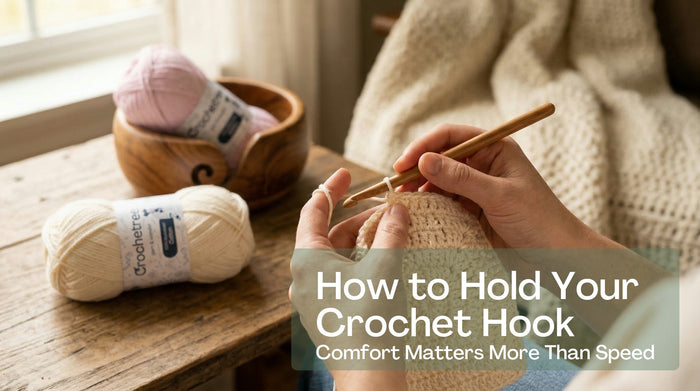
How you hold your tools is just as important as the tools themselves. Finding a comfortable grip for your hook and yarn is a cornerstone among crocheting tips for beginners. The right hold reduces hand strain and gives you consistent control over your stitches, which is the secret to even, beautiful fabric.
Finding Your Preferred Grip
There is no single "correct" way to hold a crochet hook; the best method is the one that feels natural and supportive for you. Experiment with the two most common grips to discover your perfect fit.
- The Knife Grip: Hold the hook like you would a knife. Your hand wraps around the handle, with your index finger extended along the shaft to guide it. This grip often provides more fluid motion.
- The Pencil Grip: Hold the hook as you would a pencil. It rests on your middle finger and is controlled by your thumb and index finger. This grip is known for precision.
Mastering Yarn Tension
Controlling the flow of your yarn is a skill learned alongside your hook grip. Your non-dominant hand acts as the tensioner, ensuring the yarn feeds smoothly. The most common method involves weaving the yarn over and under your fingers, creating a gentle drag that keeps stitches consistent.
Actionable Tip: Try both the knife and pencil grip for at least 10 minutes each. Don't worry about making perfect stitches yet, just focus on which hold feels more natural and less awkward for you. Your comfort is the only thing that matters! Remember to take breaks and stretch your hands, making crochet a mindful, lifelong practice.
4. Practice Single Crochet Until It's Second Nature
The single crochet (SC) is the most fundamental stitch in crochet, a sturdy building block for countless patterns. Mastering this one stitch builds a solid foundation for everything that follows. It creates a tight, dense fabric, making it a reliable choice for many projects. This is one of the most critical crocheting tips for beginners because it develops your muscle memory, tension control, and ability to read your work.
Building Your Stitch Foundation
The single crochet stitch is a simple, four-step motion. The goal is to make these movements so automatic that you can do them without thinking, allowing you to relax into the rhythm of your project.
- Create Practice Swatches: Work on small squares, about 4x4 inches. This helps you develop consistent tension without the pressure of a full project.
- Count Every Row: Get into the habit of counting your stitches at the end of each row. This simple check catches mistakes early and prevents your project from growing or shrinking.
- Use Stitch Markers: Place a stitch marker in the first and last stitch of each row. This is a foolproof way to keep your edges straight.
Why Repetition Is Your Best Tool
Consistent practice transforms the mechanical act of making a stitch into a rhythmic, almost meditative flow. Projects like washcloths or simple coasters are excellent for practicing because they rely heavily on this single stitch.
Actionable Tip: Don't worry about perfection at first. Your initial rows might be uneven, but each stitch you make improves your coordination. The goal is progress, not immediate perfection. Focus on identifying the two loops (the "V") at the top of each stitch. This is where you'll insert your hook for the next row.
5. Count Your Stitches Religiously
Of all the crocheting tips for beginners, developing the habit of counting stitches is the single most important practice for creating beautiful, predictable results. Beginners commonly lose or gain stitches without realizing it, which causes projects to become misshapen. By simply counting at the end of every row, you guarantee accuracy and save yourself from frustration later.
The Foundation of Accuracy
Think of stitch counting as your project's quality control. It ensures that each row is consistent with the one before it, which is the key to creating clean edges and predictable shapes, especially in the first 5-10 rows where your project's foundation is set.
- For Straight Edges: A scarf that begins with 30 chains must have exactly 30 stitches in every single row. Counting confirms this.
- For Shaped Projects: Amigurumi pieces rely on precise increases and decreases. A single miscount can throw off the entire shape.
- For Uniform Pieces: When making a blanket from multiple squares, a consistent stitch count ensures all your squares are the same size.
Practical Counting Techniques
Making counting a seamless part of your process is easy with the right tools. Use physical or visual aids to keep track and build your confidence.
Actionable Tip: If your stitch count is off by one, check your turning chain. You might be accidentally skipping the first stitch after you turn or adding an extra stitch at the end. To make counting easier, place a stitch marker every 10 or 20 stitches in a long row. This breaks the task into smaller, more manageable chunks.
6. Learn to Read Your Work and Spot Mistakes
Developing the ability to "read" your crochet is a game-changing skill. It means looking at the fabric and understanding its structure, identifying individual stitches, and spotting mistakes early. This is one of the most empowering crocheting tips for beginners because it transforms you from simply following instructions to truly understanding the craft.
The Anatomy of a Crochet Stitch
Every stitch has a distinct look. Learning to recognize these visual cues is the first step to reading your work, helping you track progress and count stitches accurately.
- Single Crochet (sc): Creates a dense fabric and looks like a field of small "V" shapes stacked neatly on top of each other.
- Double Crochet (dc): Produces a taller, more flexible fabric. Each stitch looks like a distinct post with a "V" on top.
- Increases and Decreases: An increase looks like two stitches emerging from one spot (fanning the fabric out). A decrease looks like two stitches merging into one (pulling the fabric in).
Catching Errors Early
Spotting a mistake rows after you've made it can be discouraging. By learning to read your work, you can catch issues almost immediately, saving you time and frustration.
Actionable Tip: Don't be afraid to "frog" your work, which means to rip-it, rip-it (unravel) a few rows to fix an error. Every crocheter, from beginner to expert, frogs their work. It's a fundamental part of the learning process, not a sign of failure. Embrace it as your secret weapon for creating work you're proud of. As you get better at this, you'll find it easier to learn how to read a crochet pattern with confidence.
7. Embrace "Frogging" Without Fear
One of the most powerful skills a new crocheter can learn isn't about making stitches, it's about undoing them. In the crafting community, this is affectionately known as “frogging” because you “rip it, rip it.” This process is not a failure; it's a positive and effective learning tool. Embracing frogging is a crucial part of our crocheting tips for beginners because it transforms mistakes into valuable lessons in mindfulness and skill-building.
Redoing Work Is Practice, Not Punishment
Think of every stitch you unravel as an opportunity to reinforce the correct technique. Each time you redo a section, you are actively building crucial muscle memory. Pushing through obvious errors often leads to a finished object you’re unhappy with.
- Example Scenario: Your practice swatch starts getting narrower. This means you're accidentally dropping stitches. Frogging back and rebuilding those rows correctly teaches you how to maintain your edges.
- Example Scenario: Your foundation chain is so tight you can barely work the first row. Instead of fighting it, unravel and start again with looser tension. You'll learn tension control much faster this way.
How to Frog Without Frustration
Unraveling can feel disheartening, but a few simple tricks make it a constructive part of the process. The goal is to correct a mistake, not create a tangled mess.
Actionable Tip: View unraveling as productive practice time. Every stitch, whether it stays or gets pulled out, is practice. To frog strategically, identify a stitch a row or two below the mistake and insert your hook into its loop before you start pulling. This creates a "lifeline" that stops the work from unraveling too far.
8. Start with Simple, Joyful Projects
Your first project is a pivotal moment. Beginning with an achievable pattern builds essential skills and, more importantly, your confidence. This is one of the most crucial crocheting tips for beginners because a positive first experience is the best motivation to continue learning and find joy in the craft.
Your Ideal First Projects
The goal of a first project is to practice fundamental techniques in a relaxing, repetitive way. Simple patterns are perfect for this, allowing you to focus on the rhythm of the craft.
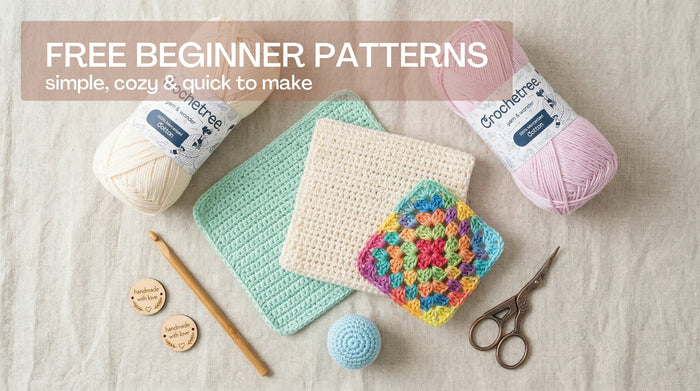
- Cotton Dishcloths: These are quick, practical, and a fantastic way to master the single crochet stitch using easy-to-work-with cotton yarn.
- Simple Scarves: A basic scarf made of repeating rows is an excellent way to practice creating even edges and consistent tension over a larger piece.
- Granny Squares: This classic motif is a wonderful introduction to working in the round. You can make one as a coaster or combine many to create a blanket.
Why Simplicity Breeds Success
Choosing a simple project allows you to celebrate a finished object quickly, which provides a powerful sense of accomplishment. Jumping into a complex project too soon can lead to frustration.
Actionable Tip: Choose a project you find beautiful and useful, like a colorful dishcloth or a simple, cozy scarf. Your first projects are not about perfection; they are about practice. Embrace any wobbly edges or uneven stitches as signs of your learning process. Each "mistake" is a lesson that makes your next project even better. For more inspiration, explore a curated list of beginner-friendly crochet projects on crochetree.com.
Crocheting Tips for Beginners: 8-Point Comparison Guide
|
Item |
Implementation Complexity 🔄 |
Resource Requirements ⚡ |
Expected Outcomes 📊 |
Ideal Use Cases 💡 |
Key Advantages ⭐ |
|---|---|---|---|---|---|
|
Start with the Right Hook and Yarn |
Low 🔄 |
Moderate ⚡ (needs specific yarn & hooks) |
Clear stitch visibility, manageable yarn |
Beginners needing easy-to-see materials |
Easier counting, visible mistakes, comfort |
|
Master the Foundation Chain Before Moving Forward |
Low to Moderate 🔄 |
Minimal ⚡ (basic yarn and hook) |
Foundation for consistent crochet tension |
All projects starting with foundation chains |
Builds muscle memory, transfers to all projects |
|
Learn to Hold Your Hook and Yarn Correctly |
Moderate 🔄 |
Minimal ⚡ |
Reduced hand strain, consistent stitch size |
Anyone wanting comfort and control |
Prevents injuries, improves consistency |
|
Practice Single Crochet Until It's Second Nature |
Moderate 🔄 |
Basic yarn and hook ⚡ |
Dense, durable fabric production |
Dishcloths, amigurumi, sturdy items |
Foundational stitch, easy mistake-fixing |
|
Count Your Stitches Religiously |
Low to Moderate 🔄 |
No extra resources ⚡ |
Accurate project shaping and tension control |
All projects where stitch count matters |
Catches errors early, builds pattern confidence |
|
Learn to Read Your Work and Identify Mistakes |
Moderate to High 🔄 |
No extra resources ⚡ |
Visual literacy in crochet patterns |
Intermediate learners aiming for skill growth |
Enables error correction, pattern independence |
|
Don't Be Afraid to Unravel and Start Over |
Low 🔄 |
None ⚡ |
Corrected work, better skill reinforcement |
Beginner projects with errors |
Saves yarn, reinforces techniques |
|
Start with Simple, Beginner-Friendly Projects |
Low 🔄 |
Basic materials ⚡ |
Build confidence, learn fundamentals |
Beginners taking on first projects |
Fast completion, low cost, motivation boost |
Your Beautiful Beginning in Crochet
You’ve just explored a wealth of information, from selecting your first hook to mastering the rhythm of the single crochet stitch. Each of the crocheting tips for beginners shared in this guide is a stepping stone on your creative journey. Remember that every crafter, no matter how skilled, started exactly where you are now: with a simple slip knot and a desire to create something wonderful.
The path to proficiency is built one stitch at a time. It’s about more than just technique; it’s about finding moments of peace, celebrating small wins like a perfectly straight edge, and discovering the joy that comes from making something with your own two hands.
Key Takeaways for Your Crafting Journey
Let’s distill the core principles that will support you as you grow:
- Foundation First: Don’t rush past the fundamentals. A well-made foundation chain and a consistent single crochet are the bedrock of almost every project. Practicing these basics builds the muscle memory you need for more complex patterns.
- Be a Stitch Accountant: Counting your stitches on every row is not a chore; it is your most powerful quality control tool. This simple habit will save you from countless headaches and misshapen projects.
- Embrace "Frogging": Unraveling your work is not a sign of failure. It is a sign of a crafter who values their work and is dedicated to learning. Think of it as a reset button, giving you a fresh chance to get it right.
- Start Small, Win Big: Your first projects are your confidence boosters. Choosing simple shapes like scarves or dishcloths allows you to focus on your technique without the stress of complex instructions.
Your Actionable Next Steps
Feeling inspired? Here’s how you can put these lessons into practice right away. Pick a beginner-friendly project, like a simple washcloth. Grab a smooth, light-colored worsted weight cotton-blend yarn and the recommended hook size. Before you even begin, dedicate thirty minutes to just practicing your slip knot, foundation chain, and rows of single crochet. Focus on how you hold your tools, finding what feels natural.
Count every stitch, and if you spot a mistake, don't hesitate to pull it out and try again. This focused practice is invaluable. By mastering these foundational skills, you are not just learning to crochet; you are cultivating patience, mindfulness, and the profound joy of creating something beautiful and functional with your own two hands. Welcome to this wonderful community; we are so happy you're here!
![The Ultimate Beginner's Guide to Crochet [2026]](http://crochetree.com/cdn/shop/articles/feat-ultimate-beginners-guide-to-crochet_eae81cec-84d0-455d-b190-08cd22d826c4.jpg?v=1777713815&width=700)
