For many of us in the amigurumi world, the holy grail is a 100% cotton yarn in either a fingering, DK or worsted weight. Why? It gives you that crisp, clean stitch definition you see in professional-looking toys, it’s tough enough for plenty of cuddles, and it creates a beautifully smooth finish. It’s the perfect recipe for those adorable, tightly stitched characters that are built to last.
Finding the Perfect Yarn for Your Amigurumi
Welcome to the wonderfully whimsical world of amigurumi, where a simple strand of yarn can spring to life as a cherished little character. The true secret to making those sturdy, huggable, and downright adorable toys lies in your very first decision: the yarn. Think of this guide as your creative launchpad, here to clear up the confusion around yarn selection so you can get back to crocheting with total confidence.
This is your roadmap to turning good projects into truly unforgettable keepsakes. Every stitch you make is a step toward creating something special, and it all starts with the yarn. Choosing the right one from the get-go makes all the difference in bringing your creative vision to life just as you imagined it.
Why Your Yarn Choice Matters
The yarn you choose is literally the foundation of your creation. It dictates the final look, feel, and sturdiness of your amigurumi. A great yarn can elevate a simple pattern into a piece that looks polished and professional, while the wrong one can lead to a floppy, fuzzy mess, and a lot of frustration.
Your yarn will directly impact these key factors:
- Stitch Definition: How clearly each individual stitch pops.
- Sturdiness: The toy’s ability to hold its shape without getting saggy.
- Softness: The all-important texture and "cuddle factor" of your finished friend.
- Durability: How well it stands up to enthusiastic play and the occasional wash.
The global yarn, fiber, and thread market is a huge testament to the passion of crafters just like you. Valued at roughly USD 100.55 billion in 2024, the market's incredible growth means more amazing options for amigurumi artists than ever before. This ever-expanding selection lets you find the perfect yarn for any need, whether it's softness, durability, or ease of use. You can dive deeper into these market trends over on Research and Markets.
Ultimately, picking the best yarn for your amigurumi is all about matching the material to your project's purpose. Whether you're making a super-soft toy for a baby or a detailed collectible for a shelf, the right yarn sets you up for success and makes the whole creative process so much more joyful.
Exploring the Best Amigurumi Yarn Fibers
Think of yarn fiber as the DNA of your amigurumi. It’s what gives your creation its unique personality, defining everything from how it feels to the touch, how sturdy it is, and, most importantly, its all-important cuddle factor.
Let's dive into the three main contenders in the amigurumi world. Once you get to know their strengths, you'll be able to choose your materials with the confidence of a seasoned pro, ready to bring any character to life.
The Power Trio of Amigurumi Fibers
Choosing the right fiber is your first big decision, and it’s a crucial one. The material you pick determines how your stitches look, how the toy feels in your hands, and how well it will hold up to a lifetime of love and adventure. It’s all about matching the yarn’s traits to your project’s goals.
Here’s a closer look at the most popular options, each with its own special strengths.
- 100% Cotton Yarn: This is the go-to for many serious amigurumi artists, and for good reason. Cotton is famous for its incredible stitch definition, which means every single stitch comes out crisp, clean, and beautifully visible. It gives your toys a sharp, professional finish that really shows off your skill. As a gentle, hypoallergenic fiber, it's also the perfect choice for toys made for babies and small children.
- 100% Acrylic Yarn: If you're looking for a budget-friendly workhorse that comes in every color imaginable, acrylic is your best friend. Known for its durability and massive color selection, acrylic yarn is fantastic for making vibrant characters that can handle a lot of play. It’s a forgiving fiber that’s easy to find just about anywhere, making it a wonderful starting point for beginners.
- Cotton-Acrylic Blends: Why choose just one when you can have the best of both worlds? Blended yarns combine the softness and structure of cotton with the resilience and color variety of acrylic. They offer a fantastic middle ground, providing great definition while feeling a bit more flexible and easier on the hands than pure cotton can sometimes be.
The image below shows these three core yarn types, helping you visualize your options at a glance.
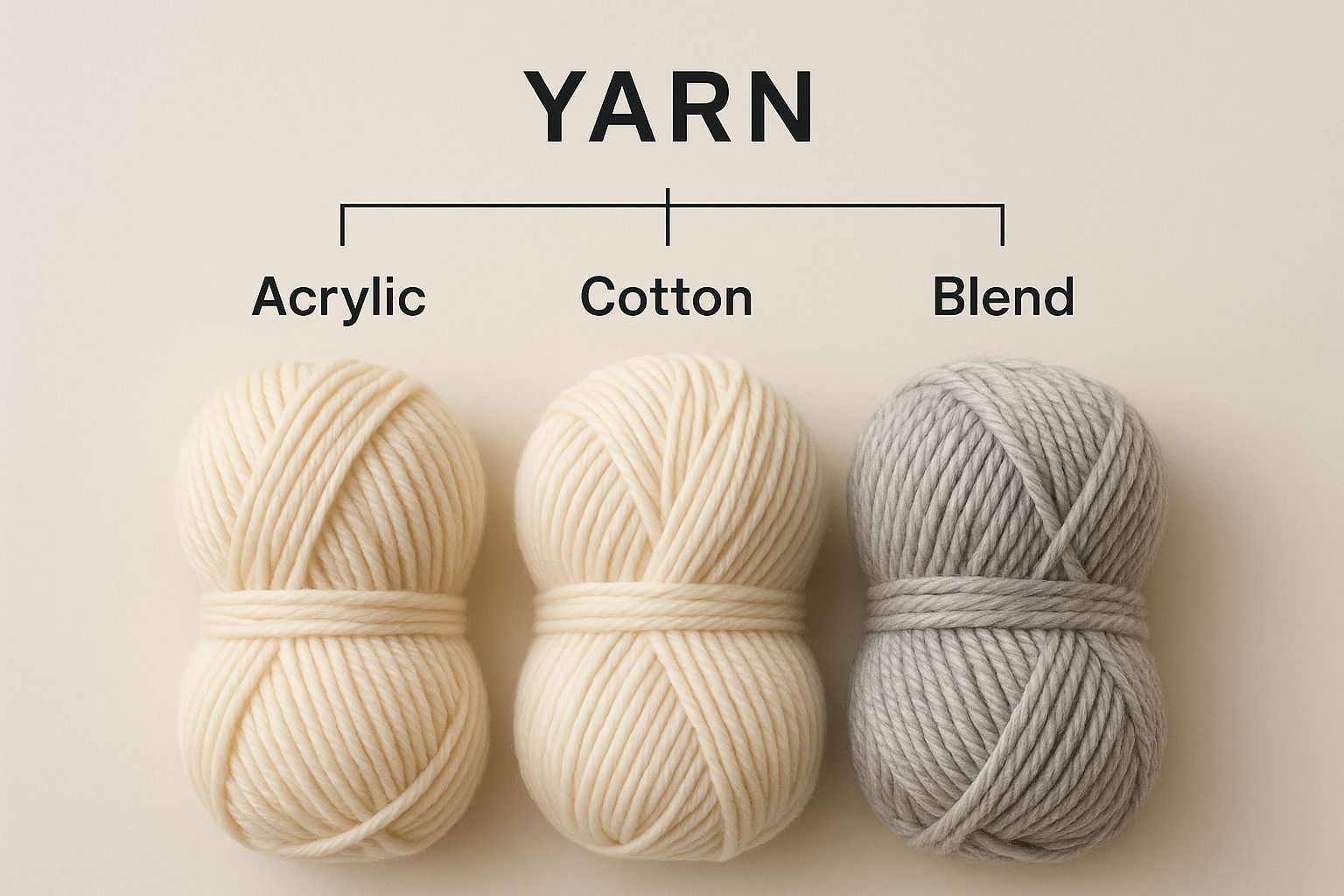
This simple visual breaks down the main choices you'll be making for nearly any amigurumi project.
To make things even clearer, let's put these fibers side-by-side and compare their key characteristics for making amigurumi.
Comparing Amigurumi Yarn Fibers Head-to-Head
| Feature | 100% Cotton Yarn | 100% Acrylic Yarn | Cotton-Acrylic Blends |
|---|---|---|---|
| Stitch Definition | Excellent; very crisp and clear | Good; can be slightly fuzzy | Very Good; combines clarity and softness |
| Feel & Softness | Sturdy and soft, but less stretchy | Soft and squishy with good bounce | The perfect balance of soft and structured |
| Durability | Very durable, but can pill over time | Extremely durable and machine-washable | Very durable, holds shape well |
| Color Selection | Good, with many natural and vibrant tones | Excellent; huge range of bright colors | Excellent; wide variety available |
| Price Point | Mid-range | Budget-friendly | Mid-range |
| Best For... | Keepsakes, baby toys, crochet dolls, detailed characters | Toys for heavy play, beginners, colorful projects | All-purpose amigurumi, gifts, projects needing structure and softness |
This table should help you quickly weigh the pros and cons of each fiber based on what matters most for your specific project.
Making Your Final Fiber Decision
While cotton is often praised for its premium feel, don't overlook the others. Recent data shows that acrylic is actually the most popular choice for amigurumi globally. In surveys conducted from 2020 to 2024, over 60% of crafters favored acrylic because it holds its shape so well and is incredibly durable. Cotton yarns followed, representing about 20-25% of choices, especially for baby-safe items. You can discover more insights about top-selling crochet crafts to see what materials are trending.
Your perfect yarn is out there! Don't be afraid to experiment. Your actionable step today: Try a small project, like a simple sphere or heart, with each fiber type to feel the difference for yourself. You might just discover a new favorite that elevates your creations from cute to absolutely unforgettable.
Selecting the Right Yarn Weight and Hook Size
If yarn fiber gives your amigurumi its personality, then yarn weight is the blueprint. This single choice dictates the final size, the overall structure, and just how much detail you can pack into your creation. Picking the right weight is what stands between a floppy toy with stuffing peeking out and a perfectly firm, huggable friend.
Don't worry, you don’t need to get lost in a sea of confusing charts. For amigurumi, we usually stick to two main players that give fantastic, consistent results. Think of them as the trusted workhorses for crafting those charming characters you love.
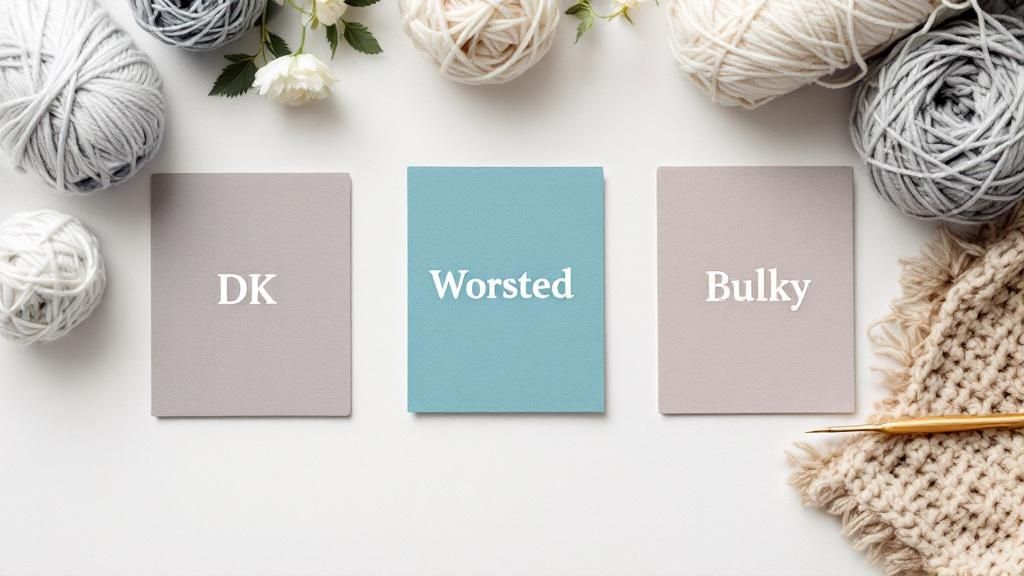
The Three Best Weights for Amigurumi
When you're hunting for the perfect yarn, you’ll almost always land on one of these two weights. Each one creates a totally different effect, giving you complete creative control over your project’s scale and feel. It all comes down to the kind of toy you want to bring to life.
- Fingering Weight: This is a lighter, finer yarn that’s absolutely perfect for smaller, more intricate projects. It's the one we use for our Crochetree dolls.
- DK (Double Knitting) Weight: Still light, but a bit heavier than the fingering weight yarn. It creates a lightweight fabric that beautifully shows off tiny details.
- Worsted Weight (or Aran): This is your go-to for standard-sized amigurumi. It’s a bit thicker and strikes the perfect balance, offering sturdiness while letting you finish projects a little faster than with DK yarn.
If you’re ever scratching your head trying to figure out which is which on a yarn label, our detailed guide on decoding yarn weights can help. Getting a handle on the numbering system is a skill that will serve you well for years to come.
The Golden Rule of Hook Sizing
Now for what might be the single most important tip in all of amigurumi: always use a smaller hook size than what the yarn label recommends. Seriously, this is the non-negotiable secret to getting that signature dense, seamless fabric that makes amigurumi so special.
Sizing down your hook creates tighter stitches with absolutely no gaps. This is how you guarantee the stuffing stays securely inside, giving your creation a firm, professional finish that’s ready for a lifetime of hugs.
Let's say a worsted weight yarn suggests a 5.0 mm hook for a blanket. For an amigurumi project with that exact same yarn, you’ll want to grab a 3.5 mm or 3.75 mm hook instead. It’s this simple switch that transforms your work from looking homemade to looking handmade with love.
Try this now: Grab some scrap yarn and crochet a small square with the recommended hook, then make another with a hook 1-1.5mm smaller. See that incredible difference? You've got this!
Essential Qualities of a Great Amigurumi Yarn
Beyond just the fiber and weight, a few specific qualities can take a yarn from simply good to absolutely perfect for amigurumi. Think of these as your personal checklist for picking a winner every single time you’re in the yarn aisle.
Getting these details right is how you move from just following a pattern to intentionally crafting a beautiful, lasting toy. It’s what ensures the final creation truly honors the time and love you pour into it.
Unbeatable Stitch Definition
The real magic of amigurumi lies in those neat, uniform stitches that sculpt its charming form. This is why stellar stitch definition is completely non-negotiable. It all comes down to choosing a yarn that is smooth, tightly spun, and not overly fluffy or fuzzy.
A smooth yarn acts like a crisp, fine-tipped pen, clearly outlining every single stitch you make. This highlights your skill and gives your work a clean, professional finish. On the flip side, a fuzzy or novelty yarn can swallow up your stitches, making it a nightmare to see where to place your hook and hiding all your hard work under a layer of fluff.
Durability for Endless Hugs
Let's be real: amigurumi toys are made to be loved. That often means being hugged, squished, and dragged along on countless adventures. A yarn must be durable enough to withstand all this affection without pilling, stretching, or falling apart.
Look for yarns known for their strength and resilience. A high-quality cotton or a sturdy acrylic blend will hold its shape beautifully over time, even after a few trips through the washing machine. This ensures your creation remains as adorable as the day you finished it, ready for a lifetime of play.
A yarn's durability directly impacts the longevity of your amigurumi. A toy that can endure play and washing becomes a cherished keepsake, while one made from a fragile yarn may not last, turning your creative effort into a temporary joy.
A Rainbow of Color Options
Personality is everything in amigurumi, and nothing brings a character to life quite like color. Having a wide and vibrant color palette to choose from is essential for adding those tiny, expressive details that make your creations unique.
The best yarn for crochet amigurumi will come in an extensive range of shades, allowing you to find the perfect hue for everything from rosy cheeks to tiny buttons on a waistcoat. Great color availability means you never have to compromise on your creative vision. It gives you the freedom to design and customize, making your characters truly one-of-a-kind.
Easy Care and Washability
Finally, let's talk practicality. If your amigurumi is destined for a child, it’s going to get dirty. There’s just no way around it! That's why easy care is such a crucial quality. The yarn should ideally be machine washable and dryable without losing its shape or color.
Always, always check the yarn label for care instructions before you buy. Choosing a washable fiber like acrylic, cotton, or a superwash wool blend gives you peace of mind. You’ll know that the beloved toy can be easily cleaned and returned to its owner, fresh and ready for the next adventure. This simple step makes your handmade gift not just beautiful, but also practical for everyday life.
Pro Tips for Crocheting Beautiful Amigurumi
You’ve picked out the perfect yarn, and now it's time to bring your creation to life. Taking your amigurumi from good to great often comes down to a few key techniques that seasoned makers swear by. These small adjustments can totally elevate your craft, giving your toys a polished, professional look that’s built to last.
The single most important habit you can develop is using a smaller hook than what the yarn label recommends. Seriously, this is the golden rule. It’s the secret to creating a dense, tight fabric with no visible gaps for stuffing to poke through. This gives your toy a smooth, solid shape that can stand up to years of cuddles.
Mastering Your Stitches and Tension
Consistent tension is what gives amigurumi that neat, uniform look we all strive for. If you find your stitches are looking a little uneven, take a moment to notice how you're holding your yarn and hook. Sometimes, small adjustments in your grip can make a world of difference, leading to a much smoother finish.
For an even cleaner look, give the "yarn under" technique a try. Instead of the standard "yarn over," you simply insert your hook and pull the yarn through from underneath. This small change creates a distinct ‘x’ shape in your single crochet stitches. The result is a tighter, more defined fabric that many amigurumi artists, myself included, absolutely love. Give it a try right now! Work a few single crochet stitches the normal way, then try a few with "yarn under." The difference is amazing!
Crocheting is so much more than a simple craft; it's a massive global community. Fueled by a shared passion for DIY projects, the knitting and crochet market is projected to grow to USD 0.29 billion by 2032. This incredible growth means there are more resources, patterns, and inspiration out there for all of us than ever before.
Polishing Your Final Piece
Perfecting the little details is what truly sets your work apart from the rest. Things like clean color changes and securely woven ends are crucial for a durable, professional-looking toy.
When you're starting a new piece, especially parts worked in the round like a head or a body, a solid foundation is everything. You can find a fantastic tutorial on mastering the Magic Ring technique that will help you get that tight, seamless beginning every single time.
For more guidance on getting that flawless finish, check out our guide on how to make the perfect amigurumi toy. Armed with these tips, you'll have the confidence to tackle any pattern and create toys that are as beautiful as they are beloved.
Tying It All Together
And there you have it. You're now equipped with everything you need to walk into a yarn store (or browse online!) and choose the perfect yarn for your next amigurumi project with total confidence. Just keep the essentials in mind: cotton gives you that crisp, clean stitch definition, acrylic offers a rainbow of durable colors, and getting the weight right is what brings your tiny creation to life.
Ultimately, the best yarn for crochet amigurumi is the one that makes you excited to start stitching. This is your craft, your little world of characters. Don’t ever be afraid to go off-script, experiment with different fibers, and find the colors that just make you happy. Every single project is another step on your creative journey.
The most beautiful amigurumi are the ones made with passion. Choose a yarn that excites you, a color that makes you smile, and a texture you love to work with. Your enthusiasm will shine through in every stitch.
With this guide in your back pocket, you can leave the guesswork behind and focus on creating adorable figures that people will treasure for years. If you're looking for more ways to make your work look extra polished, be sure to check out our tips for crafting neat and professional amigurumi dolls.
Now for the best part—grab your hook, pick a yarn that’s calling your name, and let’s bring your next creation to life. You’ve got this.
Still Have Questions About Amigurumi Yarn?
Even after you've learned the ropes, it’s completely normal to have a few questions pop into your head while you're standing in the yarn aisle, surrounded by a rainbow of choices. Let's tackle some of the most common ones I hear from fellow crafters.
Think of this as our final chat before you cast on. Getting these last few things cleared up will help you choose with total confidence and get back to what you love, bringing your creations to life!
Can I Really Use Fluffy or Chenille Yarn for Amigurumi?
You absolutely can, but it comes with a bit of a friendly warning! Fluffy yarns like chenille, velvet, or blanket yarn create the most incredibly soft, plush toys imaginable. The catch? Their fuzzy texture makes it almost impossible to see your individual stitches, which can be a real headache, especially if you're new to crochet.
If you’re feeling adventurous and want to give it a go, here are my top tips for survival:
- Pick a super simple pattern. Stick with a design that uses basic shapes and doesn't have a lot of tiny details. Trust me, it will make the process much more enjoyable.
- Use stitch markers like they’re going out of style. Mark the start of every single round, and any other important stitch your pattern points out. You’ll thank yourself later.
- Learn to crochet by feel. This is the big one. You'll need to rely more on feeling for the next stitch with your fingers than seeing it with your eyes.
It’s a fun challenge, and the ridiculously huggable toy you get at the end is a fantastic reward!
What’s the Best Yarn for Baby-Safe Toys?
When you’re making something for a tiny human, safety is everything. The best yarns are natural, hypoallergenic fibers that are soft on sensitive skin but tough enough to handle a good chew and plenty of trips through the washing machine.
For baby toys, 100% cotton yarn is the undisputed champion. It's soft, natural, and doesn't shed little fibers that a baby could swallow. If you can, look for yarn that's been certified free of harmful substances for extra peace of mind.
Also, be sure to steer clear of novelty yarns with metallic threads, sequins, or any loose, fluffy fibers. A smooth, tightly-spun yarn is always the safest bet to make sure your handmade gift is both safe and will last for years of cuddles.
Is It Worth Splurging on Expensive Yarn for Amigurumi?
Honestly? Not really! While a fancy, hand-dyed skein of merino wool can feel like a dream to work with, some of the most budget-friendly yarns produce absolutely stunning results. A good quality acrylic or an affordable cotton often has everything you need: great stitch definition, durability, and a massive range of colors.
The "best" yarn isn't the most expensive one; it's the one that’s right for your project and your wallet. Never feel pressured to buy the priciest option on the shelf. The real magic of amigurumi comes from your hands and your creativity, not the price tag on the yarn.
Ready to find the perfect yarn and patterns for your next creation? Explore the beautiful, high-quality collection at Crochetree and join a community of passionate crafters. Find your inspiration at https://crochetree.com.