In a world that often moves too fast, finding a quiet moment for yourself can feel like a luxury. But what if you could create that peace with just a hook and some yarn? That's the beautiful secret behind mindful crafting, where we're not just making things, but also making space for ourselves to breathe and heal. This guide explores a variety of crochet therapy ideas designed to reduce stress, encourage mindfulness, and connect you with a supportive community.
The projects and techniques ahead are more than just patterns; they are pathways to a calmer state of mind. We'll delve into everything from creating therapeutic blankets for emotional processing to crafting fidget objects that soothe anxiety. You will discover actionable ways to use the simple, repetitive motion of looping yarn as a powerful tool for your well-being. To further aid your pursuit of tranquility, exploring stress relief candles can complement your crochet practice by creating an atmosphere of peace. Whether you’re a complete beginner or have been crocheting for years, these projects offer a gentle path to relaxation and joy. Let's discover how you can use this timeless craft to find your calm, one stitch at a time.
1. Mindfulness Crochet Circles: Crafting Calm Together
Imagine a space where the gentle click of crochet hooks creates a soft, rhythmic backdrop to collective calm. Mindfulness Crochet Circles are guided group sessions that merge the meditative repetition of crochet with structured mindfulness exercises. This powerful combination harnesses the soothing flow state of crafting while actively teaching present-moment awareness, offering one of the most community-oriented crochet therapy ideas available.
The goal isn't to finish a complex project but to immerse yourself in the process. Participants work on simple, repetitive patterns, allowing their hands to move almost automatically while a facilitator guides them through breathing techniques, body scans, and sensory awareness. This approach has gained traction in community centers and wellness programs as a unique way to combat stress and build connection.
How to Get Started
This method is ideal for anyone feeling isolated or overwhelmed who seeks both the mental benefits of crochet and the support of a community. The synergy of individual focus within a shared space helps reduce anxiety and foster a profound sense of belonging. The benefits of crocheting for mental health are amplified when experienced together.
Actionable Tip: Start by focusing on a basic stitch like single crochet. As you work, consciously sync your breathing with your stitches: inhale as you insert the hook, and exhale as you pull the yarn through.
Create a Calming Environment: Ensure the space has comfortable seating and excellent lighting. Playing soft instrumental music or nature sounds can enhance the relaxing atmosphere.
Keep Sessions Manageable: Begin with 30-minute sessions. This is long enough to establish a rhythm but short enough to prevent fatigue, especially for beginners.
Yarn Options: A smooth, worsted-weight yarn is great for these sessions. Consider a breathable cotton blend for a soft feel or a budget-friendly acrylic that glides easily on the hook, preventing snags that could disrupt your mindful flow.
2. Therapeutic Blanket Projects for Emotional Processing
This approach transforms a long-term crochet project, like a blanket, into a tangible record of an emotional journey. Each color change or new stitch can represent a specific feeling, memory, or milestone. This creative process allows for non-verbal expression and reflection, making it one of the most personal and profound crochet therapy ideas for processing complex life events.
This method aligns with narrative therapy, where individuals construct stories to make sense of their experiences. A cancer survivor might use different colors to mark treatment phases, while someone processing grief may use a new stitch pattern for each stage of mourning. The physical act of creation provides a constructive outlet, turning abstract emotions into a warm, comforting object.
How to Get Started
This method is ideal for anyone navigating a significant life transition, recovery, or period of emotional healing. The finished blanket serves not only as a functional item but also as a powerful symbol of resilience. Choosing a variety of different crochet stitches for blankets can add another layer of meaning to your project.
Actionable Tip: Assign emotional colors. Before starting, create a color key. For example, yellow for joy, blue for sadness, and green for growth. This turns yarn selection into an intentional, mindful practice.
Establish a Project Plan: Decide if each row represents a day or a week. Mapping this out provides structure and helps connect the physical progress to your emotional timeline.
Document Your Journey: Keep a simple journal alongside your project. Note why you chose a certain color on a particular day. This adds depth to the process and aids reflection.
Yarn Options: For a large project like a blanket, you have many choices. A machine-washable acrylic is budget-friendly and practical. A wool blend offers wonderful warmth and elasticity. For a lighter-weight throw, a cotton blend provides great drape and breathability.
3. Crochet Anxiety Relief Fidget Objects
Sometimes, the most powerful therapeutic tools are the ones you can hold in your hand. This idea involves creating small, tactile items designed to soothe the senses and calm a busy mind. These aren't just decorative pieces; they are functional tools for channeling nervous energy and providing a tangible focus point during moments of stress.
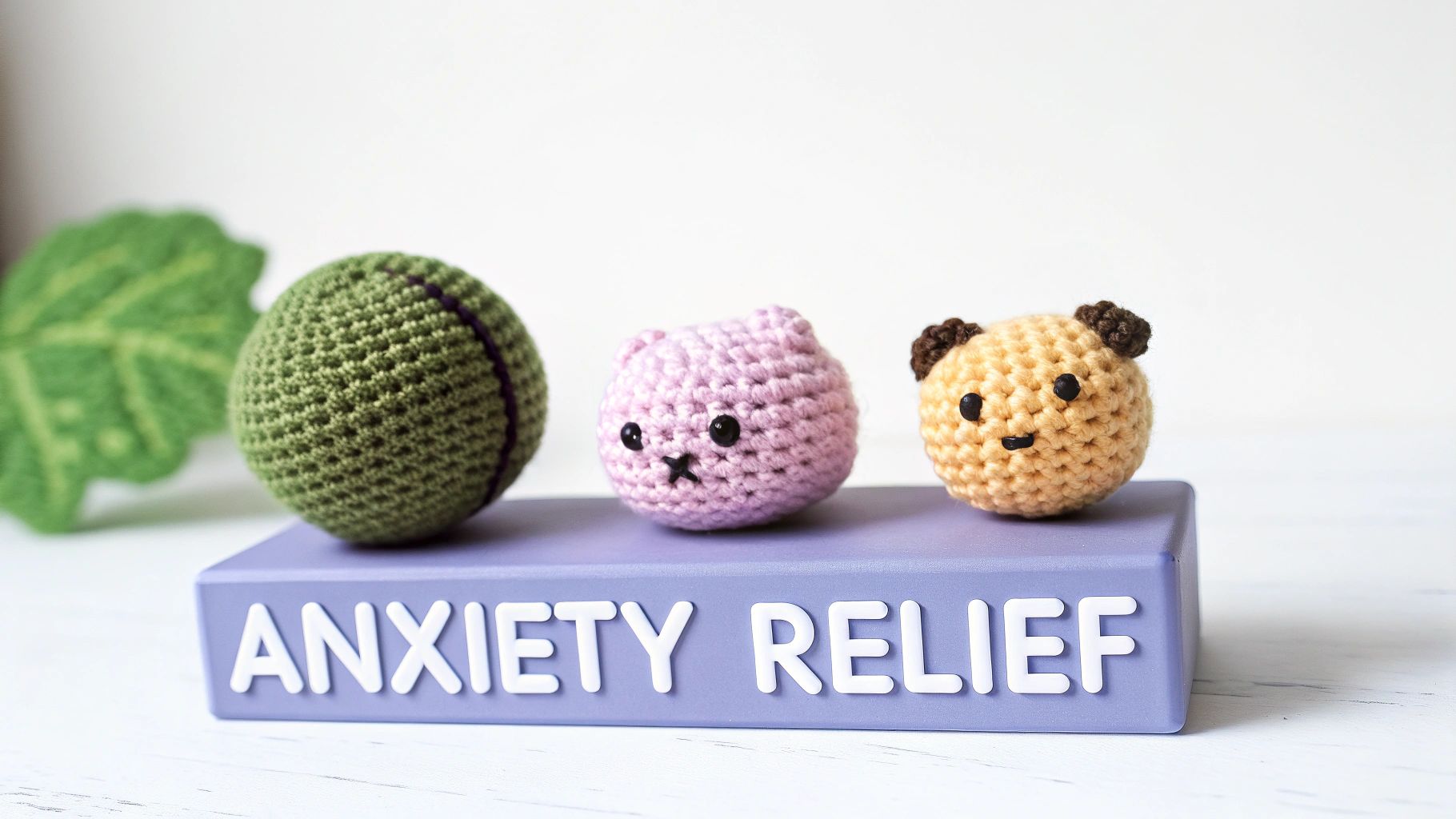
The purpose of these objects is to engage the hands and senses, providing a discreet outlet for fidgeting that can improve focus and reduce anxiety. The act of making them is as beneficial as using them, making this one of the most practical crochet therapy ideas for both personal use and gifting.
How to Get Started
This method is perfect for anyone who experiences anxiety, has trouble focusing, or simply benefits from tactile stimulation. Creating a small, quickly finished object provides a satisfying sense of accomplishment, while the finished item serves as a lasting tool for self-regulation.
Actionable Tip: Incorporate textured stitches like the bobble stitch or puff stitch. The varied and engaging textures are satisfying to touch and can help ground you in the present moment.
Use Calming Colors: Select yarn in colors you find personally soothing. Soft blues, greens, and lavenders are popular choices, but a favorite vibrant hue can be just as effective.
Add Sensory Elements: Consider adding securely attached elements like crinkle material inside for an interesting texture and noise. Please ensure any small parts are secured appropriately, and for items intended for children, adult supervision is recommended.
Yarn Recommendation: A smooth, durable yarn like 100% mercerized cotton in a fingering weight (a thin yarn) is excellent. It holds its shape well under frequent handling and provides crisp stitch definition, making the textures more pronounced.
4. Crochet for Chronic Pain Management
For those living with chronic pain, finding activities that soothe both mind and body is essential. Crochet therapy offers a unique approach by serving as a powerful cognitive distraction from pain signals while also providing gentle, low-impact movement for the hands. This purposeful activity helps maintain dexterity without strenuous effort, making it a valuable tool in a holistic pain management strategy.
The rhythmic, repetitive motions of crochet can help redirect the brain's focus away from discomfort, creating a meditative state that lessens the perception of pain. This method is often integrated into fibromyalgia and arthritis support programs as a gentle way to keep joints mobile and spirits lifted.
How to Get Started
This method is particularly beneficial for individuals with conditions like arthritis or fibromyalgia who are seeking a gentle, engaging way to manage their symptoms. The focus on process over product allows for a non-pressured activity that adapts to fluctuating energy levels.
Actionable Tip: Prioritize ergonomics. Using ergonomic hooks with cushioned, built-up handles can dramatically reduce strain on joints. You can learn more about finding the best crochet hooks for arthritis to make your practice more comfortable.
Take Frequent Breaks: Listen to your body. Work in short, 15-20 minute sessions and take stretch breaks to prevent stiffness. The goal is gentle movement, not endurance.
Adjust Your Setup: Use pillows to support your back, neck, and arms, ensuring you maintain a comfortable and neutral posture to minimize strain on the entire body.
Yarn Options: Choose a smooth yarn that glides easily. A soft wool blend offers elasticity, reducing the need for a tight grip, while a slick mercerized cotton can also work well. Avoid yarns that split easily, as they require more effort.
5. Crochet Community Service Projects for Purpose and Connection
Channeling your craft into acts of service offers a powerful way to find purpose and build community. Crochet Community Service Projects are initiatives where participants create items for charitable causes, transforming a solitary hobby into a meaningful contribution. This approach combines the therapeutic repetition of crochet with the profound psychological benefits of helping others.
The focus is on collective impact. Participants work on items like blankets for homeless shelters or hats for premature babies. The shared goal fosters a unique bond among crafters and provides a tangible sense of accomplishment that goes beyond finishing a personal project.
How to Get Started
This method is perfect for anyone seeking to infuse their craft with greater meaning or combat feelings of isolation. Knowing your stitches will bring warmth to someone in need provides a powerful boost to mental well-being and helps contextualize personal struggles within a larger framework of compassionate action.
Actionable Tip: Start small by making a few simple squares. Many organizations collect squares from crafters all over and assemble them into blankets, allowing you to contribute to a large project without a huge time commitment.
Partner with Established Nonprofits: Connect with local hospitals or shelters. They can provide specific guidelines and ensure your creations reach those who need them most.
Celebrate the Impact: Regularly share updates on how many items have been donated. Seeing the collective result of your work can be incredibly motivating and joyful.
Yarn Options: A soft, machine-washable acrylic yarn is often a great choice for charity projects. It's budget-friendly, comes in many colors, and is easy for recipients to care for. A durable cotton blend is also excellent for items like dishcloths.
6. Crochet Journaling for Self-Expression
Transform your crochet hook into a storyteller's pen with crochet journaling, a deeply personal practice where stitches and colors narrate your inner world. This approach involves creating unique patterns or color combinations that represent specific emotions or memories. It’s less about the final product and more about the process of translating feelings into a tangible form.
The goal is to create a physical archive of your emotional journey. Instead of writing words, you might crochet a jagged, dark-colored swatch to represent a stressful day or a soft, brightly colored spiral for a moment of joy. This method offers a unique avenue for healing and self-discovery.
How to Get Started
This method is perfect for anyone seeking a private, creative outlet for processing their feelings. It bypasses the need for words, allowing for a raw and intuitive form of expression that can be incredibly cathartic.
Actionable Tip: Create a dedicated journal to pair with your crocheted pieces. After making a swatch, jot down the date, the feelings it represents, and any thoughts that came up during the process.
Use Color Symbolism: Develop a personal color code. For example, blue might represent calm, red could be anger, and yellow could symbolize hope. This adds a consistent language to your emotional expressions.
Embrace Imperfection: Allow your stitches to be messy or uneven if that's what the emotion feels like. The purpose is authentic expression, not technical perfection.
Yarn Options: Experiment with a variety of textures and weights. A rough, scratchy wool might capture frustration, while a soft, chenille yarn could represent comfort and safety. Let the fiber itself be part of the story.
7. Crochet Intergenerational Programs for Connection
Picture a space where seasoned hands guide younger ones, sharing stories and stitches that bridge generations. Intergenerational programs pair individuals from different age groups, such as youth and seniors, to crochet together. This approach combines the therapeutic benefits of crochet with powerful social connection and a significant reduction in loneliness for all participants.
The focus extends beyond crafting to creating meaningful relationships. Seniors share a lifetime of skill, gaining a sense of purpose, while younger participants learn a valuable craft and benefit from mentorship. These programs thrive in community centers and nursing homes, offering one of the most heartwarming crochet therapy ideas.
How to Get Started
This method is perfect for organizations seeking to combat social isolation and foster community bonds. The shared activity of crochet acts as a natural icebreaker, creating a comfortable environment where conversation and connection can flourish.
Actionable Tip: Start with simple, collaborative projects like scarves or granny squares that can be combined into a larger blanket. This fosters teamwork and ensures everyone can contribute.
Create a Welcoming Space: Ensure the environment is comfortable, well-lit, and accessible for all ages. Incorporating snacks and social time helps build rapport.
Encourage Storytelling: Gently prompt participants to share stories while they work. The rhythmic, calming nature of crochet makes it easier for people to open up and connect.
Yarn Options: A smooth, worsted-weight acrylic yarn is an excellent choice for these programs. It is affordable, comes in a wide range of colors, and is easy for both new and experienced hands to work with.
8. Crochet as a Grounding Tool in Trauma Recovery
Picture crochet as a grounding tool in a clinical setting, where its rhythmic motions become a partner in profound healing. This advanced application integrates the bilateral, repetitive hand movements of crochet into structured trauma therapies. Under professional guidance, this technique uses the craft to help stabilize the nervous system during trauma processing, offering a tangible anchor in a therapeutic environment.
In this context, the steady, back-and-forth motion of crocheting provides a form of bilateral stimulation, which can help the brain process traumatic memories without becoming overwhelmed. This innovative approach is being explored in specialized settings and by occupational therapists working in trauma recovery.
Important Considerations
This method is strictly for use under the supervision of a licensed mental health professional trained in trauma-informed care. It is a powerful adjunctive therapy, not a standalone treatment.
Implement Only with Professional Guidance: This is a clinical tool and must be guided by a qualified therapist to ensure it is used safely and effectively within a therapeutic framework.
Actionable Tip (for general grounding): Outside of a clinical setting, you can use a simple crochet chain stitch as a grounding technique. When feeling overwhelmed, focus entirely on creating a long chain, paying attention to the feel of the yarn and the steady rhythm of your hands.
Integrate with Grounding Techniques: A therapist may guide a client to focus on the feel of the yarn or the gentle click of the hook to stay present and grounded during a session.
Yarn Options: A smooth, soft yarn that doesn’t snag or split is essential. The tactile experience should be soothing, not frustrating, to support the therapeutic process. A worsted-weight cotton or wool blend is often a good choice.
Your Journey With Yarn Awaits
As we've explored, the world of crochet extends far beyond simply creating beautiful objects. It is a powerful, accessible, and deeply personal tool for healing, connection, and self-expression. The rhythmic motion of your hook and the soft texture of yarn can become a meditative practice, transforming a simple craft into a profound therapeutic experience.
We've covered a wide spectrum of crochet therapy ideas, each offering a unique pathway to well-being. From the quiet focus required for an anxiety relief fidget object to the shared purpose found in community service projects, the benefits are as varied as the projects themselves. The key takeaway is that your crafting practice can be intentionally shaped to meet your specific emotional and mental health needs.
Embracing Your Therapeutic Craft
The most important step is the one you take right now: choosing to begin. Don't feel pressured to tackle a large project. Your journey can start with a single mindful crochet session or a few rows on a blanket that helps you process the day. The value isn't in the finished product, but in the mindful moments you create along the way.
Remember these core principles as you move forward:
- Intention is Everything: Approach your craft not just as a task, but as dedicated time for self-care.
- Process Over Perfection: Give yourself permission to make mistakes. Therapeutic crochet is not about flawless stitches; it's about the soothing rhythm and the grace you extend to yourself.
- Connection is Key: Whether you join a group or simply share your progress with a friend, crafting can be a powerful antidote to isolation.
The true magic of using crochet as a therapeutic tool lies in its adaptability. It meets you where you are, providing a gentle, creative outlet for whatever you are navigating in life. By integrating these crochet therapy ideas into your routine, you are not just learning a new skill; you are weaving a tapestry of resilience, mindfulness, and joy, one stitch at a time.