Knowing how to join crochet rounds is one of those fundamental skills that can truly elevate your projects from beautiful to breathtaking. You've got this! The basic method is simple: a slip stitch connects the end of your round to the beginning, forming a perfect circle. This is your go-to for creating projects with clearly defined, structured rounds.
Why a Perfect Seam Elevates Your Crochet
Let's be real: a lumpy, obvious seam can make a beautiful project look, well, a little too homemade. Mastering the art of the join is what separates the good from the great, especially when you're making something detailed like amigurumi where every stitch is on full display. A clean join gives your work that polished, professional look you deserve. Every stitch you make is a step toward creating something amazing, and a perfect seam is the beautiful finishing touch.
Often, the secret to a flawless finish begins before you even make the first stitch. It starts with your materials. Using a high-quality, smooth yarn is a game-changer because it gives you the stitch definition you need to really nail these joining techniques.
The Impact of Quality Yarn
When we're working on our amigurumi dolls, we always reach for a 100% mercerized cotton yarn in fingering weight. This kind of yarn has a lovely sheen and resists splitting, which lets your hook glide through the loops effortlessly. The result? Crisp, clear stitches that make it so much easier to see exactly where you need to join your round. Working with quality yarn makes the whole process more joyful and rewarding.
In this guide, we're going to focus on two essential methods every crocheter should have in their toolkit. You'll soon master both!
The reliable slip stitch join: Your workhorse for projects needing structure.
The game-changing invisible join: For when you want a completely seamless finish.
Before we get into the joins, it's a good idea to feel confident with the basics. If you need a quick refresher, pop over to our guide on the basic crochet stitches to brush up.
By the time you're done here, you'll have the skills to make every seam look clean, intentional, and beautiful. Let's get started on this exciting next step in your crochet journey!
Mastering the Classic Slip Stitch Join
The slip stitch join is a fundamental skill, probably the first one you ever learned for working in the round. It’s your old reliable, the go-to for creating projects with sturdy, well-defined rounds. When structure matters, the slip stitch join is your best friend. Don't underestimate this foundational technique. Mastering it is a huge win!
At its heart, the technique is simple: pop your hook into the first stitch of the round, yarn over, and pull that new loop through everything on your hook. Done. That single motion closes the circle, giving you a neat, visible seam.
But while the action itself is easy, getting it to look good takes a bit of practice and finesse, especially with your tension. And you can absolutely do it!
The Secrets to a Perfect Slip Stitch Seam
One of the biggest hurdles beginners face is accidentally adding an extra stitch at the join. It happens when you mistake the slip stitch from the previous round, or your starting chain, for an actual stitch. Always, always join into the top of the first real stitch you made in that round.
A stitch marker is your secret weapon here. Seriously. Pop one into that first stitch as soon as you make it, and you'll never have to guess where to join again. It’s a fantastic habit to get into that will save you so much frustration.
Tension is the other piece of the puzzle. If your slip stitch is too tight, it’ll pucker the fabric and create a little dip right at the seam. Too loose, and you're left with a gap. Your goal is to make that slip stitch blend in by matching the tension of all your other stitches. You are in control of your tension!
Actionable Insight: After you insert your hook and yarn over, give the working yarn a gentle tug to snug it up just a bit before you pull it through. Try this on your next round! This tiny adjustment can make a huge difference in keeping your seam tidy and even.
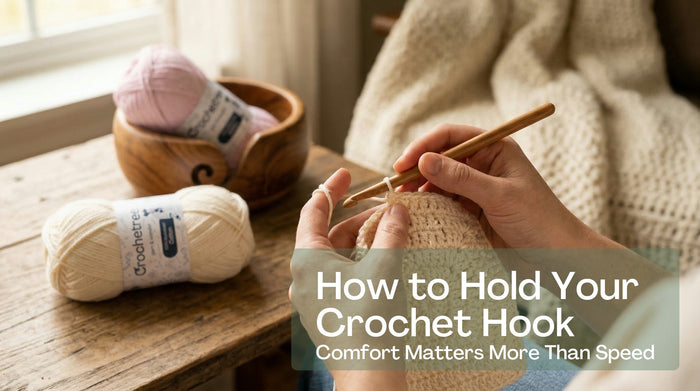
If you’re struggling with tension, take a look at how you’re holding everything. A death grip on your hook will almost always lead to tight, uneven stitches. If you find your hands are cramping up, take a look at our tips on how to hold your crochet hook and yarn for a more relaxed approach.
Keeping Your Seam Straight
Ever finish a project and realize your seam is slowly drifting off on a diagonal? It’s a super common frustration! This usually happens because the turning chain that brings you up to the next round creates a tiny, almost unnoticeable offset. Round after round, that little offset adds up.
While there are more advanced ways to combat a traveling seam, the simplest fix is to be mindful of your stitch placement and, you guessed it, keep that tension consistent. Remember, practice is what turns a good join into a great one. Be patient with yourself; you're building a skill!
The Invisible Join for a Truly Seamless Finish
Ready to make your seams completely disappear? The invisible join is the technique that will elevate your work from great to professional. It's an absolute secret weapon for amigurumi, where a flawless surface is essential for that polished, store-bought look. You are going to love the magic of this method!
Unlike a slip stitch, which creates a small but visible knot, the invisible join uses a tapestry needle to perfectly mimic the look of a real stitch. You’re essentially "drawing" the final stitch with your yarn tail, creating a connection that’s virtually undetectable. It really does feel a bit like magic, and it’s a skill you can definitely master.
The Art of the Needle Join
To get started, you’ll complete the final stitch of your round as usual but skip the slip stitch join. Instead, cut your yarn, leaving a tail of about six inches, and pull it completely through the last loop on your hook. Now, go ahead and thread this tail onto a tapestry needle.
From here, the process is quite deliberate. Let's take it step-by-step:
- First, skip the first stitch of the round (this is the one you would normally slip stitch into).
- Next, insert your needle from front to back under both loops of the second stitch of the round.
- Gently pull the yarn through. You'll see the top "V" of your new, fake stitch starting to form.
- Finally, insert the needle back down into the center of the very last real stitch you made, making sure to go under the back loop only.
This final step is what anchors the join and completes the illusion. The popularity of this technique has soared, especially for projects with frequent color changes. In fact, surveys in online communities show that over 60% of advanced crocheters prefer the invisible join for its clean results. You can dive deeper into this preference by reading about the two ways to crochet in the round.
Achieving Perfect Tension
The real key to mastering this technique is getting the tension just right. You want to pull the yarn tail just tight enough so the "fake" stitch is the same size as all the others. If you pull too hard, the fabric will pucker. Too loose, and you'll see a gap. It takes a bit of practice, and you'll get a feel for it.
Actionable Insight: Use your thumb to hold the new stitch in place as you tighten it. This gives you way more control and helps you adjust the tension until it looks just right. Give it a try on a small practice swatch to see the difference!
From our experience, this method works beautifully with 100% mercerized cotton yarn. The smooth, non-stretchy fibers create incredibly crisp and defined stitches that make the join even more seamless. Once you've perfected it, you'll wonder how you ever crocheted without this little bit of finishing magic.
Choosing the Right Joining Method for Your Project
Knowing how to do a join is one thing, but knowing when to use it is what really takes your crochet to the next level. Making a smart choice here can be the difference between a project that looks handmade and one that looks truly polished. It’s all about matching the technique to what you’re making. You're the artist, so you get to decide!
Think of it like having a couple of different tools in your kit. The slip stitch join is your trusty, everyday workhorse. It’s fast, sturdy, and perfect for projects where you want clear, defined rounds. It does leave a visible seam, but sometimes that can even be a neat design feature.
Making the Best Choice for Amigurumi
But when it comes to amigurumi, we're usually aiming for something totally different: a perfectly smooth, seamless surface. This is where the invisible join is the absolute champion. You're creating these adorable characters and dolls, and a noticeable seam can really distract from their charm. The invisible join creates a finish that’s so clean, it’s essential for getting that professional look you're aiming for.
Here's a quick comparison to help you decide which technique is the best fit for your current crochet project.
Choosing Your Joining Method Slip Stitch vs Invisible Join
|
Feature |
Slip Stitch Join |
Invisible Join |
|---|---|---|
|
Best For |
Structured items with defined rounds |
Amigurumi, hats, projects needing a seamless look |
|
Visibility |
Creates a visible, sometimes raised seam |
Creates a nearly invisible, flat seam |
|
Speed |
Fast and easy to execute with your hook |
Slower; requires a yarn needle and more steps |
|
Structure |
Adds a little rigidity and structure |
Maintains the fabric's natural drape |
Ultimately, the best method depends on the look you want to achieve. For sturdy items, the slip stitch is a great choice, but for the flawless finish needed in amigurumi, the invisible join is absolutely worth the extra effort.
As you can see, for amigurumi, which almost always uses thinner yarn and needs that seam to disappear, the invisible join is hands-down the way to go. Once you start making that choice intentionally, you'll see a huge improvement in how clean and professional your finished pieces look.
Troubleshooting Common Joining Problems
Hitting a snag with your seams? Don’t worry, it happens to all of us. That moment when you notice something is just a little off can be frustrating, but every challenge is a chance to learn more about your craft.
Even with perfect tension, you might see your seam start to slant diagonally. This happens because the starting chain at the beginning of each round creates a tiny offset that adds up over time. It’s a completely normal part of crocheting in joined rounds, but you definitely don't have to live with it.
Fixing the Slanting Seam
A surprisingly simple but effective fix is to use a standing stitch instead of a starting chain. To do this, you just make a slip knot on your hook and work your first stitch (like a single or double crochet) directly into the first stitch of the round. This trick stacks the stitches vertically and helps keep your seam perfectly straight. Why not try it right now on a small swatch?
Another classic hiccup is ending a round with more or fewer stitches than you started with. This almost always happens when you accidentally work into the slip stitch that joined the previous round. It's an easy mistake to make. Just remember, that slip stitch isn't a "real" stitch, it's just a connector.
Actionable Insight: The absolute best habit you can build is placing a stitch marker in the very first stitch of every single round. This takes all the guesswork out of where to place your join, preventing both slanting seams and accidental stitch count changes. It's a simple step that makes a world of difference!
Finally, let's talk about the dreaded gap that can appear right at the join. This is purely a tension issue. If your joining slip stitch is too loose, it creates a small but noticeable hole.
To fix this, give your working yarn a gentle tug to tighten the loop on your hook before you pull it through to complete the slip stitch. It’s a tiny adjustment that makes a massive difference, especially when you're using a smooth mercerized cotton yarn where every little detail shows. Learning to spot these things is key, and you can explore more common hurdles in our guide to crochet mistakes you must avoid.
Common Questions About Joining Crochet Rounds
Let's wrap up with a few common questions that pop up when you're mastering these joins. Getting these little details right can really boost your confidence and help you feel like a pro.
Can I Use the Invisible Join for Every Round?
Not really, and there's a good reason why. Because the invisible join requires you to cut the yarn, it’s best saved for the final round of your project or for when you're switching to a new color.
For all the rounds in between, stick with the slip stitch join. It’s far more practical when you're working continuously with the same color.
Why Is My Seam Slanting or Traveling?
Ah, the dreaded traveling seam! This is a super common issue, so don't feel bad. It happens because the little chain-up you do at the start of each round gives the stitches a tiny nudge to the side.
To straighten things out, try starting your round with a standing stitch instead of a chain. This helps stack the stitches almost perfectly on top of one another, keeping that seam line much straighter.
What's the Difference Between Joining Rounds and a Continuous Spiral?
Think of it this way: joining rounds means you close off each circle with a join stitch. This creates a visible (but hopefully neat!) seam and keeps your stitches stacked vertically. It's great when you need straight lines for colorwork or shaping things like granny squares.
Working in a continuous spiral, on the other hand, means you never join at all, you just keep going around and around. This creates a totally seamless fabric, which is why it's the go-to technique for amigurumi. You avoid the seam, but your "rounds" will slightly slant. There is no right or wrong way; it's about choosing the best technique for the amigurumi doll you are creating.