

Ever heard a crocheter say they had to “frog” their project? It’s one of those quirky terms that sounds a bit strange at first, but it has a charmingly simple meaning. Frogging in crochet means ripping out your stitches, often a whole row or more, to fix a mistake.
The name is a fun little inside joke in the fiber community. As you pull the yarn out, you "rip it, rip it," which sounds just like a frog’s "ribbit, ribbit." It's a lighthearted term for something that's a natural part of creating.
Embracing Frogging as a Positive Step
It’s easy to feel like frogging is a step backward, but it's actually one of the most valuable skills in your crafting toolkit. Every single person who crochets, from the newbie finishing their first wobbly dishcloth to the seasoned pro designing a complex sweater, has to frog their work. It's a completely normal and necessary part of making something by hand.
Think of it as your project’s undo button. When you decide to unravel your work, you’re taking control and making a conscious choice to create something you’re truly proud of. It’s a moment where you turn frustration into a chance to learn and improve.
The Real Impact of Fixing Mistakes
Nobody enjoys spotting a mistake a few rows back, but the feeling of ignoring it is often worse. While pulling out hours of work can feel a little heartbreaking, the satisfaction of getting it right is always worth it. An informal poll of 5,000 crafters found that while 85% felt frustrated when they had to frog, a whopping 65% said they felt relieved and happy after fixing the error. This shows how much frogging contributes to our overall enjoyment and the quality of what we make.
Frogging is the art of lovingly undoing your work so you can make it even better. It’s a pause, not a failure.
Ultimately, learning to embrace frogging is a huge confidence booster. It shifts your perspective from seeing mistakes as disasters to seeing them as opportunities to perfect your craft. Every stitch you rip out is proof of your dedication to creating something beautiful, one correction at a time.
Getting the Lingo Right: Frogging vs. Tinking
Once you get the hang of crochet, you start picking up on all the quirky terms that make up our shared crafting language. A common point of confusion is the difference between "frogging" and "tinking." While they both mean you're undoing your work, they are used for completely different situations.
Knowing when to frog and when to tink will save you a ton of headaches and help you fix any mistake the smart way.
Frogging is your go-to for big mistakes, when you have to pull out whole rows or even start over. Tinking, on the other hand, is for surgical precision. The name itself is a clever hint: "tink" is just "knit" spelled backward. Knitters came up with it first, but we crocheters snagged it to describe the careful act of undoing your work one stitch at a time.
Choosing Your Method
Here's an easy way to think about it:
Actionable Tip: If the mistake is in the current row you're working on, try tinking first. If the mistake is several rows back or affects the whole structure, frogging is your best bet.
Frogging: This is when you give your working yarn a good tug and watch rows disappear in seconds. It’s perfect when you spot a major counting error from way back or realize the whole section just isn't working.
Tinking: This is when you use your hook to patiently work backward, stitch by stitch. It’s ideal for fixing a slip-up you just made a few stitches ago.
It all comes down to what's most efficient. For a tiny mistake, tinking is quick and gives you total control. For a big, project-threatening blunder, frogging is your best friend.
Interestingly, the term "frogging" really took off in the late 20th century as crafting communities moved online. Sites like Ravelry brought makers together from all over the world, and this once-niche slang became a global standard. Today, you'll see it mentioned in over 30% of project discussions in major English-speaking forums, a testament to how universal the experience of starting over is!
Common Crochet Mistakes That Need Frogging
Knowing what frogging means in crochet is one thing, but knowing when to do it is a real crafting superpower. Making the call to frog can be the difference between a finished piece you tolerate and one you absolutely adore. Trust me, it’s a moment of taking back control, not admitting defeat.
Think of it as your own personal quality control. Spotting a mistake early is always less painful than finding it just as you're about to weave in the final ends. Every single crocheter has felt that sinking feeling of seeing a mistake glaring back at them from several rows down. The confidence comes from knowing you have the power to fix it.
Signs It's Time to Frog
Sometimes a mistake practically screams at you, like a giant hole where a stitch should be. Other times, the signs are much quieter. Learning to spot these little whispers is what turns you into a more intuitive and confident maker, helping you create projects you're genuinely proud of.
Here are some of the most common red flags that mean it's probably time to rip-it, rip-it:
Your Stitch Count is Off: This is the big one. A wonky stitch count can give you wavy blanket edges, a lopsided amigurumi head, or a sweater that just won't fit, no matter how much you hope it will.
The Gauge is Wrong: Did you skip the gauge swatch? We've all been there. If your tension is too loose or tight, your finished project won't match the pattern's measurements. Frogging and starting over with the right hook is really the only way to fix it.
You Dropped or Added a Stitch: A single dropped stitch can create a small hole that might unravel later, while an accidental increase will leave a bump and throw off your entire count for the rest of the project.
You Just Don't Like It: Sometimes the stitches are perfect, but the vibe is off. Maybe those colors that looked amazing in the skein just aren't working together, or the fabric doesn't have the drape you imagined. It is 100% okay to frog for purely creative reasons!
Remember, this is your project. You have total permission to change your mind and unravel your work until you are thrilled with how it’s turning out.
Getting good at identifying these issues is a massive part of the crochet journey. If you want a closer look, you can explore these common crochet mistakes you must avoid to help you spot them even faster. Recognizing when to take a step back and frog is the mark of a truly thoughtful and dedicated crafter.
How to Frog Your Crochet Project Without Tangles
So, you’re ready to frog your project. It can feel a little intimidating to pull out stitches you worked so hard on, but with a calm hand and a bit of patience, you can unravel your work without turning your yarn into a knotted nightmare.
First things first, carefully take your crochet hook out of the live loop. Now, find the working yarn, that's the strand still connected to your ball of yarn, and give it a gentle tug. You'll see the stitches start to come undone. The most important thing here is control. Don't yank it! Pull slowly and steadily, pausing every few stitches to make sure the yarn isn't twisting up or snagging.
The Lifeline: A Crafter’s Best Friend
If you’re working on a big or complicated piece, try this game-changing tip: the lifeline. This simple trick can save you a world of headache and prevent you from accidentally undoing too much work.
A lifeline is just a piece of scrap yarn, usually in a bright, contrasting color, that you weave through a row of stitches you know is correct. It acts as a safety net, stopping the unraveling process right where you want it to.
You can think of a lifeline as a bookmark for your crochet. It holds your spot so you can rip back to that point without any fear of going too far.
To set one up, thread a yarn needle with a smooth piece of scrap yarn and run it through the back loop of every stitch in a "safe" row. Then just leave it there and keep crocheting. If you spot a mistake later on, you can frog with confidence, knowing your lifeline will stop you.
A Step-by-Step Guide to Frogging
Frogging shouldn't be a frantic, panicked activity. Just follow these simple steps to keep your yarn tidy and your stress levels low.
Remove Your Hook: Gently slide your hook out of the active loop.
Find the Working Yarn: Grab the strand that leads back to your skein or ball.
Pull Slowly and Gently: Start pulling the yarn. Watching the stitches come undone one by one is the best way to prevent knots from forming.
Stop and Re-insert: Once you’ve unraveled back to the stitch right before the mistake, stop. Carefully put your hook back into that live loop to secure it.
Smooth Out the Kinks: Before you start crocheting again, run your fingers along the frogged yarn to straighten it out. It'll be a little crinkly, but this helps prevent tension issues in your new stitches.
Feeling comfortable and in control is key.
Tips for Frogging Different Types of Yarn
Not all yarns are created equal, especially when it's time to rip them out. The fiber content and construction of your yarn play a huge role in how gracefully it unravels. Getting to know your yarn is the first step toward a stress-free fix.
Smooth, tightly spun yarns are a dream to frog. Think of fibers like mercerized cotton or superwash wool: they tend to glide apart with just a gentle tug, making corrections quick and painless.
Yarn Options and How They Frog
Mercerized cotton (fingering weight): Smooth, durable, and has crisp stitch definition; it holds shape well, making it ideal for amigurumi or projects with fine detail. It frogs beautifully.
Cotton blends (DK/worsted weight): Breathable and easy to care for, they are great choices for summer garments, dishcloths, and homeware. These usually frog without much trouble.
Acrylic (mostly worsted weight): A budget-friendly and machine-washable option common for blankets and everyday projects. It generally frogs well, though some varieties can split or get staticky.
Wool/wool blends: Warm, elastic, and offers great stitch recovery for items like hats and sweaters. Go slowly when frogging, as the fibers can sometimes cling together.
Chenille/faux-fur: Known for its plush texture, perfect for cozy blankets and pillows. However, these yarns have low stitch visibility and can snag easily, making them very difficult to frog.
Actionable Tip: Before starting a project with a fuzzy or novelty yarn, do a small test swatch and try frogging it. This will show you how the yarn behaves and help you decide if it’s the right choice for a complex pattern.
How to Handle Tricky Yarns
Textured and fluffy yarns demand more patience. Their fuzzy fibers love to cling to each other, and if you pull too fast, you'll end up with a tangled mess.
The real secret to frogging tricky yarns is patience. Rushing is a one-way ticket to knots and damaged fibers. Just breathe, slow down, and think of it as a moment of mindful care for your project. To frog these yarns, gently wiggle each stitch loose with your hook before pulling the yarn through.
Embracing Imperfection: The Mindful Side of Frogging
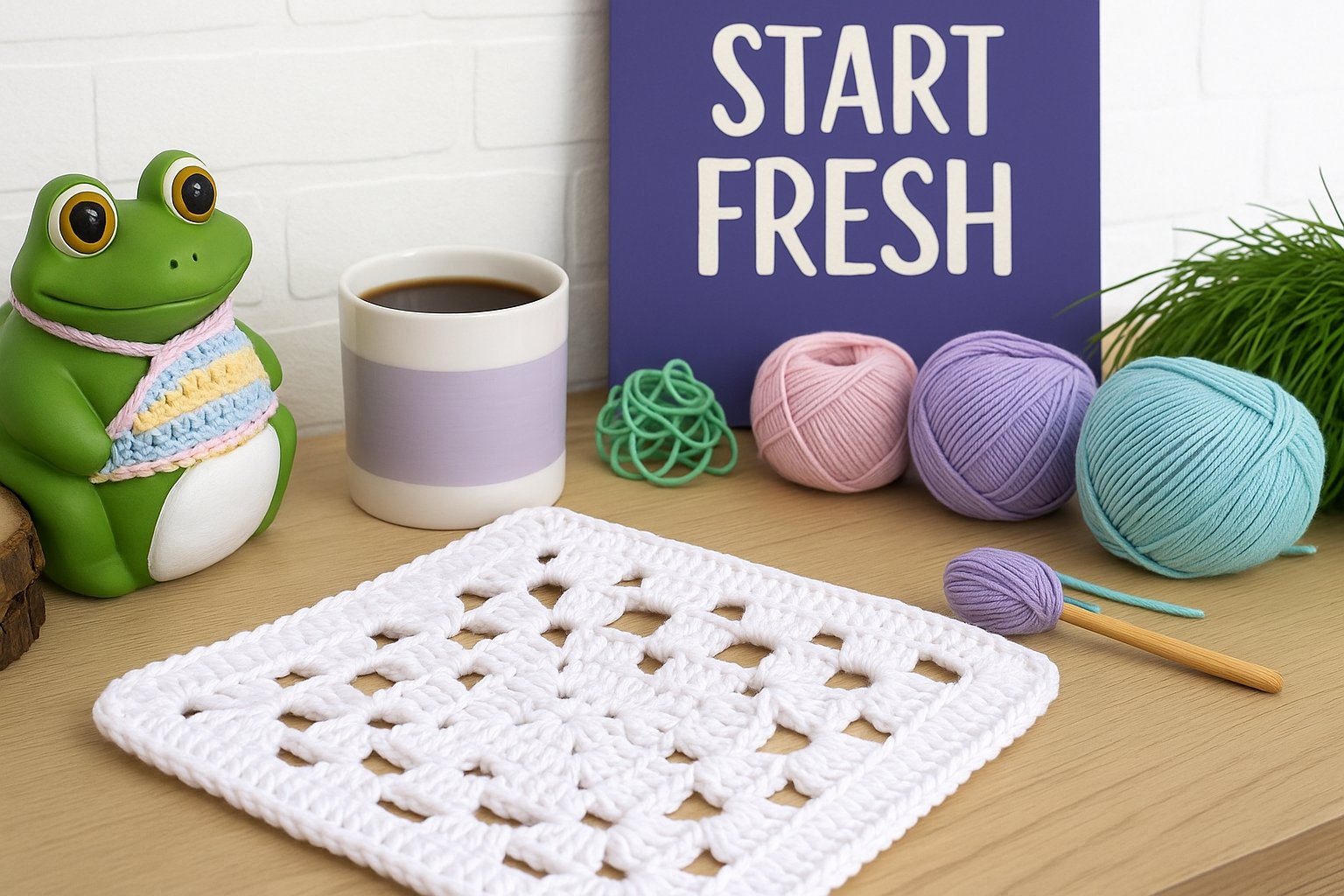
Let's be honest, having to frog your work can feel like a setback. That little flash of frustration is something every crafter knows well. But what if we decided to see it differently?
Instead of a mistake, think of it as a mindful pause. It's a chance to take a breath, reconnect with your project, and honor the creative process, bumps and all. This is where crafting becomes a beautiful way to practice a little self-compassion. The gentle act of pulling out your stitches can be surprisingly meditative, a quiet moment to reset.
A Chance to Practice Patience
Embracing frogging reminds us that the goal isn't just a flawless finished piece. The real reward is the joy and peace we find in the simple rhythm of creating. It teaches us to be patient with ourselves and appreciate that handmade items always carry the story of their making, including the parts that were redone.
Frogging isn’t about losing progress; it's about choosing a better path for your project. It's an act of love for your craft and for the beautiful piece you’re bringing to life.
When we reframe what frogging means in crochet, we can turn it from a chore into a calming ritual. It’s an opportunity to slow down, care for your work, and remember that every stitch, even the ones you undo, is part of a wonderful, very human experience. It's through these little acts of correction that we grow as makers and find a deeper connection to our projects.
Common Questions About Frogging
Once you get comfortable with the idea of frogging, a few practical questions always come up. Let’s tackle some of the most common ones so you can rip back your work without any worries.
How Many Times Can I Frog the Same Yarn?
This really comes down to the yarn’s fiber content. Sturdy, smooth yarns like mercerized cotton can handle being frogged over and over without showing much wear.
On the other hand, more delicate fibers like single-ply wool or fluffy mohair can start to thin out, pill, or get hopelessly tangled if you frog them too many times. Just be gentle and keep an eye on how your yarn is holding up.
Will Frogging Ruin My Yarn?
If you’re careful, frogging shouldn't ruin your yarn. The biggest danger is yanking too fast and creating knots, especially with fuzzy or textured yarns like chenille. Slow and steady wins the race here.
After you frog a section, the yarn will look all crinkly and ramen-noodle-like. You can definitely crochet with it as is, but if the kinks bother you, a gentle steam or a quick soak can help relax the fibers before you wind it back into a ball.
Don't worry about the kinks! Most of the time, the tension from your new stitches will straighten out the yarn just fine.
Is It Better to Frog or Just Keep Going?
Ah, the ultimate question. If the mistake throws off the structure, size, or look of your project, it’s always better to frog.
Ignoring a messed-up stitch count or a gauge that’s way off will only cause a bigger headache down the line. It's much better to fix it right away and create something you'll be genuinely proud of. I encourage you to see frogging not as a chore, but as a chance to make your project the best it can be.
At Crochetree, we believe that every part of the creative process, mistakes and all, is something to be enjoyed. Explore our gorgeous patterns and high-quality yarns to start your next project with total confidence.
Find your next creative spark at https://crochetree.com.
![The Ultimate Beginner's Guide to Crochet [2026]](http://crochetree.com/cdn/shop/articles/feat-ultimate-beginners-guide-to-crochet_eae81cec-84d0-455d-b190-08cd22d826c4.jpg?v=1777713815&width=700)
