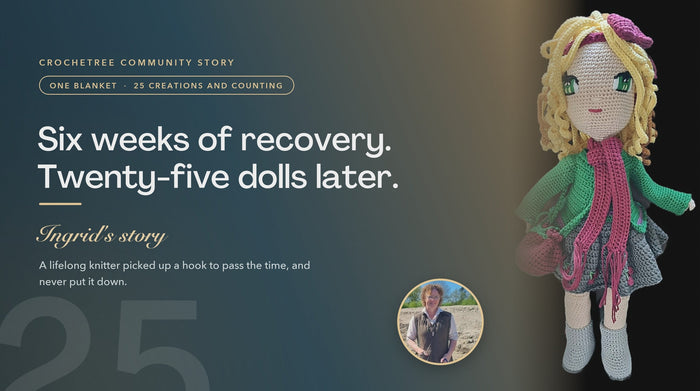
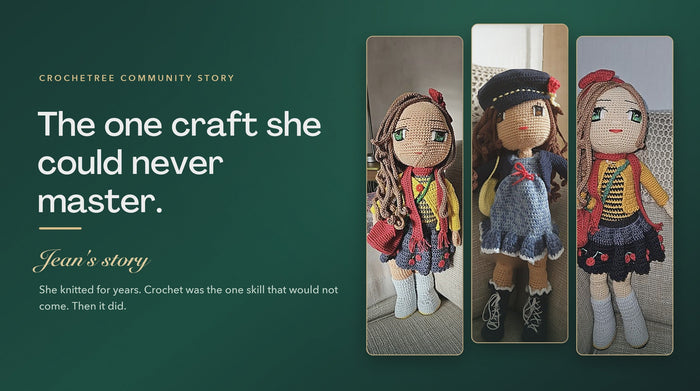
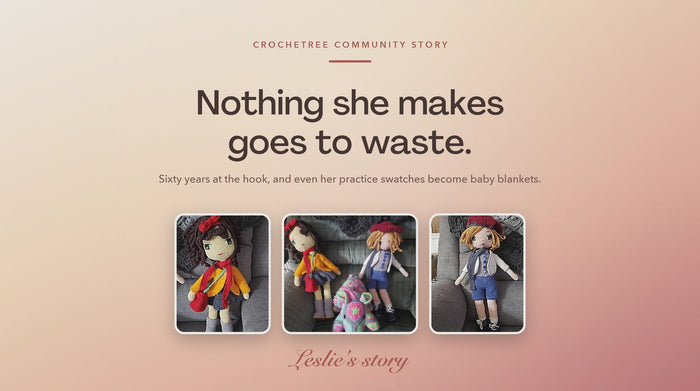
You can nail every stitch, get the tension just right, and stuff the head to a perfect sphere, but the moment you place those eyes and embroider that tiny mouth, everything changes. The face is where your crochet doll stops being a project and starts being a character.
Whether you're working on your first amigurumi or your fiftieth, getting crochet doll expressions right is one of the most rewarding (and sometimes nerve-wracking) parts of the process. A few millimeters in any direction can turn a cheerful doll into a surprised one, or a slightly unsettling one.
The good news? You don't need to be an artist to create beautiful, expressive crochet doll faces. You just need to understand a few simple principles. Let's walk through them together.

Eye Placement: The Single Biggest Factor in Crochet Doll Expressions
If there's one thing that determines how your crochet doll face reads, it's the eyes. Not the type of eyes, not the color, the placement. Amigurumi eye placement is the foundation of every expression, and even a one-row difference can completely change the mood of your doll.
Here's the general principle: the eyes sit roughly halfway down the head (between the top of the head and the neck), usually between rows 8 and 12 on a standard-sized doll. But that's just the starting point. Where you go from there determines the personality.
How Eye Position Affects Expression
| Eye Placement | Emotional Effect | Best For |
|---|---|---|
| Higher on the face | Mature, serious, thoughtful | Adult characters, grandparent dolls |
| Lower on the face | Cute, youthful, innocent | Baby dolls, children, kawaii-style |
| Closer together (5-6 stitches apart) | Focused, intense, curious | Character dolls with strong personality |
| Wider apart (8-10 stitches apart) | Sweet, gentle, dreamy | Soft, approachable dolls |
| Slightly asymmetrical | Playful, quirky, endearing | Whimsical characters, clowns |
Pro tip: Before committing, use pins or stitch markers to test different positions. Insert them into the head and step back, you'll instantly see how the spacing changes the expression. It's much easier to move a pin than to reattach a safety eye.

The "Triangle Rule" for Natural-Looking Faces
A classic trick from doll-making: if you draw an imaginary line between the two eyes and down to the mouth, it should form a triangle. An inverted triangle (eyes wider than the mouth) tends to look more natural and appealing. This simple geometry is behind almost every crochet doll face that just "looks right."
Safety Eyes vs. Embroidered Eyes: Which Should You Choose?
This is one of the most common questions in amigurumi, and there's no single right answer. Both safety eyes and embroidered eyes for crochet dolls have real advantages, and the best choice depends on your project, your skill level, and who the doll is for.
| Feature | Safety Eyes | Embroidered Eyes |
|---|---|---|
| Ease of use | Easy to insert and secure | Requires practice with yarn needle |
| Adjustability | Difficult to reposition once locked | Can be undone and redone easily |
| Child safety | Not recommended for children under 3 | Safe for all ages when secured well |
| Expression range | Limited to available shapes and sizes | Unlimited, any shape, size, or style |
| Professional look | Clean, polished, consistent | Handmade charm, unique character |
| Durability | Very durable once locked | Can loosen over time if not secured |
| Cost | Requires purchasing eyes in bulk | Requires purchasing embroidery floss |
| Best for | Gifts for older children/adults | Baby-safe toys, display dolls, custom expressions, artistic freedom |
Our crochet doll patterns include instructions for our beautiful embroidered eyes. However, if you're just starting out with amigurumi, safety eyes are the easier entry point. As your confidence grows, embroidered eyes open up a whole world of creative expression.

A Note on Safety Eye Sizes
Bigger isn't always better. For a standard amigurumi doll head (around 45-50 stitches in circumference), 9 mm to 12 mm safety eyes tend to look the most proportional. Going larger (15 mm+) gives a cartoonish, kawaii look, while smaller eyes (6 mm) create a more subtle, gentle expression. Match the eye size to the personality you're going for.
The Mouth: Less Is More
If eye placement is the foundation of your crochet doll face, the mouth is the finishing touch that brings it all together. And here's the secret that experienced doll makers know: when it comes to amigurumi mouths, restraint is everything.
A tiny, carefully placed mouth can say more than a large, detailed one. In fact, some of the most beloved crochet dolls have no mouth at all, the eyes do all the talking.
Mouth Style and Expression
| Mouth Style | Expression Created | How to Make It |
|---|---|---|
| Small curved smile | Happy, content, friendly | 2-3 straight stitches in a gentle upward curve |
| Straight horizontal line | Calm, neutral, serious | 1-2 horizontal straight stitches |
| Tiny "v" shape | Sweet, subtle, thoughtful | Two small diagonal stitches meeting at a point |
| Small "o" circle | Surprised, curious, singing | 3-4 small stitches in a circle |
| No mouth | Serene, mysterious, open to interpretation | Leave blank, let the eyes carry the expression |
| Curved downward line | Sad, worried, pensive | 2-3 stitches in a gentle downward curve |
Placement matters as much as style. The mouth should usually sit 2-3 rows below the eyes, centered between them. As our dolls are bigger than most crochet dolls you will see online, the mouth placement is a bit lower. Placing it too low makes the doll look surprised; too high and the face feels crowded. Use a single strand of embroidery thread or a thin yarn for the most delicate results.

Nose Placement and Style
The nose is the most often skipped facial feature in amigurumi, and honestly, that's perfectly fine. Many beautiful crochet dolls have no nose at all. But when you do add one, it can bring surprising depth and personality to the face.
For dolls that include a nose, placement follows the triangle rule: it should sit roughly at the midpoint between the eyes and the mouth. Common approaches include:
- A single small stitch in skin-tone or pink yarn, the simplest option, subtle but effective
- Two tiny vertical stitches side by side, gives a slightly more defined nose
- A small crocheted triangle sewn on, best for character dolls like animals or fantasy creatures
- A French knot, creates a cute, rounded bump that catches the light nicely

Subtle Shaping Techniques That Change Everything
Beyond eyes, mouth, and nose, there are a few shaping tricks that experienced amigurumi makers use to add dimension and expression to crochet doll faces. These aren't complicated, but they make a real difference.
Sculpting with Needle and Thread
Thread jointing (also called needle sculpting) is a technique where you use a long needle and strong thread to pull specific points of the stuffed head inward, creating subtle contours. You can use this to:
- Create shallow eye sockets that make safety eyes sit more naturally
- Define a slight chin or jawline
- Add gentle cheek indentations for a smiling effect
- Shape a small nose bridge
The key is subtlety. You're not trying to reshape the entire head, just pulling in a few points by 2-3 mm to create depth that catches light and shadow.
Blush and Color Accents
A little bit of color goes a long way. Many doll makers use chalk pastels, fabric markers, or cosmetic blush to add rosy cheeks, freckles, or subtle shading around the eyes. This is purely optional, but it's an easy way to add warmth and life to a crochet doll face without any stitching at all.
If you try this, test on a scrap piece first. Chalk pastels can be brushed off and reapplied; fabric markers are permanent. Either way, a light hand gives the most natural result.
Common Facial Expression Fixes
Even experienced crocheters run into faces that don't look quite right. Here are the most common issues and how to fix them, because almost every "wrong" face is just a small adjustment away from looking great.
| Problem | Likely Cause | Fix |
|---|---|---|
| Doll looks angry or grumpy | Eyes are too close together, or eyebrows angle downward | Widen eye spacing by 1-2 stitches; angle any eyebrow stitches slightly upward |
| Doll looks constantly surprised | Eyes are too large for the head, or mouth is too low | Use smaller safety eyes; move mouth 1 row closer to eyes |
| Doll looks sad even with a smile | Eyes are angled downward at the outer edges | Keep eyes level or angle them very slightly upward at the outside |
| Face looks "off" but you can't pinpoint why | Eyes are not symmetrically placed | Count stitches from center stitch to each eye, they must match exactly |
| Expression is too intense | Too many facial features competing for attention | Simplify, remove the nose or mouth and see if the eyes alone carry the expression |
| Doll looks generic or lifeless | Features are perfectly centered with no personality | Try moving eyes one row lower; add subtle blush to cheeks; choose a more expressive mouth style |
Matching Expression to Personality
One of the best things about making crochet dolls is that every single one can be different. The facial expression should match the character you're creating, and thinking about personality before you start the face makes the whole process easier.
Here are some personality-to-expression pairings to get you thinking:
- Adventurous character: Wide-set eyes, small confident smile, slightly raised eyebrow stitches
- Shy, gentle character: Eyes slightly lower on the face, no mouth or a tiny "v" mouth, soft blush on cheeks
- Wise elder character: Eyes higher on the face, closer together, straight or gently curved mouth, maybe a few wrinkle stitches at the eye corners
- Playful character: One eye slightly higher than the other (very subtle), curved smile, bright eye color
- Elegant character: Almond-shaped embroidered eyes, no mouth, sculpted cheeks
Browse our full pattern collection for inspiration, each of our 50+ doll characters has a unique personality that comes through in the face. You'll notice how small changes create completely different characters from the same base pattern.
Why Imperfect Faces Are the Most Loved
Here's something that every new amigurumi maker needs to hear: the "mistakes" in your doll's face are often exactly what makes it special.
A perfectly symmetrical, precisely measured face can sometimes look a little... robotic. It's the tiny imperfections, one eye sitting half a stitch higher, a smile that curves just a bit more on one side, a nose that's not quite centered, that give a handmade doll its soul.
Think about the stuffed animals and dolls you loved as a child. Were they perfect? Probably not. But they had personality. They had a face that felt like it belonged to a real friend.
That's what you're creating every time you pick up your hook and yarn. Not a factory-produced product, but a one-of-a-kind character with its own charm. And that charm comes precisely from being handmade.
So if your doll's face doesn't look exactly like the pattern photo, that's not a failure. That's your version of that character. And honestly? It's probably someone's future favorite thing in the whole world. 💛
Remember: you can craft this. And every face you make, perfect or not, is uniquely, beautifully yours. ✨

Frequently Asked Questions
Where should I place eyes on a crochet doll?
For most amigurumi dolls, eyes are placed roughly halfway down the head, typically between rows 8 and 12, spaced 6-8 stitches apart. Lower placement creates a cuter, more youthful look, while higher placement gives a more mature appearance. Always test with pins before committing to safety eyes, even a single row of difference can completely change the expression.
Are safety eyes or embroidered eyes better for crochet dolls?
Both are great choices, it depends on your project. Safety eyes are easier to use and give a clean, polished look, making them ideal for beginners. Embroidered eyes offer more creative freedom and are the safer choice for toys intended for children under three. Many experienced crocheters use both techniques depending on the doll and its purpose.
How do I fix a crochet doll face that looks wrong?
The most common fix is adjusting eye spacing. If the doll looks angry, try widening the eyes by 1-2 stitches. If it looks surprised, try smaller eyes or moving the mouth closer to the eyes. Always count stitches from a center point to ensure both eyes are symmetrical. If you're using embroidered features, simply undo and redo them, that's one of the biggest advantages of embroidery over safety eyes.
Does the mouth really matter on an amigurumi doll?
The mouth has a surprisingly big impact, but less is almost always more. A small, simple mouth (even just 2-3 stitches) is enough to define the expression. Many beautiful amigurumi dolls skip the mouth entirely and let the eyes do the work. If you're unsure, try your doll without a mouth first, you can always add one later.
What thread should I use for embroidering crochet doll faces?
Embroidery floss is the most popular choice for crochet doll expressions because it gives you fine control over line thickness. You can also use thin yarn or sewing thread. For the cleanest results, use a sharp tapestry needle rather than a blunt yarn needle, and work with a single arm-length piece of thread to prevent tangles.