

Welcome to the wonderful world of crochet! Picking up a hook and yarn for the first time is an exciting step toward creating beautiful, handmade items filled with personality. The journey begins with that first simple stitch, a moment of focus that can quiet the mind and bring a sense of calm. Here at Crochetree, we believe crafting is a powerful tool for joy and human connection, and we're here to support you every step of the way.
This guide is designed to introduce you to a variety of fun and rewarding crochet projects for beginners. Each one is carefully chosen to help you build foundational skills, gain confidence, and create something you can be proud of right away. We'll explore everything from practical home goods like dishcloths and coasters to cozy wearables and even your first amigurumi creation.
Within each project idea, you will find practical tips on choosing the right yarn and materials, clear guidance on the essential skills you'll practice, and actionable advice to ensure a successful outcome. Forget any pressure or intimidation; this is about finding delight in the process and making something uniquely yours. Let's dive in and discover the perfect project to get you started on your creative path.
1. Dishcloths and Washcloths
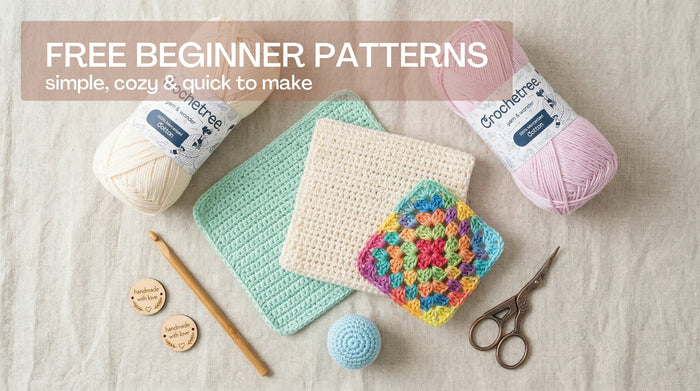
Dishcloths and washcloths are the quintessential first step into the world of crochet, and for good reason. These small, practical squares are among the best crochet projects for beginners because they allow you to master fundamental skills without the pressure of a large, complex pattern. The goal is simple: create a functional square or rectangle using basic stitches, making it an ideal environment for building muscle memory and confidence.
These projects are incredibly forgiving. If you make a mistake, it’s easy to pull out a few stitches (a technique called "frogging") and try again. Plus, a slightly uneven edge on a dishcloth doesn't detract from its usefulness in the kitchen. This low-stakes practice is perfect for learning how to hold your hook and yarn, maintain consistent tension, and create an even fabric.
Why It's a Perfect Starting Point
The beauty of a dishcloth project lies in its simplicity and speed. You only need to know a few key techniques: how to make a slip knot, create a foundation chain, and work a basic stitch like the single crochet or double crochet. This focused approach helps you build a solid foundation before moving on to more intricate designs.
- Practical & Functional: You create something you can actually use right away, providing an immediate sense of accomplishment.
- Quick to Complete: Finishing a project in just a few hours is highly motivating and encourages you to keep crafting.
- Skill-Building Focus: It’s a perfect canvas for practicing straight edges, counting stitches, and learning to read your work.
Here is a quick reference summarizing the key details for this beginner-friendly project.
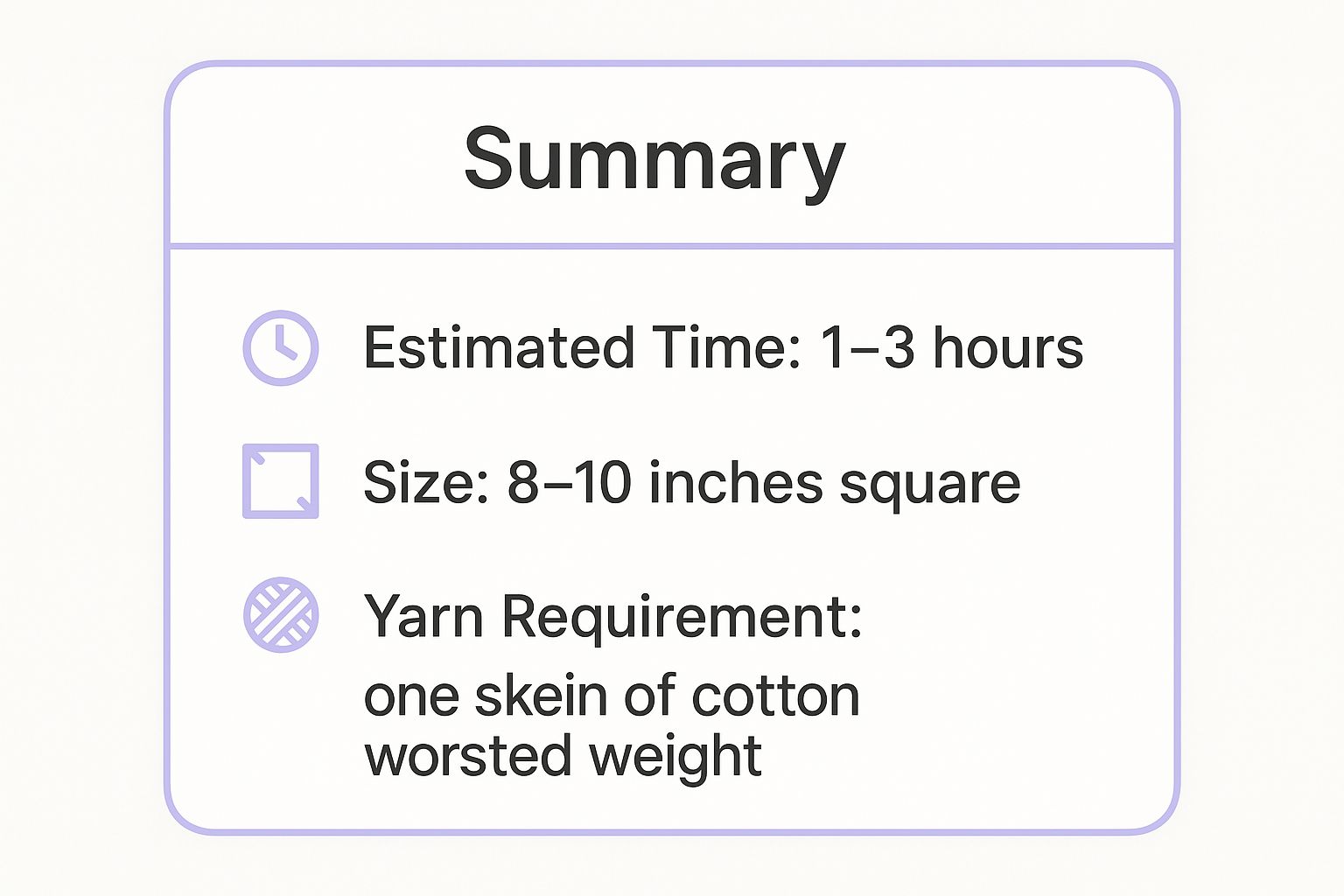
The data highlights just how accessible this project is, requiring minimal time and only a single skein of yarn to create a standard-sized cloth.
Tips for a Great Finish
To ensure your dishcloths are both beautiful and durable, yarn choice is crucial. A breathable and easy-care cotton blend (DK or worsted weight) is an excellent choice as it is highly absorbent, durable, and machine washable. Starting with a light-colored yarn will also help you see your stitches clearly as you learn.
Actionable Tip: To keep your edges straight, count your stitches at the end of every row. This simple habit takes only a few seconds and prevents you from accidentally adding or skipping stitches, which is a common challenge for beginners.
2. Infinity Scarf (Cowl)
After mastering the basic square, an infinity scarf or cowl is a fantastic next step. These stylish accessories are essentially a continuous loop of fabric, making them one of the most rewarding crochet projects for beginners. The project involves creating a long rectangle and seaming the ends or, for a more seamless look, crocheting in the round. This teaches you how to maintain consistent tension over a larger piece and introduces you to working in joined rounds.
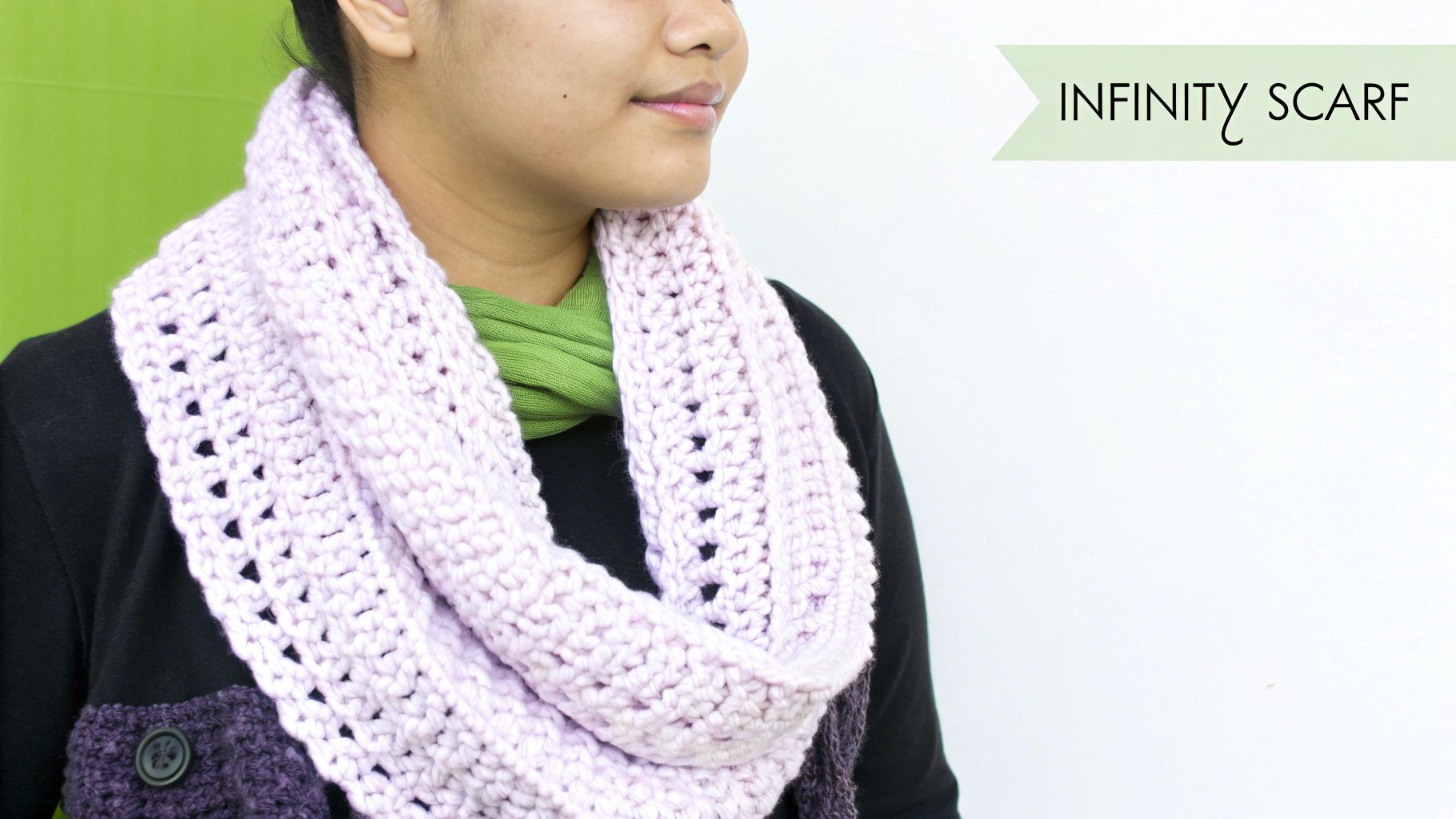
The beauty of a cowl is its forgiving nature. Minor variations in your stitch tension will likely go unnoticed once the scarf is looped around your neck. This low-pressure project allows you to focus on the rhythm of your stitches and the satisfaction of watching your work grow row by row. It’s an excellent way to practice new stitches without the commitment of a full-sized garment.
Why It's a Perfect Starting Point
An infinity scarf builds on the skills you learned making a dishcloth but scales them up to create a wearable, fashionable item. It feels like a significant accomplishment without being overwhelming, which is a huge confidence booster for anyone just starting their creative journey. The project is easily customizable in both length and width, giving you creative freedom.
- Practical & Stylish: You create a functional accessory you can wear or gift, adding a handmade touch to any outfit.
- Skill Progression: It introduces working on a larger scale, practicing color changes, and potentially working in the round.
- Quick Gratification: Using a bulky yarn and a large hook, you can complete a cozy scarf in just one weekend.
This project is a great way to move beyond simple squares. If you're new to the craft, you can find foundational guidance on our blog. Get started with our beginner's guide on how to start crocheting.
Tips for a Great Finish
Your yarn choice will define the look and feel of your scarf. For a warm and quick project, consider a budget-friendly acrylic or a cozy wool blend. For a lighter scarf with a lovely drape, a cotton blend works beautifully. Always choose a yarn that feels good against your skin to ensure your finished scarf is a joy to wear.
Actionable Tip: When you finish your rectangle, lay it flat and twist it once before seaming the ends together. This simple twist creates a "mobius" style infinity scarf that drapes more elegantly than a simple untwisted loop.
3. Simple Beanie Hat
Moving from flat squares to three-dimensional objects is a major milestone for any new crocheter, and the simple beanie hat is the perfect project for this transition. A basic beanie introduces you to working in the round, a fundamental technique used in countless patterns, from toys, like our Crochetree dolls, to baskets. It teaches you how to create a flat circle with increases and then build up the sides to form a wearable, functional accessory.
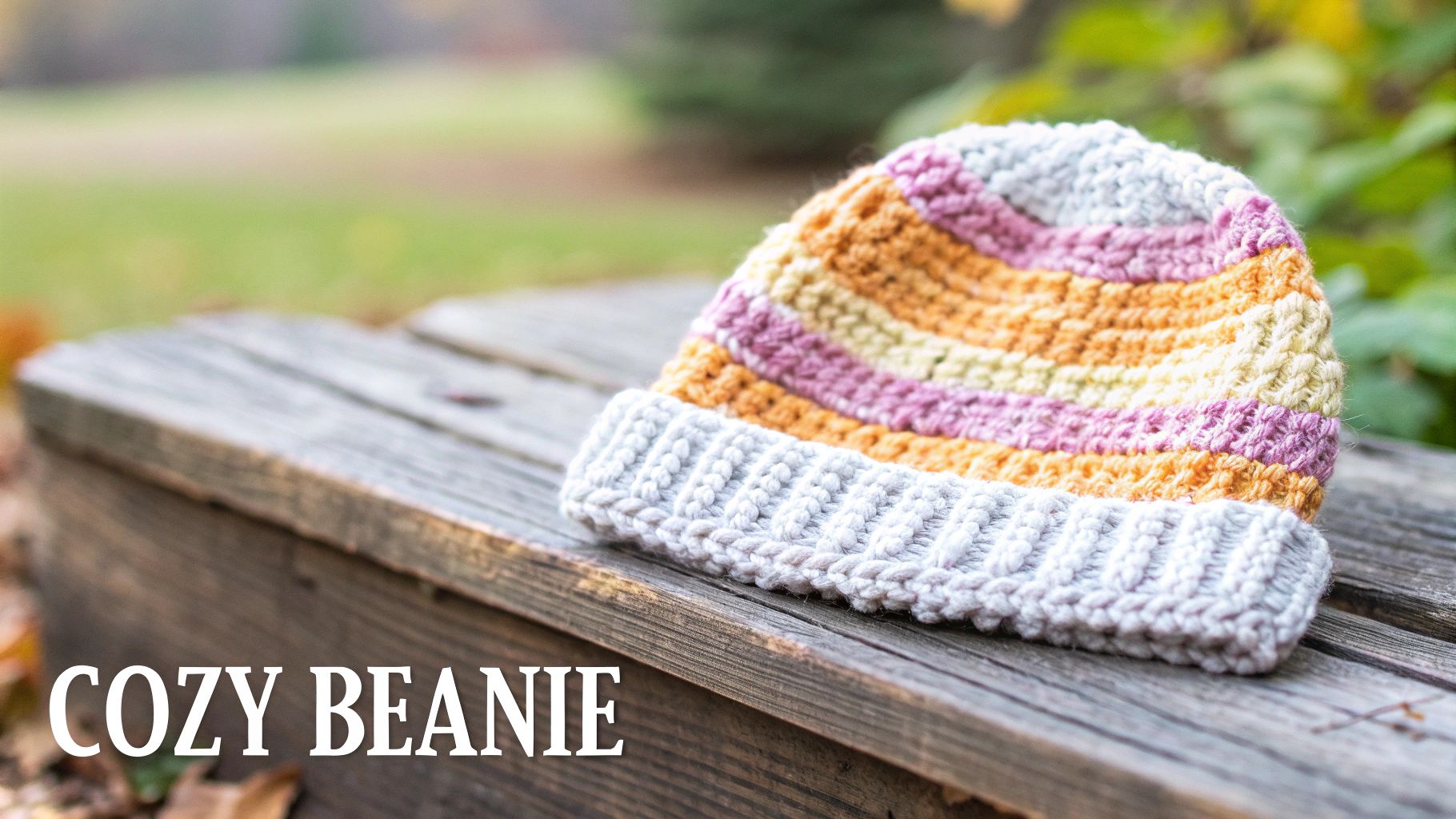
This project is one of the most rewarding crochet projects for beginners because it results in a practical item you can wear proudly or give as a thoughtful handmade gift. Unlike a flat scarf, a beanie requires you to think about shaping and fit, helping you understand how crochet construction works. The sense of accomplishment that comes from creating your first piece of clothing is incredibly motivating.
Why It's a Perfect Starting Point
The simple beanie hat is a fantastic skill-builder that feels less repetitive than larger projects. It combines several core techniques into one manageable and quick-to-finish item, giving you a comprehensive learning experience. You’ll learn how to start a project from the center, increase stitches evenly, and work in continuous rounds.
- Teaches Key Skills: Master working in the round, using a magic ring, making increases, and tracking your rounds with a stitch marker.
- Wearable & Practical: You create a stylish, functional accessory that can be customized with different colors and stitch textures.
- Boosts Confidence: Successfully completing a shaped item like a hat is a huge confidence booster that prepares you for more complex garments.
This project is your gateway to understanding the construction of amigurumi, sweaters, and other top-down items, making it an essential step in your crochet journey.
Tips for a Great Finish
A worsted-weight wool or acrylic blend works beautifully for beanies. Wool offers excellent warmth and elasticity, which helps the hat fit snugly, while acrylic is a budget-friendly and easy-care alternative. Using a 5.5mm (I) hook with worsted yarn is a common pairing that creates a fabric with a nice balance of warmth and flexibility.
Actionable Tip: Use a stitch marker to keep track of the first (or the last) stitch of each round. This small tool is your best friend when working in the round, as it prevents you from losing your place and ensures your increases are made in the correct spots. Move it up to the new first stitch every time you complete a round.
4. Granny Square Blanket
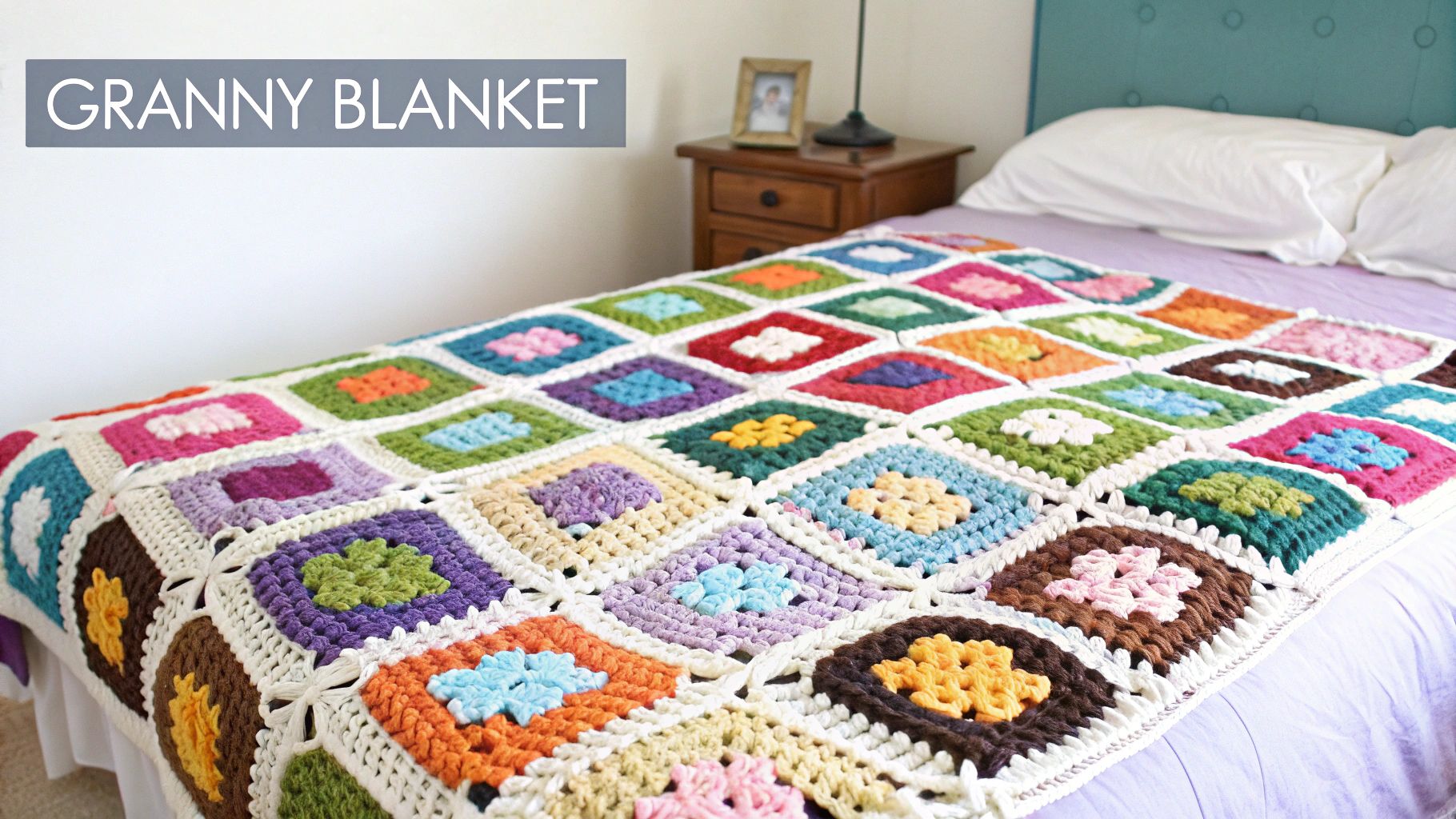
The granny square is an iconic and beloved motif in the world of crochet. A granny square blanket is created by making numerous individual squares and then joining them together, making it one of the most versatile and rewarding crochet projects for beginners. This modular approach allows you to learn essential skills like working in the round, changing colors, and joining techniques in small, manageable bursts.
Creating a blanket one square at a time is far less intimidating than tackling a large project all at once. The repetitive nature of a single square builds muscle memory and confidence quickly. Because each square is a mini-project, it’s portable and perfect for crafting on the go. Whether you envision a traditional rainbow afghan or a modern, solid-color throw, the creative possibilities are endless.
Why It's a Perfect Starting Point
The granny square introduces beginners to the concept of working from the center out, a fundamental skill for projects like hats and circular shawls. This project is a fantastic way to experiment with color theory and design without committing to a single, large color palette.
- Modular & Portable: You can work on individual squares anytime, anywhere, and see progress quickly.
- Skill Expansion: It teaches you how to work in rounds, change colors neatly, and join finished pieces.
- Creative Freedom: Mix and match colors and lay out your squares in countless patterns before you commit to joining them.
Ready to start your first square? You can find a step-by-step guide to the classic granny square on our blog. Learn more about creating this timeless crochet staple at Crochetree's granny square tutorial and begin your journey.
Tips for a Great Finish
For blankets, a soft and washable yarn is key. Acrylic yarn (worsted weight) is a popular, budget-friendly choice that comes in a vast array of colors and is easy to care for. For a more natural fiber, a cotton blend or a superwash wool can provide wonderful softness and warmth.
Actionable Tip: Weave in your ends as you complete each square. While it's tempting to save this step for the end, facing a mountain of loose ends can be daunting. By weaving them in after each square is finished, you break the task into small, manageable steps and make the final assembly much more enjoyable.
5. Amigurumi Simple Ball or Sphere
Diving into the world of amigurumi, the Japanese art of crocheted stuffed toys, often begins with a simple sphere. This foundational project is one of the most rewarding crochet projects for beginners because it teaches you how to transform a flat circle into a three-dimensional object. Creating a basic ball introduces you to the essential techniques of working in the round, increasing, and decreasing stitches to create shape.
The process is magical. You start with a small ring and methodically add stitches to expand it, then remove stitches to close it up, forming a perfect sphere. This project builds crucial skills for almost any amigurumi pattern you'll encounter later, from cute animals to fun characters. It’s a low-pressure way to learn shaping techniques that are central to creating impressive-looking toys.
Why It's a Perfect Starting Point
The simple ball is an ideal introduction to amigurumi because it focuses on a core set of skills in a small, manageable package. Mastering this shape unlocks the potential to create countless other toys, as spheres form the basis for heads, bodies, and other character parts.
- Builds 3D Skills: You’ll learn how to use increases and decreases to create curves and volume, a fundamental amigurumi skill.
- Quick and Satisfying: A small ball can be completed in under an hour, providing a quick sense of accomplishment and a finished object to be proud of.
- Gateway to Creativity: Once you master the sphere, you can easily turn it into an ornament, a juggling ball, a cat toy, or the head of a simple character by adding small features.
Tips for a Great Finish
For amigurumi, we recommend 100% mercerized cotton in a fingering weight (thin, good for detail). This type of yarn creates a smooth, durable fabric with crisp stitch definition, which is perfect for preventing stuffing from showing through and helping your creation hold its shape beautifully.
Actionable Tip: Use the “invisible decrease” technique. Instead of yarning over through both loops of the next two stitches, insert your hook into the front loop only of each stitch, then complete your single crochet. This creates a much neater and less noticeable decrease, giving your amigurumi a smooth, professional finish.
6. Market Tote Bag
A market tote bag is one of the most rewarding crochet projects for beginners because it transforms simple stitches into a durable, stylish, and highly practical item. This project typically involves crocheting a flat rectangular base and then working in rounds to build up the sides, creating a sturdy bag perfect for groceries, books, or a trip to the beach. It’s an excellent way to practice working in the round and creating a functional, three-dimensional object.
The repetitive nature of making the bag's body allows you to get into a comfortable rhythm, which is perfect for solidifying your tension and stitch consistency. Unlike smaller items, a tote bag introduces you to the concept of creating structure and durability in your projects. Seeing a flat piece of fabric turn into a useful bag is an incredibly motivating experience for any new crocheter.
Why It's a Perfect Starting Point
The market tote bag strikes a wonderful balance between simplicity and utility, making it an ideal step up from smaller, flatter projects. It teaches you how to create a piece with size and purpose while still relying on fundamental stitches. This project builds confidence by showing you how to construct something substantial and useful from scratch.
- Practical & Eco-Friendly: You’ll create a reusable bag you can use immediately, reducing the need for single-use plastic bags.
- Builds Construction Skills: It introduces essential skills like working in the round, creating a base, and attaching handles.
- Highly Customizable: You can easily adjust the size, color, and stitch pattern to make a bag that is uniquely yours.
Tips for a Great Finish
To create a bag that is both strong and beautiful, yarn choice is key. A sturdy cotton or cotton-blend yarn in a worsted weight is an excellent choice, as it provides strength, holds its shape, and has minimal stretch. This ensures your bag can handle weight without sagging over time.
Actionable Tip: When you crochet the handles, switch to a smaller hook size than you used for the bag’s body. This will create a tighter, denser fabric, making the straps much stronger and less likely to stretch out with use.
7. Coasters Set
A set of coasters is one of the most satisfying and versatile crochet projects for beginners. These small, functional items are fantastic for practicing new skills on a manageable scale. Whether you make them as simple squares or venture into working in the round, coasters provide a quick win, often taking less than an hour to complete. This allows you to build a full, coordinated set in a single afternoon.
The beauty of making coasters is the opportunity for repetition and experimentation. You can create multiple identical pieces to master consistency or try a different stitch pattern on each one to expand your skills. Because of their small size, mistakes are low-stakes and easy to correct. The final product is not only useful for protecting furniture but also serves as a perfect handmade gift or a touch of personal style for your home.
Why It's a Perfect Starting Point
Coasters are a brilliant next step after mastering a basic square. They introduce new techniques like working in the round, changing colors, and creating different shapes, all without the commitment of a large project. This makes them an ideal platform for building confidence and exploring your creativity.
- Practical & Giftable: You end up with a useful set that’s perfect for gifting, providing a wonderful sense of accomplishment.
- Quick Repetitive Practice: Making a set of four or six allows you to practice the same pattern multiple times, building muscle memory.
- Low Yarn Commitment: A single skein of cotton yarn is usually enough to create an entire set, making it a budget-friendly project.
Tips for a Great Finish
To create coasters that are both functional and beautiful, your choice of yarn is key. A 100% cotton yarn in a DK or worsted weight is highly recommended for its excellent absorbency and durability. It holds up well to moisture and can be washed easily. Avoid acrylic, as it doesn't absorb water and can be damaged by heat from a hot mug.
Actionable Tip: To ensure your coasters lie perfectly flat, especially circular ones, try blocking them. Simply mist them with water, shape them with your hands on a flat surface, and let them air dry completely. This simple finishing touch makes a huge difference and gives your set a polished, professional look.
Beginner Crochet Projects Comparison Table
|
Item |
Implementation Complexity 🔄 |
Resource Requirements ⚡ |
Expected Outcomes 📊 |
Ideal Use Cases 💡 |
Key Advantages ⭐ |
|---|---|---|---|---|---|
|
Dishcloths and Washcloths |
Low - Basic stitches, no shaping |
Minimal - One skein cotton yarn |
Functional, small, quick-to-make cloths |
Beginners practicing basic stitches |
Inexpensive, fast results, forgiving |
|
Infinity Scarf (Cowl) |
Medium - Continuous rounds or seam |
Moderate - 200-400 yards yarn |
Warm, stylish wearable accessory |
Fashion accessories, gifts |
Wearable, customizable, builds tension |
|
Simple Beanie Hat |
Medium - Circular rounds, increases |
Moderate - 150-250 yards yarn |
Fitted 3D headwear |
Teaching shaping and magic ring |
Teaches 3D shaping, practical, customizable |
|
Granny Square Blanket |
Medium to High - Multiple squares |
High - Large yarn amount |
Large, modular blanket |
Portable modular projects, scrap yarn use |
Portable, customizable, modular approach |
|
Amigurumi Simple Ball/Sphere |
Medium - Tight tension, shaping |
Minimal - <50 yards yarn |
Small 3D spheres for toys or decor |
Intro to 3D shapes, amigurumi basics |
Fast, foundational 3D skills, cute items |
|
Market Tote Bag |
Medium to High - Rectangular, handles |
High - 300-600 yards sturdy yarn |
Durable, functional reusable bag |
Eco-friendly bags, practical use |
Functional, durable, teaches construction |
|
Coasters Set |
Low - Small rounds or squares |
Minimal - Small yarn amounts |
Protective drink mats, multiple sets |
Quick projects, practicing stitches |
Very quick, low cost, stitch experimentation |
Your Crafting Journey Has Just Begun
You have just explored a wonderful collection of crochet projects for beginners, each designed to build your skills while creating something beautiful and functional. From the simple, satisfying rows of a dishcloth to the foundational magic of a granny square, every project on this list is a stepping stone on your creative path. The journey into crochet is not about achieving immediate perfection; it's about finding joy in the rhythm of your hook, the texture of the yarn, and the pride of making something with your own hands.
Remember, each stitch is a small victory. Every completed row builds not just a project, but your confidence and muscle memory. The skills you've learned through these starter projects are the fundamental building blocks for a lifetime of crafting.
Key Takeaways for Your Crochet Adventure
As you move forward, keep these core principles in mind to ensure your crafting time is both productive and restorative:
1. Master the Basics First: Projects like dishcloths and simple scarves are invaluable. They allow you to perfect your tension, practice basic stitches like the single crochet and double crochet, and learn how to maintain straight edges without the pressure of complex shaping.
2. Yarn Choice Matters: The right yarn can transform your experience. A smooth, worsted-weight cotton or acrylic makes stitches easy to see and work with, while a high-quality mercerized cotton gives amigurumi a crisp, professional finish. Don't be afraid to feel different fibers and see what you enjoy working with most.
3. Don't Fear the Frog: “Frogging,” or unraveling your work (because you “rip-it, rip-it”), is a normal and essential part of learning. It’s not a failure; it's a chance to understand a mistake and correct it. Every crocheter, from beginner to expert, unravels their work from time to time.
4. Celebrate Your Progress: Your first project may not look like the picture, and that is perfectly okay. Celebrate the fact that you learned a new skill and created something from scratch. Each subsequent project will show visible improvement, which is incredibly motivating.
Your Actionable Next Steps
Feeling inspired? Don't let that creative energy fade. Here’s how you can keep the momentum going and continue to grow as a crocheter:
1. Choose Your First (or Next) Project: Look back at the list. Did the practical appeal of a market tote bag catch your eye, or are you drawn to the charm of a simple amigurumi sphere? Pick the one that excites you the most.
2. Gather Your Foundational Tools: Ensure you have the essentials: a comfortable crochet hook in the right size for your chosen yarn, a pair of sharp scissors, and a yarn needle for weaving in those ends.
3. Create a Crafting Nook: Designate a small, comfortable space for your crochet. Having your materials organized and accessible makes it much easier to pick up your project for a few minutes of mindful stitching whenever you have the time.
4. Connect with the Community: Share your progress! Joining online crafting groups or sharing photos of your finished objects can provide encouragement, inspiration, and a wonderful sense of connection with fellow makers.
Embracing these early crochet projects for beginners is about more than just learning stitches; it's about discovering a source of calm, a creative outlet, and a powerful way to connect with a timeless craft. You are now equipped with the knowledge and inspiration to begin creating beautiful, handmade items for yourself, your home, and the people you love. Welcome to the wonderful world of crochet.
![The Ultimate Beginner's Guide to Crochet [2026]](http://crochetree.com/cdn/shop/articles/feat-ultimate-beginners-guide-to-crochet_eae81cec-84d0-455d-b190-08cd22d826c4.jpg?v=1777713815&width=700)
