In a world that constantly rushes, finding a quiet corner of calm can feel like a superpower. What if that power was waiting for you in a simple ball of yarn and a crochet hook? The gentle, rhythmic art of crochet is more than just a cozy hobby; it’s a powerful tool for nurturing your mind, offering a tangible way to quiet anxious thoughts and ground yourself.
This article explores the proven benefits of crocheting for mental health, showing how this craft can become a key part of your wellness toolkit. We’ll look at seven ways crochet supports well-being, from reducing stress to improving focus and fostering connection.
You'll find actionable tips to weave crocheting into your life as a form of self-care. Whether you’re an experienced crafter or a curious beginner, this guide offers insights into how each stitch can help soothe your mind and build resilience, transforming a simple craft into a restorative practice. Let's begin this journey to see how a hook and yarn can help you create not just beautiful projects, but also a stronger sense of inner peace.
1. Stress and Anxiety Reduction
One of the most profound benefits of crocheting for mental health is its remarkable ability to reduce stress and anxiety. The craft's rhythmic motions act as a powerful anchor, drawing your focus away from looping worries and grounding you firmly in the present moment. This gentle, predictable action helps to soothe an overstimulated mind.
How Crocheting Calms Your Nervous System
When you engage in a calming activity like crochet, you signal your body that it is safe to relax. This process activates the parasympathetic nervous system, your "rest and digest" system. It works to counteract the body's fight-or-flight response, slowing your heart rate, lowering blood pressure, and reducing levels of the stress hormone, cortisol.
This creates a meditative state where the mind can quiet down. For individuals struggling with racing thoughts, especially at the end of the day, crocheting offers a tangible and constructive outlet. The repetitive motion provides a focused activity that helps quiet a racing mind, offering practical ways to calm anxiety at night and promote more restorative sleep.
The visual summary below highlights the key physiological changes that occur when you crochet for relaxation.
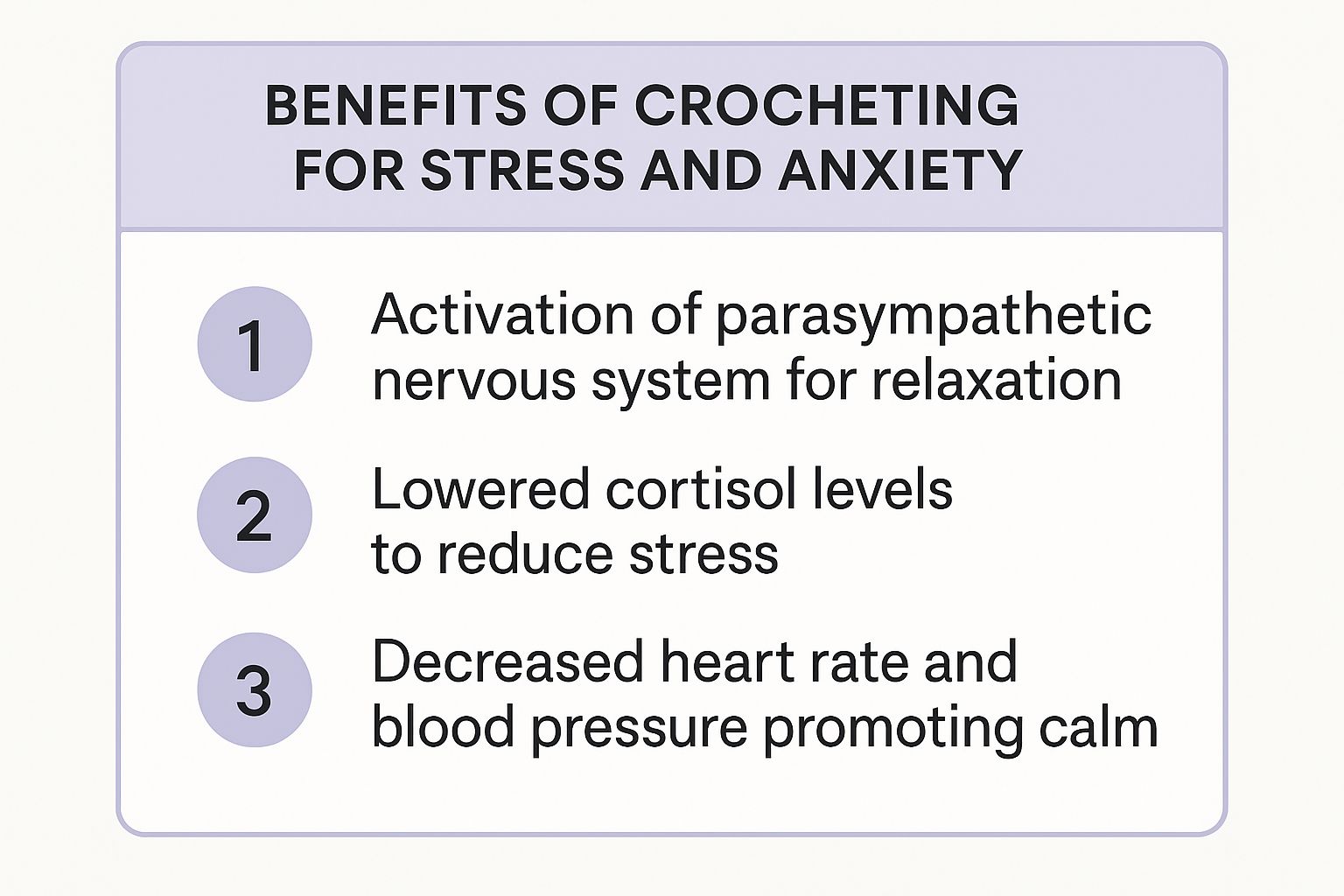
As the infographic illustrates, crocheting initiates a cascade of calming effects, from nervous system activation to a measurable decrease in key stress indicators. This holistic response is why many find the craft to be so effective for managing daily pressures.
Actionable Tip: Your Stress-Relief Starter Kit
To maximize the stress-reducing benefits, prepare a "go-to" project. Keep a simple project like a scarf or dishcloth in a basket with your favorite hook and a soothing yarn. When you feel overwhelmed, it's ready for you to pick up and start stitching immediately, no complex decisions needed. This simple act of preparation makes it easier to turn to your craft for comfort.
2. Improved Focus and Concentration
Beyond its calming effects, crocheting serves as a powerful exercise for the mind, significantly improving focus and concentration. The craft demands sustained attention to detail, from tracking stitch counts to following patterns. This deliberate engagement trains the brain to filter out distractions and maintain a steady focus on the task at hand.
How Crocheting Strengthens Your Cognitive Control
Engaging in crochet requires the coordination of multiple cognitive functions. You must read a pattern, remember the sequence of stitches, and maintain consistent tension. This multi-layered process strengthens neural pathways associated with executive functions like planning, sequencing, and sustained attention.
This mental workout helps enhance your ability to concentrate for longer periods, a skill that is highly transferable to other areas of life. For individuals who struggle with a scattered mind, crochet offers a structured way to practice and build mental endurance. The goal-oriented nature of the craft provides a clear and rewarding path to improved mental clarity.
Actionable Tip: Practice the 'Crochet Pomodoro'
Use the Pomodoro Technique to build your focus muscle. Set a timer for 25 minutes and commit to uninterrupted crocheting. When the timer goes off, take a 5-minute break to stretch. This method trains your brain to concentrate in manageable intervals, making it a fantastic tool for gradually increasing your attention span.
3. Enhanced Mood and Depression Management
Beyond its calming effects, crocheting serves as a powerful tool for actively enhancing mood and managing symptoms of depression. The craft triggers the release of dopamine and serotonin, the brain's natural "feel-good" chemicals, creating a sense of pleasure and satisfaction. This biochemical boost provides a gentle lift, which is one of the key benefits of crocheting for mental health.
This process is reinforced by the tangible results of your work. Transforming a simple skein of yarn into a finished object, whether it's a cozy scarf or a small amigurumi character, provides a profound sense of purpose and achievement. For individuals struggling with low motivation, these small, consistent wins can be incredibly empowering and help rebuild self-esteem.
How Crocheting Boosts Your Brain's Feel-Good Chemicals
Engaging in a creative and goal-oriented activity like crochet stimulates the brain's reward system. Each completed stitch or row releases a small amount of dopamine, a neurotransmitter associated with pleasure and motivation. This creates a positive feedback loop where you are motivated to continue crafting, which in turn continues to boost your mood.
Similarly, the rhythmic and focused nature of crochet can increase serotonin levels. Serotonin plays a crucial role in regulating mood, appetite, and sleep. The craft acts as a non-pharmacological way to naturally support these essential brain chemicals, offering a gentle and constructive way to crochet your way to calm during difficult times and providing a reliable source of comfort.
Actionable Tip: Create a 'Joy Jar' Project
Start a project where each row or round represents a small victory or a moment of gratitude. You could use different colors to signify different moods or achievements. When you feel low, working on this project, and seeing the progress you've made, serves as a tangible, colorful reminder of your resilience and the good things in your life.
4. Mindfulness and Present-Moment Awareness
Crocheting is a natural gateway to mindfulness, the practice of being fully present without judgment. It guides your attention away from ruminating on the past or worrying about the future by providing a tangible, multi-sensory anchor. The simple act of creating loops with yarn and a hook demands a gentle focus that quiets mental chatter.
This focused state is one of the most powerful benefits of crocheting for mental health, as it helps interrupt the cycle of negative thoughts. By concentrating on the tactile feel of the yarn and the rhythmic motion of your hands, you create a space for your mind to rest and reset.
How Crocheting Cultivates Mindfulness
Engaging in crochet immerses you in a sensory experience. You feel the texture of the yarn, see the stitches forming one by one, and hear the soft sound of the hook moving through the fibers. This rich sensory input keeps your brain occupied with the task at hand, making it difficult for intrusive thoughts to take over.
This process is similar to formal meditation but can feel more accessible. Instead of just observing the breath, you have a physical activity to focus on. Therapists sometimes use crochet as a grounding technique, as it provides a predictable and calming activity that helps people connect with the present moment.
Actionable Tip: Practice 'Sensory Stitching'
Dedicate the first five minutes of your crochet session to a sensory check-in. Before you start, close your eyes and just feel the yarn. Notice its texture, weight, and temperature. As you begin to stitch, pay close attention to the sound the hook makes and the feeling of the loops forming. This simple practice anchors you in the present moment right from the start.
5. Social Connection and Community Building
While crocheting is often enjoyed as a solitary activity, it also serves as a powerful bridge to social connection. Engaging with others who share a passion for the craft combats feelings of loneliness and isolation. This shared interest provides a natural, low-pressure foundation for friendship and fosters a deep sense of belonging.
As the image suggests, the simple act of creating alongside others cultivates an atmosphere of shared purpose and mutual support. This environment makes it easier to form meaningful bonds, whether in person or through the vast network of online communities.
How Crocheting Builds Your Social Network
Participating in crochet groups creates a supportive ecosystem where members share patterns, celebrate finished projects, and offer encouragement. This collaborative spirit reduces social anxiety by focusing interactions on a common, tangible activity rather than open-ended small talk.
The rise of digital platforms has expanded these opportunities globally. Websites and social media groups connect millions of crafters, providing a sense of community that is accessible anytime. From local craft circles to large-scale charity drives, crocheting provides countless avenues to connect with like-minded individuals and contribute to a collective good.
Actionable Tip: Join a Crochet-Along (CAL)
Look for a beginner-friendly Crochet-Along online. In a CAL, a group of people all work on the same project over a set period, with parts of the pattern released weekly. It’s a wonderful, structured way to learn new skills, ask questions, and share your progress with a supportive community, even from the comfort of your own home.
6. Cognitive Preservation and Brain Health
More than just a relaxing hobby, crocheting is a powerful workout for your brain. This intricate craft provides comprehensive cognitive exercise that helps maintain brain plasticity and may support long-term mental sharpness. The act of crocheting simultaneously engages multiple brain regions, strengthening neural pathways and promoting overall cognitive vitality.
How Crocheting Exercises Your Brain
Crocheting is a multifaceted activity that challenges your mind in several ways at once. It requires visual-spatial processing to read patterns, fine motor control to manipulate the hook and yarn, and mathematical thinking to count stitches. This complex coordination strengthens existing neural connections and even helps form new ones.
This mental stimulation is why many memory care facilities and senior centers incorporate crochet into their activity programs. Research from the Mayo Clinic even suggests that engaging in crafts like crochet can reduce the risk of developing mild cognitive impairment. It offers a tangible way to keep the mind sharp, which is a key component of the benefits of crocheting for mental health.
Actionable Tip: Challenge Your Brain with a New Stitch
Once a month, make it a goal to learn one new crochet stitch. You don’t have to start a whole project with it—just practice making a small swatch. This simple act of learning something new creates novel neural pathways and keeps your brain engaged and flexible. For more insights, you can learn more about how crocheting is good for your brain and unlocks cognitive benefits.
7. Pain Management and Physical Symptom Relief
Beyond its emotional benefits, crocheting can serve as a non-pharmaceutical tool for managing chronic pain. By engaging both the mind and body in a focused, gentle activity, it provides a unique form of relief that complements traditional medical treatments. The craft offers a way to regain a sense of control when physical discomfort feels overwhelming.
How Crocheting Eases Physical Discomfort
The focused attention required for crocheting can activate the brain's "gate control theory" of pain. This theory suggests that the brain can only process a limited number of stimuli at once. When you concentrate on your stitches, you are sending non-painful signals to the brain that effectively compete with and "close the gate" on pain signals, reducing their intensity.
This mental distraction is a key reason why organizations like the American Cancer Society have noted the value of crafts for patients. The process also triggers the release of endorphins, the body's natural painkillers, which can further alleviate discomfort and improve mood. This dual-action relief is one of the most significant, yet often overlooked, benefits of crocheting for mental health and physical well-being.
Actionable Tip: Mind Your Posture and Tools
To crochet comfortably, use an ergonomic hook with a cushioned grip to reduce hand strain. Pay attention to your posture: sit in a supportive chair with your feet flat on the floor and take a short break every 20 minutes to stretch your hands, neck, and shoulders. Making your crafting physically comfortable is key to unlocking its mental benefits.
Your Journey to Wellness
The connection between yarn craft and well-being is a tangible, powerful force. The simple, repetitive motion of pulling loops through loops creates a profound sense of calm, offering a practical antidote to the chaos of modern life. A ball of yarn can truly become a toolkit for resilience and peace.
The benefits of crocheting for mental health are multifaceted. From the measurable reduction in stress to the mood-boosting effects of creative expression, each stitch contributes to a more balanced state of mind. It’s a craft that grounds you in the present, sharpens your focus, and connects you to a warm, supportive community.
Start Your Crafting Journey Today
The most beautiful part of this practice is its accessibility. You don’t need an expensive studio or years of training to begin. The journey starts with a single step.
Start Small: Choose a simple project like a dishcloth or scarf. A quick win will build your confidence and motivate you to continue.
Gather Your Tools: Pick a yarn that feels good in your hands. A soft worsted-weight acrylic or a smooth cotton blend is great for beginners. Pair it with an ergonomic hook to ensure comfort.
Set Aside "Stitch Time": Even 15 minutes a day can make a difference. Treat this time as a non-negotiable appointment with yourself.
Embrace Imperfection: Your first projects will have mistakes, and that is perfectly okay. The value lies in the act of creating and the mental space it provides, not in achieving flawless results.
Ultimately, crochet can become a reliable wellness practice, a go-to tool you can pull out whenever you feel overwhelmed, anxious, or disconnected. This isn't just another hobby; it’s a sustainable, creative, and profoundly effective way to support your mental health for years to come. Your well-being is worth it. Pick up a hook, and let every stitch be an act of self-care.
Ready to begin your own journey into mindful crafting? Crochetree offers beautiful, beginner-friendly amigurumi kits that provide everything you need to start creating, including easy-to-follow guides and high-quality materials designed for a joyful experience. Explore our collections at Crochetree and discover how a simple kit can unlock a world of creativity and calm.