
Welcome to the wonderful, calming world of crochet! It's a craft filled with endless possibilities, connecting us to creativity, joy, and a warm community. Taking that first step can feel a little tangled, but we've gathered our best crochet tips for beginners to help you on your way.
This guide is your friendly companion, designed to walk you through the fundamentals with encouragement and clarity. We'll cover everything from choosing your very first hook and yarn to mastering those initial stitches. Think of this as your first pattern to follow, one that leads to confidence, healing, and a lifetime of happy crafting.
We will skip complex theory and focus on actionable advice that builds a solid foundation for your skills. Let's pick up our hooks together and start this beautiful journey.
1. Start with the Right Yarn and Hook Size
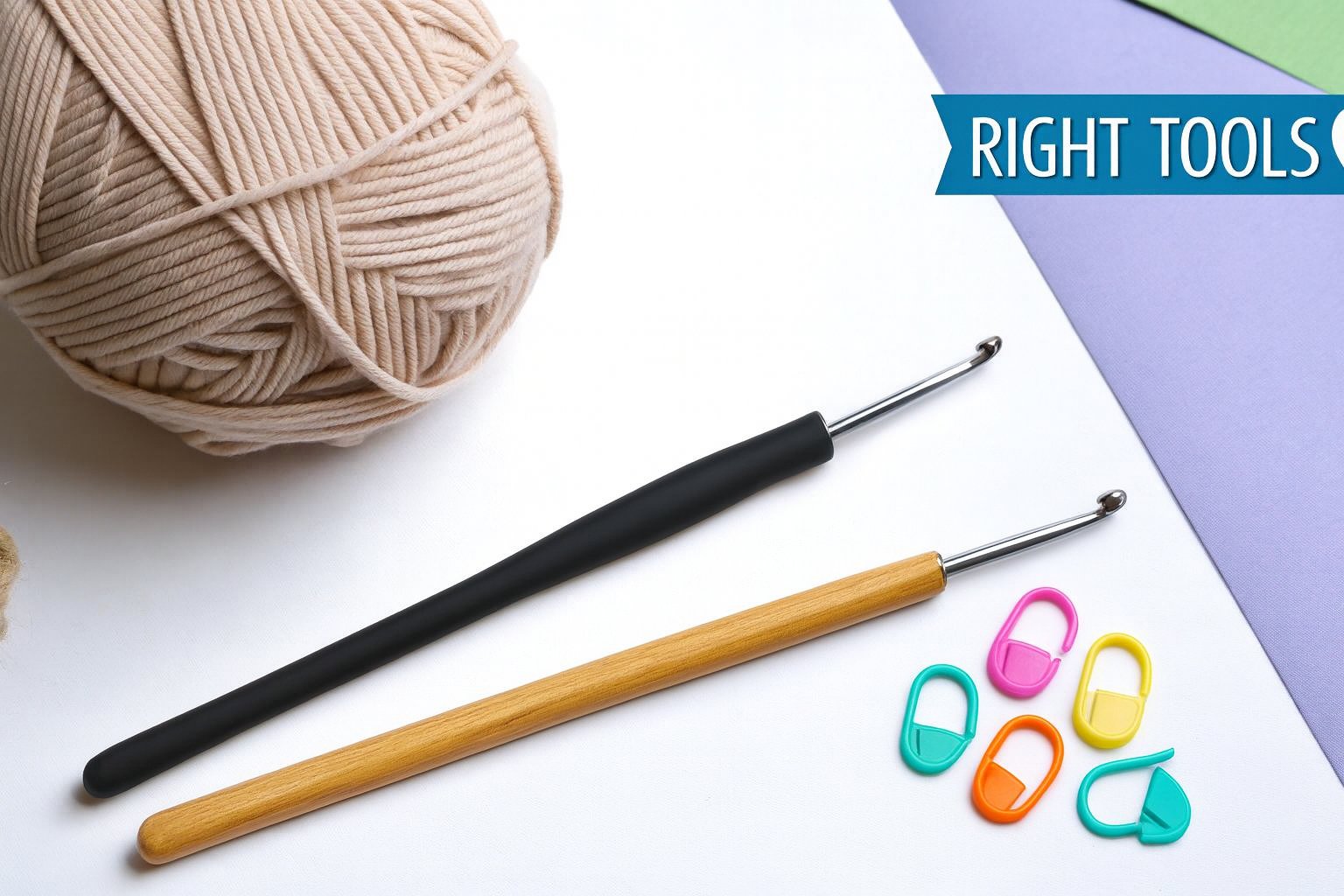
Jumping into crochet is exciting, but one of the most impactful crochet tips for beginners is to select the right tools from the start. Your first yarn and hook combination can make the difference between a joyful learning experience and a frustrating tangle. The key is to choose materials that make your stitches easy to see and handle.
For your first project, a medium-weight yarn, often labeled as worsted weight (size 4), is an excellent choice. This yarn is thick enough to work up quickly but thin enough that you can clearly see how each stitch is formed. Pair this with the hook size suggested on the yarn's label, which is typically an H-8 (5.0mm) or I-9 (5.5mm). This pairing is designed to create an even, balanced fabric, which helps you practice consistent tension.
Why Your First Yarn Choice Matters
The type and color of your yarn significantly impact visibility. Dark, fluffy, or highly textured yarns can hide your stitches, making it nearly impossible to see where to insert your hook. This is a common pitfall that can discourage new crocheters.
Key Insight: Start with a smooth, light-colored yarn in a solid shade like cream, pale yellow, or light blue. This simple choice illuminates your stitches, helping you identify the parts of each one as you learn.
A Quick Guide to Beginner-Friendly Yarn Fibers
Different yarn fibers have unique qualities. When choosing a yarn, consider what you're making and how it will be used.
Mercerized cotton (fingering): Smooth, durable, crisp stitch definition; holds shape, ideal for amigurumi/detail work, like our Crochetree dolls.
Cotton blends (DK/worsted): Breathable, easy care, good for summer garments, dishcloths, homeware.
Acrylic (mostly worsted): Budget-friendly, machine-washable, common for blankets and everyday projects (note potential pilling/static).
Wool/wool blends: Warm, elastic, great stitch recovery, hats, sweaters; check care/sensitivity.
Chenille/faux-fur: Plush texture for blankets/pillows; not recommended for beginner amigurumi (low stitch visibility).
Actionable Tips for Success
- Stick Together: Practice your tension by using the same yarn and hook combination consistently. Switching tools can alter your results and make learning more difficult.
- Choose the Right Hook: The hook itself also makes a difference. Learning about the different types of crochet hooks can help you find one that feels comfortable in your hand.
- Practice with a Slip Knot: Master making a slip knot and chaining a few stitches. Practice pulling them out and starting again until it feels natural.
By making these simple, intentional choices, you set yourself up for a much smoother learning curve, allowing you to focus on the rhythm and joy of creating stitches.
2. Master Basic Stitches Before Moving Forward
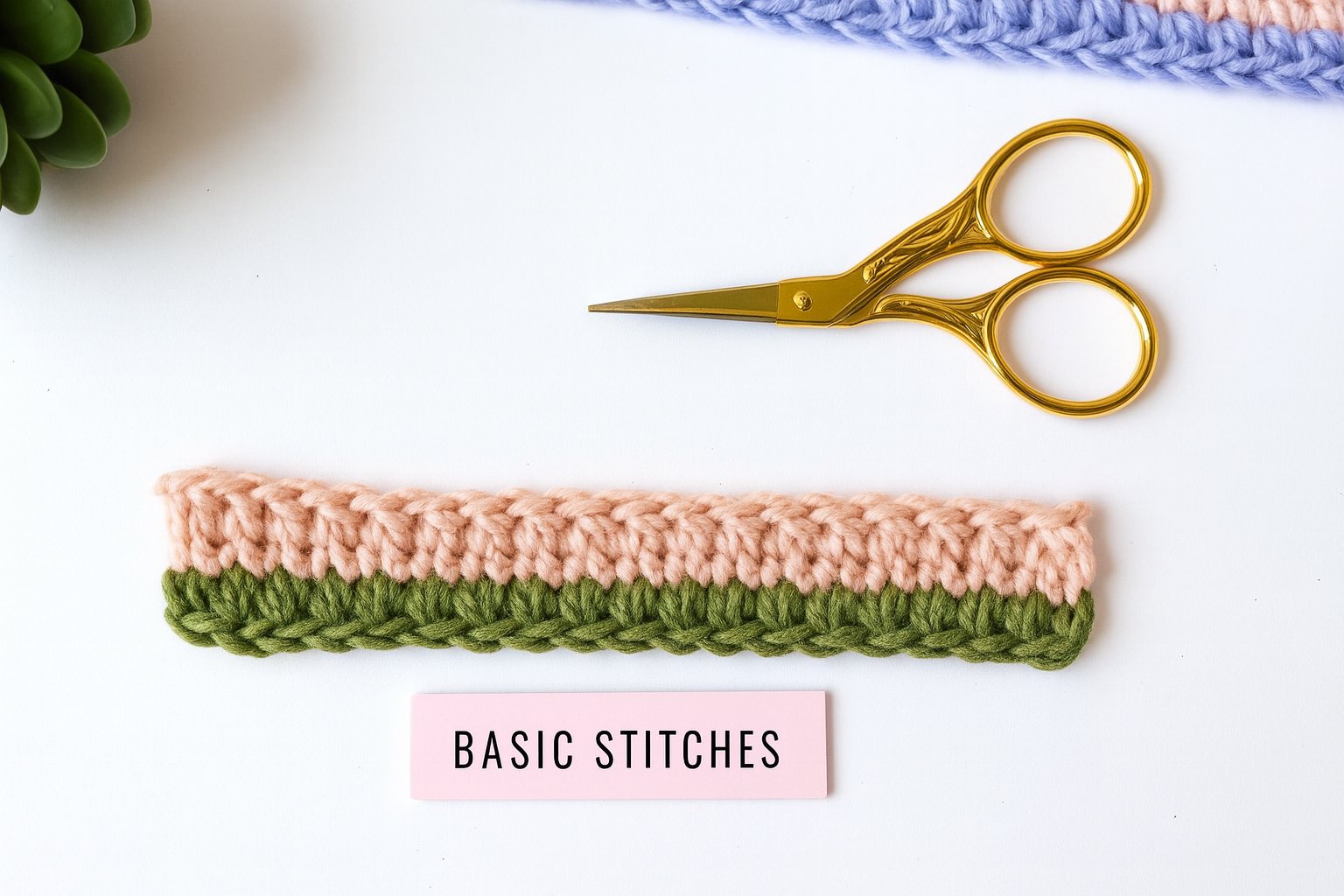
Eagerness to create complex projects is natural, but one of the most crucial crochet tips for beginners is to build a strong foundation first. The core of crochet rests on just a few fundamental stitches. By mastering these basics, you ensure every future project has a polished, professional look. The key is to practice these stitches until they become muscle memory, focusing on consistency and correct form.
The three essential stitches every beginner should perfect are the chain (ch), single crochet (sc), and double crochet (dc). These stitches are the building blocks for nearly every pattern you will encounter. Taking the time to master them individually prevents future frustration and helps you develop a smooth, even tension.
Why Perfecting the Basics Matters
Jumping ahead to advanced techniques without a solid grasp of the fundamentals often leads to uneven edges and projects that don't look quite right. When you can create chains, single crochets, and double crochets effortlessly, you can focus on reading patterns and shaping your work instead of struggling with stitch formation.
Key Insight: Focus on the quality of your stitches, not the speed. Consistent, even stitches are far more important than finishing a project quickly. Your hands will naturally speed up as you build confidence and rhythm.
Beginner-Friendly Practice Projects
Repetition is the best way to learn. Instead of just making endless swatches, turn your practice into small, functional items. This approach makes learning more rewarding and gives you a sense of accomplishment.
Single Crochet: Create small, sturdy squares to use as dishcloths or pot holders. This stitch creates a dense fabric that is perfect for these items.
Double Crochet: Practice making a simple scarf. The taller double crochet stitch works up quickly, providing instant gratification and helping you practice consistent height and tension over many rows.
Combining Stitches: Make a sampler dishcloth using alternating rows of single and double crochet to practice switching between the two.
Actionable Tips for Success
- Daily Practice: Dedicate just 20-30 minutes each day for a week to a single stitch. This consistent, short-burst practice is more effective than one long, overwhelming session.
- Count Every Row: Get into the habit of counting your stitches at the end of every row. This simple check ensures your edges stay straight and you haven't accidentally added or skipped a stitch.
- Use Stitch Markers: Place a stitch marker in the first and last stitch of each row. This is a game-changer for identifying where to work, especially when your edges are still a bit uneven.
- Keep Your Swatches: Don't unravel your first attempts. Keep them as a tangible reminder of your progress and see how far you've come.
By dedicating time to these foundational skills, you are setting yourself up for long-term crochet success and a more joyful crafting experience.
3. Learn to Hold Your Yarn and Hook Properly
How you hold your tools is one of the most fundamental crochet tips for beginners, directly impacting your comfort, speed, and the final look of your stitches. Establishing a comfortable and effective grip from the start prevents hand fatigue and helps you develop consistent tension (the secret to neat, uniform fabric). There is no single "correct" way, but understanding the most common methods will help you find what works best for your hands.
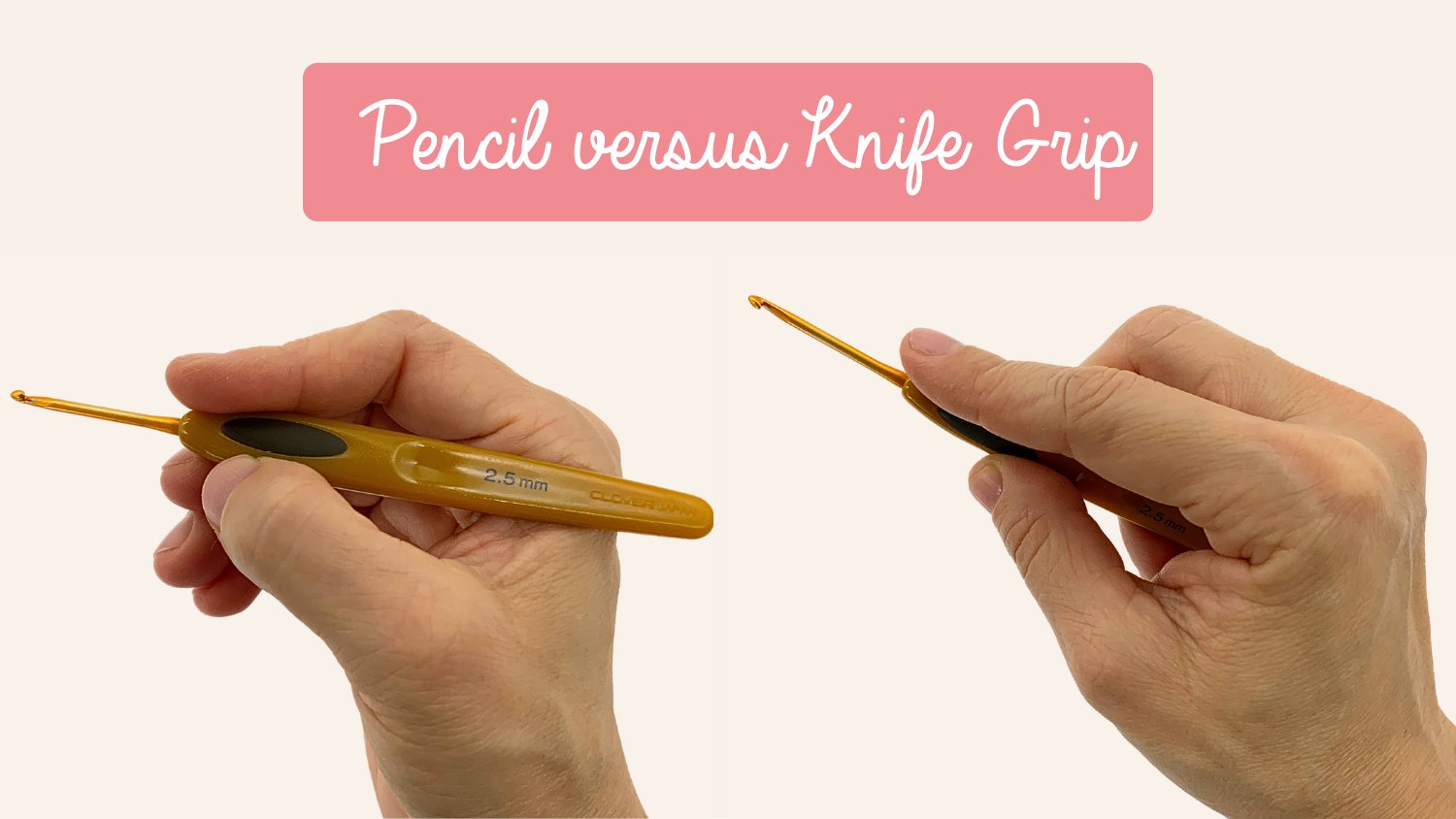
The two primary ways to hold a crochet hook are the pencil grip and the knife grip. The pencil grip involves holding the hook just as you would a pen for writing, while the knife grip is similar to how you would hold a knife to cut food. Your other hand is responsible for feeding the yarn and controlling its tension, which is crucial for creating even stitches.
Why Your Grip and Tension Matter
An uncomfortable grip can lead to cramping and stiffness. A proper hold allows you to crochet for longer periods without discomfort, making the craft a more relaxing and enjoyable experience. Consistent yarn tension is just as important. If your yarn is too loose, your stitches will be floppy; if it's too tight, you’ll struggle to insert your hook.
Key Insight: Finding your ideal grip and tension method is a personal journey. Experiment with different ways of holding your hook and wrapping the yarn around your fingers until you discover a combination that feels natural and relaxed.
Common Grips and Tensioning Methods
Your goal is to find a hold that gives you control without causing strain. Explore these popular techniques to see which one fits you.
Pencil Grip: Held like a writing instrument, this grip offers fine motor control, which can be helpful for detailed work.
Knife Grip: Grasping the hook from above, this method often feels more powerful and can reduce wrist strain for some crocheters.
Yarn Tensioning: A common method is to weave the yarn over your index finger and under your middle finger. This creates a smooth, controlled flow of yarn as you work.
Actionable Tips for Success
Practice Without Yarn: Get comfortable holding the hook first. Practice the motions of making stitches in the air to build muscle memory in your hand and wrist.
Stay Relaxed: Keep your shoulders down and your elbows relaxed. Tension in your upper body will travel down to your hands, causing cramps.
Take Frequent Breaks: Set a timer to remind yourself to stretch your hands, wrists, and shoulders every 20-30 minutes. This is a key part of mindful crafting.
Explore More Grips: If you experience discomfort, try an ergonomic hook with a larger, cushioned handle. To learn more, explore in-depth guides about the best ways to hold your hook and yarn.
By consciously practicing a comfortable grip, you’re investing in your long-term enjoyment of the craft. It allows you to focus on the joy of creating, not on aching hands.
4. Count Your Stitches Consistently
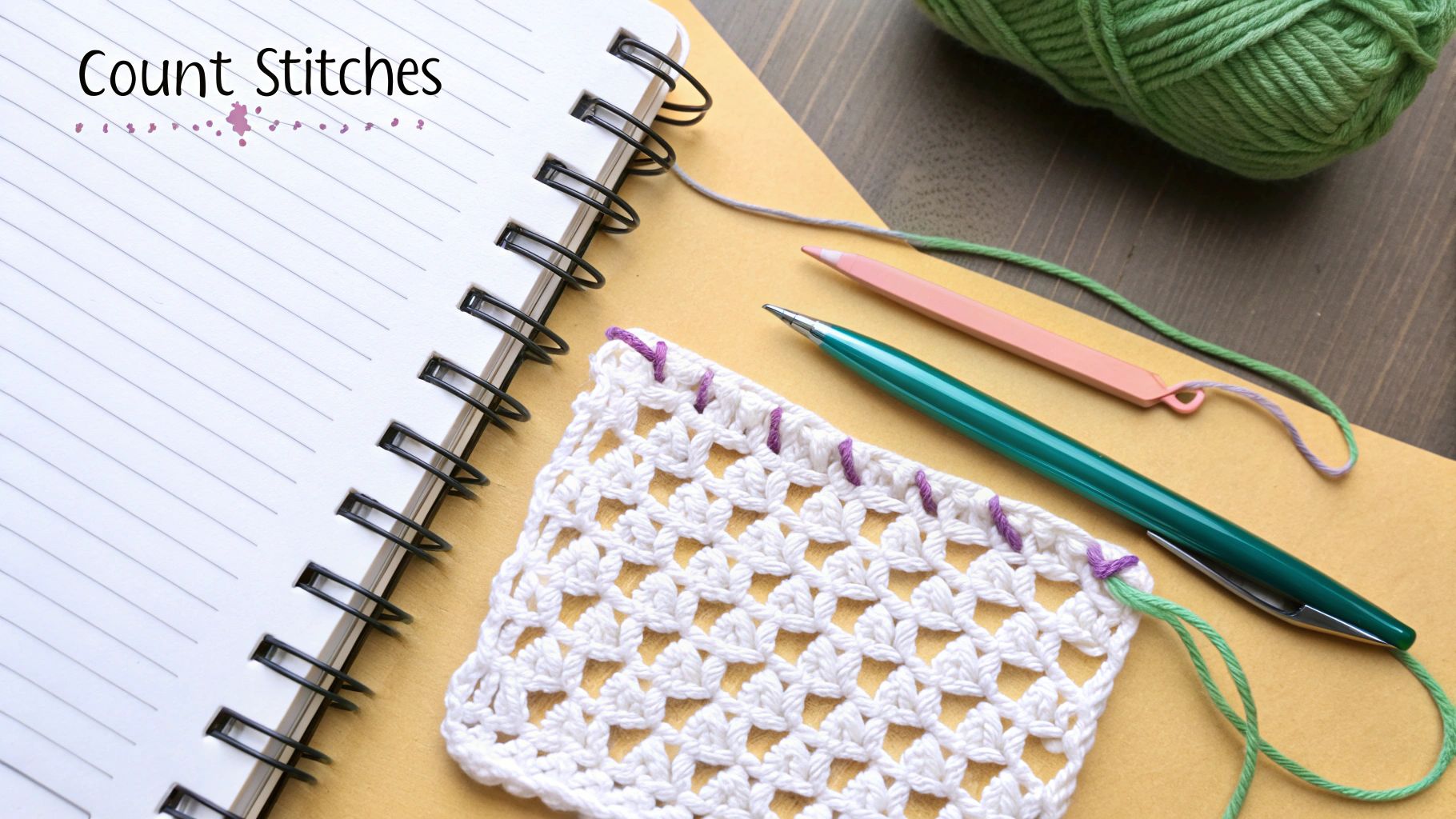
One of the most crucial crochet tips for beginners is developing the habit of counting your stitches. It might seem tedious, but maintaining an accurate stitch count is the secret to creating projects that are the right shape and size. Beginners often accidentally add or skip stitches, which can cause your work to become wavy or lopsided, leading to frustration.
Consistent counting is your project's quality control. By checking your stitch count at the end of every row, especially when you're just starting, you can catch mistakes immediately. This simple act saves you from discovering a major error dozens of rows later and helps you build the foundational skills needed for more complex patterns.
Why Consistent Counting is Non-Negotiable
When a pattern specifies a certain number of stitches per row, it's to ensure the final piece has the correct dimensions and structure. A blanket with inconsistent stitches will have wobbly edges, and a garment piece might not fit correctly. Counting prevents these structural flaws.
Key Insight: Treat counting as part of the stitch itself. Every time you complete a row, take a moment to count. This habit is the difference between a project you have to fight with and a project that grows smoothly and predictably.
Tools to Make Counting Easier
You don't have to rely on memory alone. Several simple tools are designed to help you keep track of your work with minimal effort, allowing you to focus on the mindful rhythm of crocheting.
Stitch Markers: These small, removable clips are invaluable. Place one in the first and last stitch of every row to ensure you never miss them. You can also place them at regular intervals, like every 10th or 20th stitch, to make counting large rows faster.
Row Counters: For projects with many rows, a manual or digital row counter is a lifesaver. Simply click it at the end of each row to keep an accurate tally.
A Simple Notebook: Keep a small notebook and pen with your project. Jotting down the row number and its completed stitch count provides a clear record to refer back to.
Actionable Tips for Success
- Count Every Row: When you are new to crochet, make it a rule to count the stitches at the end of every single row. It builds muscle memory and helps you spot errors instantly.
- Mark Key Stitches: Always mark the first and last stitch of a row. These are the easiest ones to accidentally skip, especially the turning chain.
- Use Markers for Repeats: If your pattern has a repeating section, place a marker at the beginning and end of one repeat. This helps you confirm each section has the correct stitch count.
- Learn the Look: Over time, you’ll start to recognize what a row with the correct number of stitches looks like. Counting helps train your eyes to spot inconsistencies in the fabric's texture and width.
By integrating counting into your regular crochet practice, you build a strong foundation of accuracy that will serve you well as you move on to more intricate and rewarding projects.
5. Start with Simple, Rectangular Projects
One of the most encouraging crochet tips for beginners is to choose projects that set you up for success from the very first stitch. Resisting the urge to jump into a complex shaped project can be tough, but starting with simple, flat, rectangular items is the key to building a strong foundation. These projects allow you to focus entirely on mastering the fundamentals: holding your tools, creating even stitches, and maintaining consistent tension.
Projects worked in straight rows without any increasing, decreasing, or shaping are ideal. Think of items like dishcloths, scarves, placemats, or simple baby blankets. By working back and forth in rows, you build muscle memory for the basic stitches. This repetition builds confidence and produces a tangible, useful item you can be proud of, which is a powerful motivator to keep going.
Why Rectangles are Your Best Friend
Shaping in crochet involves adding or subtracting stitches to create curves and angles. This requires careful counting and pattern reading. By starting with a rectangle, you remove these complexities and can focus solely on the rhythm and feel of your stitches.
Key Insight: A simple cotton dishcloth is the perfect first project. It's small enough to finish quickly, uses basic stitches, and any imperfections will be a charming reminder of your learning journey. Plus, it's incredibly useful!
Beginner-Friendly Project Ideas
Instead of getting bogged down by complicated patterns, choose a project that allows you to practice one or two stitches repeatedly.
Cotton Dishcloths: Use single crochet or half-double crochet with a durable cotton yarn. They are quick, practical, and a great way to practice turning your work.
Simple Striped Scarves: Work in double crochet to create a fabric with a lovely drape. Changing colors every few rows is an easy way to add visual appeal without learning new stitches.
Baby Blankets or Placemats: These are essentially larger rectangles. They offer more practice and result in a satisfying and functional finished object.
Actionable Tips for Success
- Choose a Quick Win: Select a project you can complete in a few hours or over a weekend. A fast finish provides a huge confidence boost.
- Focus on the Basics: Stick to one stitch for your entire first project. This helps you perfect your tension and create an even fabric.
- Use Your Creations: Making something you will actually use or gift keeps you motivated to finish and try another project.
- Embrace "Frogging": If you make a mistake, don't be afraid to pull out your stitches (it's called "frogging" because you "rip-it, rip-it"). It's a normal part of learning!
6. Learn to Read and Understand Basic Patterns
Transitioning from practice swatches to actual projects is a thrilling step, but it requires learning a new language: the language of crochet patterns. This is one of the most empowering crochet tips for beginners, as it unlocks a universe of projects created by designers worldwide. Patterns use standardized abbreviations and symbols that, once deciphered, provide a clear roadmap to creating anything you can imagine.
At first glance, a pattern might look like a confusing code. However, most patterns follow a logical structure, detailing the required materials, gauge, and step-by-step instructions. Starting with simple, beginner-friendly patterns that use basic stitches will help you gradually build your pattern-reading vocabulary and confidence.
Why Understanding Patterns is a Game-Changer
Without patterns, you are limited to projects you can memorize or invent yourself. Learning to read them opens the door to thousands of professionally designed items, from blankets and garments to intricate toys. It also teaches you about proper project construction and sizing.
Key Insight: Always read through the entire pattern before you make your first stitch. This helps you understand the project's flow, identify any new techniques you need to learn, and ensure you have all the necessary supplies on hand.
Getting Started with Your First Pattern
The best way to learn is by doing. Choose patterns specifically labeled for beginners, as they use common stitches and provide clear, detailed instructions.
Keep a Chart: Print or save a common crochet abbreviation chart. Having it next to you while you work is like having a translator at your side. Terms like sc (single crochet), dc (double crochet), and sl st (slip stitch) will soon become second nature.
Check for Notes: Pay close attention to the "Pattern Notes" or "Special Stitches" section. This is where designers explain any unique techniques or provide crucial information for completing the project successfully.
Trust the Gauge: For any project that needs to fit, like a hat or garment, making a gauge swatch is essential. This small test square ensures your finished item will match the size intended by the designer.
Actionable Tips for Success
- Start Simple: Choose a straightforward first project, like a scarf or a dishcloth. These often use repetitive stitch patterns that help build your reading rhythm.
- Use Stitch Markers: Place a stitch marker in the first and last stitch of your rows. This helps you keep an accurate count and ensures your edges stay straight, a common challenge when following a pattern.
- Highlight Your Progress: Print the pattern and use a highlighter to mark off each row as you complete it. This keeps you from losing your place.
- Learn the Basics: Understanding the fundamental components of a pattern will make the process much smoother. Learning to read crochet patterns will break down everything from abbreviations to chart symbols.
By patiently tackling your first few patterns, you are not just making an object; you are gaining a lifelong skill that allows you to participate in a rich, creative community.
6-Key Crochet Tips Comparison Guide
|
Aspect |
Start with the Right Yarn and Hook Size |
Master Basic Stitches Before Moving Forward |
Learn to Hold Your Yarn and Hook Properly |
Count Your Stitches Consistently |
Start with Simple, Rectangular Projects |
Learn to Read and Understand Basic Patterns |
|---|---|---|---|---|---|---|
|
Implementation Complexity 🔄 |
Low - select appropriate tools, minimal skill |
Medium - requires repeated practice for mastery |
Medium - developing muscle memory and grip comfort |
Medium - requires disciplined counting and monitoring |
Low - repetitive rows, no shaping |
Medium-High - learning pattern language and symbols |
|
Resource Requirements ⚡ |
Moderate - need suitable yarn and hook |
Low - only yarn and hook needed |
Low - just yarn and hook, ergonomic tools optional |
Low - stitch markers, row counters recommended |
Low - basic materials only |
Low - patterns and abbreviation charts needed |
|
Expected Outcomes 📊 |
⭐⭐⭐⭐ - consistent stitches and easier project work |
⭐⭐⭐⭐ - solid foundational skills, stitch automation |
⭐⭐⭐⭐ - improved comfort, speed, and stitch evenness |
⭐⭐⭐⭐ - correctly shaped projects, fewer errors |
⭐⭐⭐⭐ - quick, satisfying useful projects |
⭐⭐⭐⭐ - ability to follow diverse patterns accurately |
|
Ideal Use Cases 💡 |
Beginners starting any crochet project |
Beginners building foundational skills |
Those developing hand coordination and reducing strain |
Beginners aiming for precision and pattern accuracy |
Beginners wanting quick wins with simple projects |
Crocheters moving to independent project creation |
|
Key Advantages ⭐ |
Easier stitch visibility and control |
Builds muscle memory and confidence |
Reduces fatigue, improves consistency |
Prevents pattern mistakes and project failures |
Fast project completion and tangible results |
Unlocks wide pattern access and correct project making |
Your Beautiful Beginning in Crochet
You’ve now journeyed through the foundational building blocks of a craft that offers boundless creativity and mindful relaxation. From selecting the perfect yarn to mastering the art of counting, each tip is a stepping stone on your path to becoming a confident crocheter. These aren't just rules; they are your toolkit for turning a simple skein of yarn into something beautiful and meaningful.
Remember, the most crucial takeaway is to embrace the learning process with patience and kindness. Every experienced crafter was once a beginner. The act of unraveling a row, or "frogging," isn't a failure; it's a fundamental part of the craft, teaching you resilience and attention to detail. This collection of crochet tips for beginners was designed to give you a strong, steady start, helping you avoid common frustrations and find joy in the rhythmic motions of your hook.
Key Takeaways for Your Crochet Journey
As you move forward, keep these core principles at the forefront of your practice:
Consistency is Your Best Friend: Whether it’s how you hold your yarn or how diligently you count your stitches, consistency builds the muscle memory needed for smooth, even fabric.
Foundation First, Flair Later: Mastering the basics on simple rectangular projects like scarves or dishcloths will build a solid foundation, making advanced techniques much easier to learn later.
Your Tools Matter: Starting with the right tools, like a smooth, light-colored worsted weight yarn and a comfortable hook, sets you up for success.
Your Actionable Next Steps
Feeling inspired? Don't let that creative energy fade. Put these tips into action today:
- Gather Your Supplies: Choose a simple worsted-weight acrylic or cotton blend yarn in a light color and the recommended hook size (usually a 5mm or H-8).
- Practice Swatches: Create small squares (swatches) of single crochet and double crochet. Focus on consistent stitch height and straight edges. This is your training ground.
- Choose Your First Project: Select a simple, rectangular pattern. A basic scarf, a set of coasters, or a washcloth are all excellent choices that allow you to practice your new skills.
Embrace this beautiful beginning. Crochet is more than a hobby; it's a portable form of meditation, a creative outlet, and a way to connect with a rich tradition of makers. Every stitch you create is a small victory, weaving together patience, skill, and a touch of your own unique spirit. Welcome to the wonderful, warm community of crocheters; we are so happy you're here.


