

Welcome, crafter!
Let’s talk about something every single one of us has faced: wobbly, uneven crochet stitches. If your work looks a little bumpy right now, it’s not a mistake. It’s just a sign that you’re in the process of finding your own unique rhythm. Every stitch you make is part of a beautiful journey.
Fixing uneven stitches crochet is less about "correcting" and more about finding that beautiful, steady flow that makes crafting so relaxing and joyful. With a little gentle guidance, you'll be creating smooth, even fabric in no time.
Why Do My Stitches Look Uneven?
If you’re seeing frustrating bumps, gaps, or stitches that just don’t seem to match in size, you’re in the right place. This is one of the most common hurdles for new crocheters, but the good news is that it’s completely fixable with a bit of mindful practice.
Think of it as a dance between your hands, your hook, and your yarn. Sometimes, it just takes a minute to learn the steps and get them in sync. Most of the time, inconsistent stitches boil down to just a handful of culprits. Once you know what to look for, you can make tiny adjustments that create a massive improvement.
Common Causes of Uneven Stitches at a Glance
Recognizing the potential cause is the first step toward creating that smooth, even fabric you're dreaming of. This little table breaks down the usual suspects.
| Symptom | Common Cause | Primary Solution Focus |
|---|---|---|
| Stitches are tight and loose in patches | Tension Troubles | Consistent yarn hold & flow |
| Stitches vary in height or lean oddly | Inconsistent Hooking Motion | Repeatable "yarn over" technique |
| Stitches are different sizes overall | The "Golden Loop" Varies | Uniform loop size on the hook |
| Inconsistency appears over time | Posture & Comfort | Relaxed hands, shoulders, & body |
Now that you have a cheat sheet, let's look at what each of these really means. The biggest reasons your stitches might be acting up are:
Tension Troubles: This is the #1 reason for uneven fabric. Holding your yarn too tightly one moment and too loosely the next creates stitches of different sizes. It's all about finding a comfortable, consistent way to let the yarn glide through your fingers.
Inconsistent Hooking Motion: The way you yarn over and pull through your loops has a huge impact on stitch height. If you sometimes scoop the yarn from above and other times from below, your stitches won't match. A repeatable motion is key.
The "Golden Loop": This is a term for the single loop of yarn that sits on your hook right before you start a new stitch. If that loop is sometimes big and sometimes small, your finished stitches will reflect that inconsistency.
Posture and Comfort: This is the sneaky one! If you're crocheting while tense or hunched over, it directly affects your muscle memory and leads to inconsistent work.
Remember, achieving even stitches is a journey, not a race. Each project is another chance to connect with your craft and build that muscle memory. You've got this!
Mastering Tension: The Heart of Consistent Stitches
Tension is that secret ingredient for beautiful, even stitches, but it can feel like a mystery when you're starting out. Think of it as the gentle hug you give your yarn: not too tight, not too loose, but just right. It’s all about how you guide the yarn through your fingers to control its flow to the hook.
There's no single "correct" way to hold your yarn; the real goal is finding a method that feels comfortable and gives you a steady, repeatable flow. This mindful practice is the key to fixing uneven stitches crochet.
Finding Your Perfect Yarn Hold
Let's explore a couple of popular ways to wrap the yarn. Try them both with a small practice swatch to see which feels most natural to you.
Actionable Tip #1: The Index Finger Wrap: Run the yarn over your index finger, under your middle finger, and then over your ring finger. Your index finger acts as the main guide, lifting or lowering to adjust how tightly the yarn feeds to your hook.
Actionable Tip #2: The Pinky Weave: Wrap the yarn around your pinky first before weaving it over and under your other fingers. This can give you extra control, which is a big help if you find yourself crocheting too loosely.
Remember, the key is consistency. Once you find a hold that works, your muscle memory will start to take over. Soon enough, you'll be creating smooth, even fabric without even thinking about it.
Your hands will learn their own unique dance with the yarn. Be patient and kind to yourself as you find a rhythm that feels both comfortable and controlled. A relaxed grip is a consistent grip.
Common Tension Pitfalls to Avoid
It’s so easy to fall into a couple of common habits when you’re concentrating hard. Keep an eye out for these little tension traps:
"Strangle-Holding" the Yarn: If your fingers are turning white or your hand is cramping, you're likely holding on too tightly. This chokes the yarn flow, creating tiny stitches that are difficult to work into. Take a deep breath and consciously relax your grip.
Letting It Go: On the flip side, if your yarn is flowing freely without any guidance, your stitches will probably be loose and loopy. The goal is gentle control, not a free-for-all.
If tension still feels like a puzzle, don’t worry! We have more tips for you. You can explore our guide on getting the hang of your crochet tension for more in-depth drills. Practicing with a simple chain or a swatch of single crochet is a wonderful, low-pressure way to build your confidence.
How Your Hook and Yarn Affect Your Stitches
It's not just about how you hold your yarn or move your hands. The actual tools you're working with play a massive part in how your final fabric turns out. Picking the right hook and yarn combo can make getting those even stitches feel totally natural, while the wrong pair can turn it into a constant battle.
Let's break down how to choose your tools wisely for a smoother crochet experience.
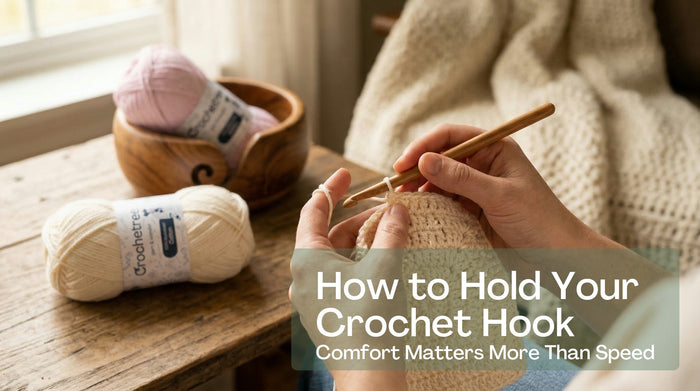
Think of your crochet hook as your creative partner. A slick aluminum hook can speed things up, but if you're a loose crocheter, it might make your stitches too loose. On the other hand, a bamboo hook has more grip, which is great for controlling slippery yarns and can help you tighten up your work.
Choosing Your Hook Style
Hooks generally come in two main shapes: inline and tapered. An inline hook has a deeper groove and a sharper head, which many crafters find helps create incredibly uniform stitches. A tapered hook has a shallower groove and a more rounded head, which can help you work faster. There’s no "right" choice—it all comes down to what feels best in your hand.
For a deeper dive into all the hook options, our complete crochet hook size guide is a great resource.
How Yarn Fiber Impacts Your Stitches
The yarn you choose can either put your inconsistencies on display or graciously hide them while you're practicing. A smooth yarn shows every detail, which can be a double-edged sword.
Here’s a quick guide to common yarn fibers and their traits:
Mercerized cotton (fingering weight): Smooth, durable, and creates crisp stitch definition. It holds its shape well, making it ideal for amigurumi and detailed work.
Cotton blends (DK/worsted weight): Breathable and easy to care for, making them a good choice for summer garments, dishcloths, and homeware.
Acrylic (mostly worsted weight): A budget-friendly and machine-washable option, common for blankets and everyday projects. Note that it can sometimes pill or create static.
Wool/wool blends: Warm and elastic with great stitch recovery. Perfect for hats and sweaters, but always check care instructions and for skin sensitivity.
Actionable Tip #3: If you’re just starting out, try practicing with a light-colored, worsted-weight acrylic or wool blend. These yarns are generally more forgiving and make it easier to see what you're doing without magnifying every tiny wobble.
Finding Your Rhythm with Posture and Technique
Believe it or not, the secret to even crochet stitches often has less to do with your hook and yarn and more to do with your body. How you sit and hold yourself is the foundation for your crafting rhythm. Get this right, and the physical motions can become a mindful, almost meditative practice.
When you're relaxed and comfortable, your muscles build a consistent memory for each movement. But if you’re hunched over with tense shoulders, fatigue will set in fast, quickly translating into wonky stitches. Find yourself a cozy spot with good back support, plant your feet on the floor, and let your arms move freely. Your crochet will thank you for it.
The Motion of Your Hook
How you move your hook is just as critical as how you hold it. The two main ways to wrap your yarn can dramatically change the look of your final stitches.
Yarn Over (yo): The classic method where you wrap the yarn over the top of the hook, from back to front. This creates a standard stitch that looks like a little ‘v’.
Yarn Under (yu): This technique involves grabbing the yarn from underneath the hook. It makes a tighter, denser stitch that looks more like an ‘x’ and is a favorite for amigurumi because it helps prevent stuffing from peeking through.
Neither way is right or wrong, but consistency is everything. If you switch between them in the same project, you'll see a noticeable difference. Pick one and stick with it to build that smooth, automatic motion.
Master the Golden Loop
Take a closer look at the single loop that stays on your hook right after you pull through a stitch. Many crocheters call this the golden loop, and for good reason—its size dictates the height of your very next stitch. If that loop is sometimes tight and other times loose, your stitches will never be even.
Actionable Tip #4: Your goal is to keep the golden loop the same size for every single stitch. It should be snug enough for control but loose enough to slide easily along the shaft of your hook. Nailing this small detail is a game-changer for creating uniform fabric.
Making Friends with the Gauge Swatch
I know, the word "gauge" can sound intimidating, and making a gauge swatch feels like a chore when you’re excited to start a new project. But trust me, this little square is your best friend for getting polished, professional-looking results.
Think of it as a low-stakes practice session with your yarn and hook. It’s a small piece you create before diving into the main event—especially critical for projects like sweaters or hats where size matters. This is your chance to fix issues with uneven stitches before you've sunk hours into your work. It's the perfect, no-pressure way to find your rhythm.
What to Do When Your Gauge Is Off
So, you’ve crocheted your swatch (usually a 4x4 inch square) and measured your stitches and rows. What if your numbers don’t match the pattern? Don’t panic! This is what the swatch is for.
Too many stitches? If you have more stitches than the pattern calls for, it means your stitches are too small and tight. The fix is simple: try again with a larger hook size.
Too few stitches? If you have fewer stitches than the pattern suggests, your stitches are too big and loopy. Just switch to a smaller hook size.
This one adjustment can be the difference between a project that fits like a dream and one that doesn't. Getting this detail right is a hallmark of skilled crafting, and it’s a passion shared by a huge global community. In fact, the market for knitting and crochet supplies is growing every year, proving that people all over the world love creating beautiful handmade items. You can explore more about this trend and its drivers.
Common Questions About Fixing Uneven Stitches
Even after you've nailed your tension and found a good rhythm, some frustrating issues can still pop up. It happens to everyone! Let's walk through a few of the most common problems and how to fix them, so you can keep your projects looking beautiful.
Why Are the Edges of My Project Wavy?
The dreaded wavy edge. Nine times out of ten, this is because extra stitches are sneaking into your rows. It’s easy to do, especially by accidentally working a stitch into the turning chain when the pattern doesn’t call for it.
Here’s a simple trick: place a stitch marker in the very first and last stitch of every row. This gives you a crystal-clear target and guarantees your stitch count stays on track, resulting in wonderfully straight edges.
My Project Is Getting Wider or Narrower
This is another classic case of a shifting stitch count. We’ve all been there. You're in the zone and don't realize you've either skipped the last stitch or added an extra one. The best habit you can build is to simply pause and count your stitches every few rows.
It might feel like a tiny chore, but taking 30 seconds to count your stitches can save you from the heartache of unraveling hours of work. Think of it as a little insurance policy for your project!
Can I Fix Stitches in a Finished Project?
What if you've already finished and notice some minor wobbles? For slight inconsistencies, your secret weapon is a technique called blocking. Blocking is like a spa day for your yarn. You get your finished piece wet, gently pin it into the perfect shape, and let it dry. This process relaxes the yarn fibers and works magic on smoothing out a surprising amount of lumpiness, giving your work a polished finish.
At Crochetree, we believe every stitch is a step toward joy, healing, and connection. Be kind to yourself, enjoy the process, and remember that you are creating something wonderful with your own two hands. Find your next project at https://crochetree.com.
![The Ultimate Beginner's Guide to Crochet [2026]](http://crochetree.com/cdn/shop/articles/feat-ultimate-beginners-guide-to-crochet_eae81cec-84d0-455d-b190-08cd22d826c4.jpg?v=1777713815&width=700)
