

Welcome to the wonderfully creative world of crochet! Learning how to do a chain stitch in crochet is much simpler than you might think. It all starts with a slip knot on your hook, wrapping the yarn over (what we call a "yarn over"), and pulling that yarn right through the loop already on your hook. That's it! This one simple, rhythmic motion is the foundation for almost every crochet project you can imagine.
Your First Step into a World of Joyful Crafting
Every beautiful blanket, every cozy scarf, and every adorable amigurumi doll starts with this exact stitch. Think of the chain stitch as the alphabet of crochet. Once you learn it, you can start forming words, sentences, and eventually, entire stories with your yarn. Nailing this first skill will give you the confidence to tackle more exciting patterns down the road.
This guide is designed to be a gentle, friendly introduction. We’ll start at the very beginning so you feel prepared, not overwhelmed. Before you can even make a chain, you need to get the yarn onto your hook, and that all starts with a simple knot.
The very first thing you do in any crochet project is secure the yarn to your hook. This is done with a special adjustable loop called a slip knot, which acts as the anchor for your entire foundation chain.
Getting this first part down is quick and easy. If you need a little help, we have a complete walkthrough in our guide on how to create a slip knot for crochet. Once you’ve got that handled, you’re ready to start chaining.
Building Your Foundation with Mindfulness
Crochet is meant to be a source of joy, not stress. The chain stitch is your perfect entry point into this mindful and rewarding craft. Don't worry about making every stitch look perfect right away. Your only job right now is to find a comfortable rhythm and enjoy the process of learning something new. Think of it as a warm-up—a chance to get to know your tools and celebrate those first few stitches.
For a beginner, the main goals are:
Getting comfortable: Figure out how to hold your hook and yarn in a way that feels natural for you.
Understanding the motion: Focus on that simple "yarn over, pull through" movement until it feels like second nature.
Building muscle memory: Let your hands learn the motions through gentle, repeated practice. It won't take long!
Choosing Your First Crochet Tools
Before you can make that first magical loop, you need the right tools. It can feel a little overwhelming walking into a craft store, but don't worry. You only need a few simple things to get started, and picking them out is half the fun.
The most important tool, of course, is your crochet hook. They come in all sorts of materials (smooth aluminum, warm bamboo, sleek plastic) and a huge range of sizes. It all comes down to what feels good in your hand. If you want a deep dive into all the options, our beginner's guide to buying crochet hooks is a great place to start.
Selecting Your Hook and Yarn
For your very first project, a size H-8 (5mm) hook is a fantastic choice. It's the goldilocks of hooks for beginners, not too big, not too small. This size makes it comfortable to hold and much easier to see what you're doing as you learn the basic motions.
Next up is the yarn! Your yarn choice is just as critical for a frustration-free start. You'll want to grab a smooth, light-colored yarn in a worsted weight (a medium, or #4, thickness). Why? Because you can actually see your stitches clearly. Trust me, trying to learn on dark or fuzzy yarn is a recipe for a headache.
Beginner-Friendly Yarn Options
To help you choose, here's a quick look at some common yarn fibers that work well for general beginner projects:
Cotton blends (DK/worsted): Breathable and easy to care for, good for summer garments, dishcloths, and homeware.
Acrylic (mostly worsted): Budget-friendly and machine-washable, common for blankets and everyday projects.
Wool/wool blends: Warm and elastic with great stitch recovery, perfect for hats and sweaters, but always check care instructions and for skin sensitivity.
Stick with a smooth, light-colored worsted weight yarn, and you'll have a much smoother learning curve as you get the hang of stitch tension and control.
Other Essential Notions
Beyond your hook and yarn, you just need two other small items to complete your starter kit:
- A small pair of scissors for cutting your yarn. Any pair will do!
- A tapestry needle, which is just a blunt-tipped needle with a large eye. You'll use this for weaving in your yarn ends when you finish a project.
And that’s it! With these four simple tools, you have everything you need to start learning how to make your very first crochet chain.
Creating Your First Crochet Chain
Alright, this is where the fun really starts. We're about to turn that single slip knot into a beautiful, flowing chain of stitches. Think of it like learning a new dance with your hands, it’s all about finding a gentle, easy rhythm.
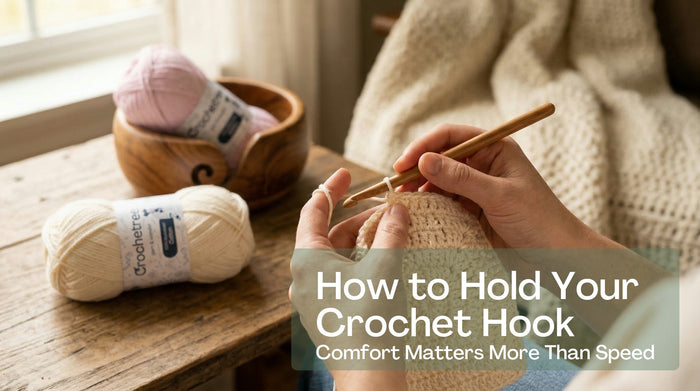
First, get that slip knot onto your hook and give it a gentle tug so it's snug but not tight. Now, get comfortable. A relaxed grip is everything. The way you hold your hook and guide the yarn, which we call managing your tension, is what makes your stitches look even and consistent. Don't stress about perfection right now; just find what feels right for you. If you need some ideas, we have a whole post that explores different ways of how to hold your crochet hook and yarn.
The Yarn Over and Pull Through Motion
With your slip knot sitting comfortably on the hook, you're ready for the core movement of crochet. It’s a simple two-step process.
First, use your hook to grab the working yarn (that's the yarn coming from the ball) from back to front. This simple scoop is called a "yarn over," often abbreviated as YO in patterns. You'll be seeing that abbreviation a lot!
Next, slightly turn the head of your hook down toward the loop already on it. This little twist helps it glide smoothly as you pull the yarn you just grabbed right through that first loop. And just like that, you've made your first chain stitch! That's really all there is to it: yarn over, pull through. Keep repeating that, and you're chaining.
Actionable Tip: Don't rush it. Feel the rhythm in your hands and let the motion become second nature. Each little loop is a win. The goal is to build that muscle memory, not to race to the finish line.
Solving Common Beginner Challenges
Let’s be real for a second. Every single person who has ever picked up a crochet hook has felt exactly what you’re feeling right now. We’ve all made mistakes. This is a judgment-free zone where we’ll walk through the most common hurdles you might hit when learning how to do a chain stitch in crochet.
The biggest one? Tension. Hands down, this is where most beginners struggle. If your chains are so tight you can barely jam your hook back into them, you're holding the yarn in a death grip. On the flip side, if they look loose and sloppy, your hold is probably a bit too relaxed. Finding that happy medium is all about practice, not perfection.
Achieving Consistent Stitches
Don't be afraid to experiment with how you hold your yarn. Seriously, there's no single "right" way to do it. Some people wrap it around their pinky, while others weave it through a few fingers to create just the right amount of drag.
Try making a few of these small adjustments:
Too Tight? Take a breath and consciously relax your non-hook hand. Let the yarn glide a little more freely through your fingers.
Too Loose? Try wrapping the yarn one extra time around your index finger. This usually adds just enough control.
Twisting Chain? This happens to everyone. Just lay your work down every 10-15 stitches to make sure it’s lying flat and not coiling up on itself.
Mistakes are just learning opportunities in disguise. Every wonky stitch teaches you something new about your tension and rhythm, so embrace them as part of your creative journey.
It's also pretty cool to remember that the simple chain stitch has a powerful history. During the devastating Irish Potato Famine between 1845 and 1850, Irish women crafted intricate lace using chain stitches. For many, it became a vital source of income that saved their families from starvation. You can learn more about the rich history of crochet and its impact and see just how important this craft has been.
So, if you drop a loop or your chain looks a little lopsided, don’t sweat it. Just give the working end of your yarn a gentle pull to unravel a few stitches. We call this "frogging" because you "rip-it, rip-it", and try again. This isn’t a failure. It’s a totally normal part of the process that makes you a better, more confident crocheter in the long run.
Tips for Practicing Your Chain Stitch
Okay, you’ve got the basic motion down. Now comes the part that really makes a difference: practice. This is where you build that all-important muscle memory, turning a clunky, deliberate movement into something that feels as natural as breathing.
But don't dive into a giant project just yet! The best way to learn is by focusing purely on the rhythm of your hands and the feel of the yarn. Think of this as your quiet, mindful crafting time, a chance to find your flow without any pressure.
Give Your Practice a Purpose
Let's be honest, making endless, aimless chains can get boring fast. The trick is to give your practice a fun, creative purpose to keep yourself motivated.
Friendship Bracelets: Grab some colorful yarn, crochet a long chain, and tie it off. Just like that, you’ve made a sweet, simple gift for a friend.
Gift Ribbons: Why use store-bought ribbon when you can make your own? A beautiful handmade chain adds a personal touch to any present.
Bookmarks: A simple chain is the perfect length for a bookmark. You can even add a little tassel at the end for some extra flair.
By focusing on these small, achievable goals, you're not just practicing how to do a chain stitch in crochet; you're creating something useful and celebrating your progress along the way.
How to Count Your Stitches
This is a skill you’ll need for pretty much every pattern you ever follow, so it's a great habit to build now. To count your chains, just turn your work so you're looking at the front. See that series of little "V" shapes? Each one of those is a single stitch.
Here’s the important part: do not count the slip knot or the loop currently on your hook. Only count the fully formed "V"s you've already made. That's your true stitch count.
Common Questions About the Chain Stitch
As you start your crochet adventure, it's totally normal to have a few questions. Don't worry, we've all been there! Here are a few common hurdles and how to clear them with confidence.
Why Is My Starting Chain Always Twisting?
This happens to everyone! A twisting chain is almost always a sign of uneven tension. The easiest fix is to keep a close eye on your stitches as you go. Make sure all the little "V" shapes are facing you.
For longer chains, like for a scarf or blanket, just pause every 10-15 stitches. Lay your work down on a flat surface to check that it’s not coiling up on you before you keep going. Problem solved.
How Tight Should My Chain Stitches Be?
Your chains need to be loose enough for your hook to slide back into them without a fight when you start your first row. If they're too tight, you’ll have a frustrating time trying to work into them.
A great rule of thumb is to make each loop the same size as the thickest part of your crochet hook’s shaft. If you find yourself making tiny, tight stitches, take a deep breath and consciously relax your grip on both the yarn and the hook.
Does the Slip Knot Count as My First Stitch?
Nope! Think of the slip knot as the anchor, it just fastens the yarn to your hook so you can get started. It does not count as a stitch.
Your first official chain is the loop you pull through that initial slip knot. So, if a pattern says to "chain 10," you’ll make 10 brand-new loops after the slip knot is already on your hook.
You've learned the most fundamental stitch in crochet and are ready to create something wonderful. Celebrate this first step, and remember that every stitch is a moment of creativity and joy. Happy crocheting! https://crochetree.com
![The Ultimate Beginner's Guide to Crochet [2026]](http://crochetree.com/cdn/shop/articles/feat-ultimate-beginners-guide-to-crochet_eae81cec-84d0-455d-b190-08cd22d826c4.jpg?v=1777713815&width=700)
