
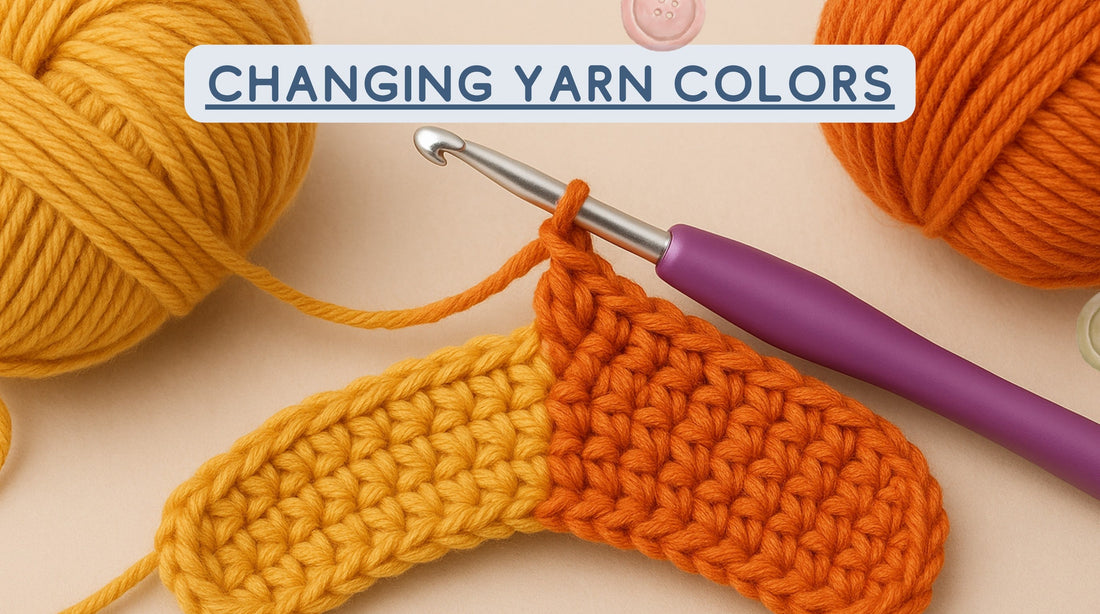
For most crocheters, switching yarn colors feels like stepping into new territory. You’ve built a steady rhythm, your stitches are neat, and then suddenly, you have to drop one yarn, pick up another, and somehow keep it all looking smooth.
But here’s the secret: color changes are just tiny, mindful pauses in your project. Once you understand where and how to switch, you’ll start to love them because they’re what turn plain stitches into personality.
When to Change Yarn Colors
Changing yarn colors can happen almost anywhere, but timing matters. Choose your moment carefully to make your work look intentional, not accidental.
|
Project Type |
Best Time to Change Color |
Reason |
|
Flat rows (scarves, blankets) |
At the end of a row, before turning |
Keeps edges neat |
|
Amigurumi rounds (dolls, animals) |
At the end of a round, after slip stitch |
Hides color join in the back |
|
Shaping or pattern details |
One stitch before the new color appears |
Gives clean color break |
💡 Pro Tip: Always plan your color transitions where they’ll be least visible, like under an arm, at the back seam, or along a border.
Step-by-Step: Seamless Color Change in Single Crochet
Step 1: Work Up to the Last Step of the Stitch
Crochet until you have two loops left on your hook. Don’t finish the stitch yet.
Step 2: Drop the Old Color
Gently drop the working yarn to the back of your work, no knots, no cutting yet.
Step 3: Yarn Over with the New Color
Lay the new yarn across your hook and pull it through both loops on the hook.
Congratulations! The stitch is now complete in your new color!
Step 4: Continue Crocheting
Keep working with the new color, holding both yarn tails along the row for a few stitches to weave them in as you go.
🧵 Crochetree Tip: If you’re working in spirals (like doll heads or bodies), mark the join with a stitch marker. This helps keep your transitions consistent round after round.
Avoiding the Dreaded “Color Ridge”
When crocheting in the round, you might notice a stair-step effect at your color joins. Here’s how to prevent that:
Invisible Join Method:
-
Finish your last stitch of the old color and cut the yarn.
-
With a needle, thread the tail through both loops of the first stitch of the new color (as if sewing).
-
Bring it back down through the center of the last stitch.
→ This creates a fake top loop that blends perfectly.
Slip Stitch Transition:
After finishing a round, make one slip stitch in the next stitch using the new color before continuing. This levels out the edge visually.
|
Problem |
Quick Fix |
|
Uneven line between colors |
Use invisible join or slip stitch trick |
|
Loose loops when switching |
Keep tension firm while pulling new yarn through |
|
Gaps between colors |
Crochet over tails to tighten join |
For Amigurumi Makers: Changing Colors in the Round
When you’re making dolls or toys, color changes often mark clothing, skin, or accessories. These transitions are small, but they define the character’s charm.
Here’s a simple sequence used in Crochetree’s Daisy Base Doll:
-
Last stitch of the “skin” color → stop before final pull-through.
-
Pull new yarn (shirt color) through both loops.
-
Crochet next round with the new color.
-
On the next stitch, pull tails gently to even tension.
The result: clean neckline, no knots, no bulk.
Weaving in Ends Like a Pro
Loose ends can turn a pretty project into a tangled mess, but there’s a simple fix.
-
Crochet over tails for the first few stitches of the new row or round.
-
Weave diagonally through the back of stitches using a yarn needle (avoid pulling too tight).
-
Split the yarn tail before trimming; frayed ends blend more naturally into the fabric.
If you’re making toys for children, double-weaving is worth the extra minute. It ensures no tails peek out later.
Choosing Harmonious Color Combos
Color changes are more fun when the palette feels balanced.
If you’re unsure, use this quick pairing guide inspired by Crochetree’s most-loved yarn bundles:
|
Mood |
Recommended Colors |
Works Great For |
|
Calm & Neutral |
Beige, linen, ivory, blush |
Minimalist dolls, home décor |
|
Playful & Bright |
Coral, mint, lemon, aqua |
Kids’ toys, cheerful accents |
|
Classic & Warm |
Terracotta, mustard, cream |
Autumn sets, cozy wearables |
✨ Try limiting yourself to 3 colors per project. It keeps your work cohesive and easier to manage while switching yarns.
Troubleshooting Table
|
Issue |
What Happened |
Quick Recovery |
|
One color peeks through another |
You switched too late |
Undo 1 stitch and redo earlier |
|
Ends unravel after washing |
Ends too short |
Re-weave with longer tails (6 in minimum) |
|
Color change looks bumpy |
Tension mismatch |
Practice keeping even tension during pull-through |
A Gentle Reminder from Crochetree 🌷
Every color change is like a new chapter in your handmade story. Some rows might not look perfect, and that’s okay. Each transition teaches your hands a rhythm that gets more graceful over time.
If the first few attempts look messy, keep going. You’re not just learning to crochet, you’re learning patience, precision, and the quiet art of trusting the process.
So when you finally see your doll wearing a neat two-tone dress or your blanket stripes blending beautifully, take a breath and smile. That’s you, woven into every stitch.
Bring your color stories to life with our curated Crochetree Yarn Sets. Soft, balanced hues perfect for seamless switching. Explore yarn sets → https://crochetree.com/collections/yarns


