

Starting your crochet journey can be exciting, but also a little confusing. One of the first questions many beginners ask is: “Which hook should I use?” With so many sizes, materials, and styles on the market, it can feel like a lot to figure out. But don’t worry! This guide will walk you through everything you need to know about choosing the right crochet hook for your hands, your yarn, and your projects.
What Is a Crochet Hook?
A crochet hook is your most essential tool. It’s what you use to pull loops of yarn through other loops, turning string into stitches and stitches into dolls, blankets, hats, and more. Hooks vary in size, shape, and material, and the right one can make all the difference in your comfort and results.
Types of Crochet Hooks
There are many types of hooks, each with its pros and cons:
• Standard Hooks
Usually made from aluminum, plastic, or wood. These are the basic go-to hooks, often inexpensive and widely available.
• Ergonomic Hooks
Designed to reduce hand strain, these come with soft, rubber, or silicone grips and are perfect for long sessions or those with joint pain.
• Tunisian (Afghan) Hooks
Longer hooks with a stopper or cable, used for Tunisian crochet, a hybrid of knitting and crocheting.
• Double-Ended Hooks
Often used for specific techniques like crochet-in-the-round or reversible stitches.
• Interchangeable Sets
Hooks with detachable handles and heads. These are great for advanced crocheters who want flexibility and space-saving kits.
Hook Materials: Pros and Cons
| Material | Pros | Cons |
|---|---|---|
| Aluminum | Lightweight, smooth, widely available | Can feel cold or hard on the hands |
| Bamboo | Warm, eco-friendly, light | Can snag on some yarns, breaks easier |
| Plastic | Affordable, lightweight | May warp or feel sticky with heat |
| Steel | Best for fine thread crochet | Very small sizes only, not beginner-friendly |
| Resin/Glass | Beautiful, smooth | Fragile and pricey |
| Ergonomic Mix | Comfortable grip, reduces fatigue | Slightly bulkier, more expensive |
Inline vs. Tapered Hooks
- Inline Hooks (e.g., Susan Bates): The head is the same width as the shaft, with a deep throat. Great for consistent stitch size and control.
- Tapered Hooks (e.g., Boye, Clover, Tulip): The head gradually narrows toward the shaft. Often feels smoother for fast crocheting.
Try both styles to see which suits your tension and hand position better.
Hook Sizes & Yarn Pairing
Hook sizes range from tiny 0.6 mm steel hooks to jumbo 25 mm plastic ones.
Here’s a basic pairing guide:
| Yarn Weight | Recommended Hook Size |
|---|---|
| Lace | 1.6 mm – 2.25 mm |
| Fingering | 2.25 mm – 3.5 mm |
| Sport | 3.5 mm – 4.5 mm |
| Worsted/Aran | 5 mm – 6.5 mm |
| Bulky | 6.5 mm – 9 mm |
| Super Bulky | 9 mm – 15 mm |
Tip: For tighter amigurumi stitches, like the ones we need for our Crochetree dolls, go down a hook size from what’s listed on the yarn label. If you are using our yarn, you can simply use the hook size advised on our patterns.
Comfort & Ergonomics
If your hands hurt, you won’t enjoy crocheting for long. Here are tips to stay comfortable:
- Choose ergonomic hooks if you have arthritis or crochet for hours.
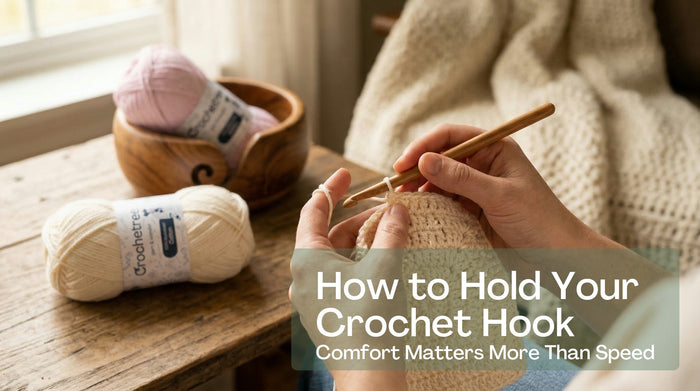
- Use pencil or knife grip, whichever feels natural.
- If your favorite hook isn’t ergonomic, add a rubber pencil grip or foam.
- Switch hook types during long sessions to reduce strain.
Durability & Care
- Aluminum and steel hooks last a lifetime.
- Bamboo and wood hooks should be kept dry and stored flat.
- Plastic hooks may warp in heat. Don’t leave them in the car!
- Clean hooks with a soft cloth; avoid abrasive cleaners.
- Sustainability & Values
If you want to reduce your environmental impact:
- Look for bamboo from certified sustainable forests.
- Choose recycled aluminum options.
- Avoid throwaway packs of low-quality plastic hooks.
Our Experience at Crochetree
At Crochetree, we usually work with hook sizes from 2.0 mm to 3.0 mm for our doll patterns. We've found that different hook shapes can change the tightness of the stitches, and the final look of the doll! Inline hooks give a neat, firm result, while tapered ones feel faster and smoother to use.
If you're a beginner, start with a 2.5 or 3 mm aluminum or ergonomic hook. As you grow more confident, you’ll learn to choose the right hook for each project.
Final Tips
- Test a few hooks before investing in a full set.
- Don’t assume expensive = better. The best hook is the one that feels good in your hand.
- Always check the pattern’s recommended hook size.
Want to Go Further?
- Check out our YouTube tutorials to see different hooks in action.
- Visit our shop for yarn kits and beginner-friendly patterns.
- Join our Crochetree Facebook group to ask questions and share your experience with others.
Happy hooking!
Ready to pick your first hooks? Our complete buying guide to the best crochet hooks of 2026 names specific picks for beginners, amigurumi, and blankets.
![The Ultimate Beginner's Guide to Crochet [2026]](http://crochetree.com/cdn/shop/articles/feat-ultimate-beginners-guide-to-crochet_eae81cec-84d0-455d-b190-08cd22d826c4.jpg?v=1777713815&width=700)
