

Welcome to the wonderfully creative world of crochet! This guide is here to walk you through the very basics, the essential stitches that form the foundation of every blanket, doll, or cozy scarf you’ll ever make. Our goal is to make learning the basic crochet stitches for beginners an encouraging and joyful experience.
A Gentle Start to Your Crochet Journey
Think of learning crochet as a moment of mindful self-care. It’s all about simple, rhythmic motions that quickly turn into something beautiful. Forget about feeling overwhelmed; this is your space to learn at your own pace and find joy in making things with your own two hands.
This guide is more than just instructions. It’s an invitation to slow down, get creative, and find a little happiness in the simple act of making.
Before we even get to the stitches, we'll cover the absolute first steps, like the best way to hold your hook and manage your yarn. We’ll break everything down so you feel supported every step of the way.
Build Confidence: We’ll focus on the must-know essentials first, so you can start creating right away.
Mindful Practice: Our approach is all about taking a relaxed pace. There’s no rush here, just the simple joy of learning.
Creative Joy: Every single stitch you make is a step toward creating something that is uniquely yours.
We'll go over the essential tools, explain common crochet terms in plain English, and set you up for success. Let's get started on this wonderful journey together.
Gathering Your First Crochet Tools
Before you can dive into making that first stitch, you'll need to get your supplies in order. This isn't about buying the most expensive gear, but about finding tools that feel good in your hands and make the learning process a joy rather than a chore.
Honestly, you only need two things to start: a crochet hook and some yarn. Hooks are made from all sorts of materials, from slick aluminum to warm bamboo. Some even have soft, ergonomic handles that make longer crochet sessions much more comfortable.
A great place to start is with a size H-8 (5mm) hook. It's the perfect middle-of-the-road size that works beautifully with the most common yarn weights, making it incredibly versatile for your first projects.
Choosing Your First Yarn
Walking down the yarn aisle can feel a bit like information overload. For now, just focus on two key things: yarn weight (how thick it is) and its fiber (what it’s made from). A medium, worsted-weight yarn is your best friend when you're starting out. It's substantial enough that you can easily see your stitches, which is a huge help when you're learning to count them.
Actionable Tip: I always recommend starting with a smooth, light-colored yarn. Fuzzy, dark, or busy-looking yarns can make it nearly impossible to see where your hook is supposed to go, and that’s a recipe for frustration.
Now, let's talk about fiber. Different fibers feel and behave differently, so your choice depends on what you want to make. Here’s a quick guide:
- Acrylic (mostly worsted): Budget-friendly and machine-washable, making it great for blankets and everyday projects. It can sometimes pill or create static.
- Cotton blends (DK/worsted): Breathable and easy to care for, this yarn is good for summer garments, dishcloths, and homeware.
- Wool/wool blends: Warm and elastic with great stitch recovery. Ideal for hats and sweaters, but always check care instructions and consider skin sensitivity.
- Mercerized cotton (fingering): Smooth, durable, and creates crisp stitch definition. It holds its shape well, making it ideal for amigurumi and detailed work.
- Chenille/faux-fur: Known for its plush texture, perfect for blankets and pillows. It’s not recommended for beginner amigurumi due to low stitch visibility.
For a deeper dive into all the handy accessories you might want down the line, check out our complete guide on what you need to start crocheting.
Mastering Your First Foundational Stitches
Alright, this is where the fun really starts. Every single crochet project you've ever admired, from a simple washcloth to a sprawling blanket, is built from the exact same handful of basic movements. Let’s walk through them together.
Think of these first few stitches as the ABCs of crochet. Once you get the hang of them, you’ll be able to string them together into "words" (stitch combinations) and then "sentences" (full projects). The only rule is to be patient with yourself and enjoy the rhythm of learning.
The Slip Knot: Your Starting Point
Before you can make a single stitch, you have to get the yarn onto your hook. That’s the job of the slip knot. It’s just a simple, adjustable loop that anchors the yarn, designed to tighten up when you pull the working end and loosen when you tug on the loop itself.
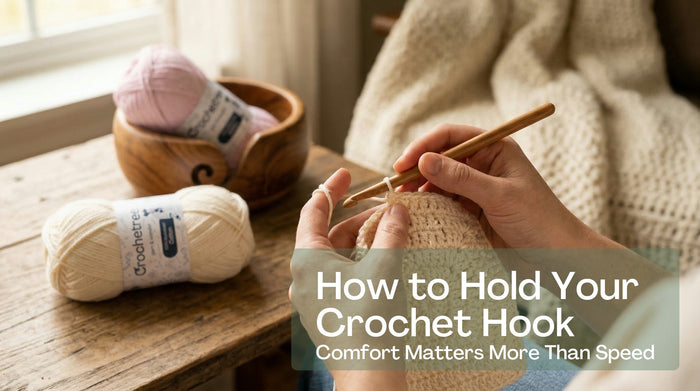
Getting this knot right is your first little win! Don't stress if it feels awkward at first; tying a slip knot will feel like second nature before you know it. Of course, a comfortable grip is key to a good start, and you can find more on that in our guide on how to hold your crochet hook and yarn.
Creating Your First Chain Stitch
The chain stitch (ch) is the true bedrock of crochet. It’s just a series of interconnected loops that can either form the base for projects worked in flat rows (like a scarf) or the starting ring for projects worked in the round (like a beanie).
To make one, you just "yarn over", which is exactly what it sounds like, wrapping the yarn over your hook, and pull that new loop through the one already on your hook. That's it! You've made a chain stitch. Repeat that motion, and you're building a chain. Your goal here is consistency; try to make each loop about the same size as the last. That comes with practice and finding a comfortable rhythm.
Actionable Tip: Your starting chain really sets the tone for the whole project. If it’s too tight, your first row will be a challenge to work into and might even cause the edge to curl. Aim for relaxed, even tension right from the get-go.
Building Your Skills with Core Crochet Stitches
Alright, you’ve got your foundation chain, and now the real fun begins. It’s time to transform that simple line of loops into actual fabric! This is where you’ll meet the core stitches that form the backbone of almost every crochet project. We'll walk through three essential stitches, each one building gently on the last.
Our journey starts with the mighty Single Crochet (sc). Don't let its name fool you; this is a short, sturdy stitch that creates a dense and durable fabric. Because it’s so compact, it's a go-to for projects that need to hold their shape, think amigurumi dolls, sturdy market bags, or even washcloths.
The Reliable Single Crochet
Making a single crochet is a simple rhythm: insert your hook into a chain, yarn over, and pull up a loop. Now you have two loops on your hook. To finish it off, yarn over one more time and pull through both loops. That's it! Each tiny stitch is a small victory that, row by row, builds into something beautiful.
Next up, let's meet a stitch that gives you a bit more height: the Half Double Crochet (hdc). This is the perfect "in-between" stitch. It’s taller than a single crochet but shorter than a double crochet, making it a fantastic all-rounder. It works up faster than single crochet, which is why you’ll see it used in hats, sweaters, and blankets.
The Elegant Double Crochet
Finally, we have the Double Crochet (dc). This is one of the tallest basic stitches and is wonderful for projects that need softness and drape. Because each stitch adds so much height, your project grows incredibly fast, which is so satisfying to see. It’s perfect for cozy scarves, flowing shawls, and soft, squishy blankets.
To work a double crochet, you’ll start by yarning over before inserting your hook into the stitch. Then, insert the hook, yarn over, and pull up a loop. You should now have three loops on your hook. Yarn over and pull through the first two loops, then yarn over again and pull through the final two.
A Gentle Reminder: Counting your stitches at the end of each row is a mindful practice, not a chore. It takes just a moment and saves you the headache of discovering a mistake several rows later. Trust me, it’s one of the best habits a crocheter can build.
Keeping your edges from getting wonky is another common hurdle for beginners. The secret is the turning chain, a few chain stitches you make at the end of a row before flipping your work over. This little step acts like a ladder, bringing your yarn up to the correct height to start the next row and keeping your sides perfectly straight.
Troubleshooting Common Beginner Challenges
Let’s be honest: every single person who crochets has ended up with a tangled mess or a project that looks… well, nothing like the picture. But remember, these little bumps in the road aren't failures! They’re your first real lessons in how yarn and hook actually behave together.
One of the first hurdles you'll likely encounter is tension. Are your stitches so tight you can barely force the hook back into them? Or are they so loose that your fabric is full of gaps? Finding that comfortable, consistent rhythm just takes practice.
Think of your tension as your creative signature. It’s unique to you. The goal isn't perfection but a relaxed flow that you can maintain throughout a project.
Another classic beginner issue is wonky edges. If your swatch starts looking more like a wonky triangle than a neat rectangle, it's almost always because you've accidentally added or skipped stitches at the ends of your rows. It happens to everyone.
A simple, game-changing trick is to use stitch markers in the first and last stitch of every row. This little bit of insurance helps you keep things even. If you want a deeper dive, check out our guide on how to crochet straight edges.
Common Questions About Basic Crochet Stitches
When you're first starting out, it feels like a million questions can pop up while you're learning. That's totally normal! We've gathered some of the most common ones we hear from newcomers right here to give you clear answers and help you feel more confident with those basic crochet stitches for beginners.
Just remember, every single expert crocheter was once a beginner, and getting curious is the best way to grow your skills.
What Is the Easiest Stitch to Learn First?
The very first technique everyone should master is the chain stitch (ch). Think of it as the alphabet of crochet, it’s the foundation for almost every single project you'll ever make.
Once you get the hang of making chains, the natural next step is the single crochet (sc). It’s a nice, short stitch that helps you practice the basic motion of inserting your hook and pulling up loops. Nailing this movement early on builds the muscle memory you'll need for everything else.
Why Is My Starting Chain So Tight?
Oh, the dreaded tight starting chain! This is probably the number one hurdle for new crocheters, so you are definitely not alone. It almost always happens because you're concentrating so hard that you end up with a death grip on your yarn.
Try to consciously take a deep breath and relax your hands. Your tension will naturally loosen up as you get more comfortable.
Actionable Tip: Grab a hook that’s one size larger than what the pattern suggests and use it only for the foundation chain. After the chain is done, switch back to the recommended hook for the rest of the project. This little cheat creates bigger, looser loops that are a dream to work your first row into.
How Do I Know Which Hook to Use?
Your yarn label is your best guide! Most yarn wrappers have a little icon that shows the recommended hook size, which is the perfect place to start.
As a general rule, thinner yarns (like fingering weight) work best with smaller hooks, and chunkier yarns (like a fluffy chenille) need larger hooks to create a nice, even fabric. But don't be afraid to play around a bit to see what kind of texture you like best.
At Crochetree, we believe that every stitch is a step toward creating something joyful and uniquely you. We hope this guide has inspired you to pick up a hook and start your own creative journey.
Ready to find the perfect tools for your first project? Explore our beginner-friendly kits and yarns at Crochetree.
![The Ultimate Beginner's Guide to Crochet [2026]](http://crochetree.com/cdn/shop/articles/feat-ultimate-beginners-guide-to-crochet_eae81cec-84d0-455d-b190-08cd22d826c4.jpg?v=1777713815&width=700)
